Former U.S. President Donald Trump pays a landmark call on Britain’s monarch amid diplomatic fanfare and political undercurrents
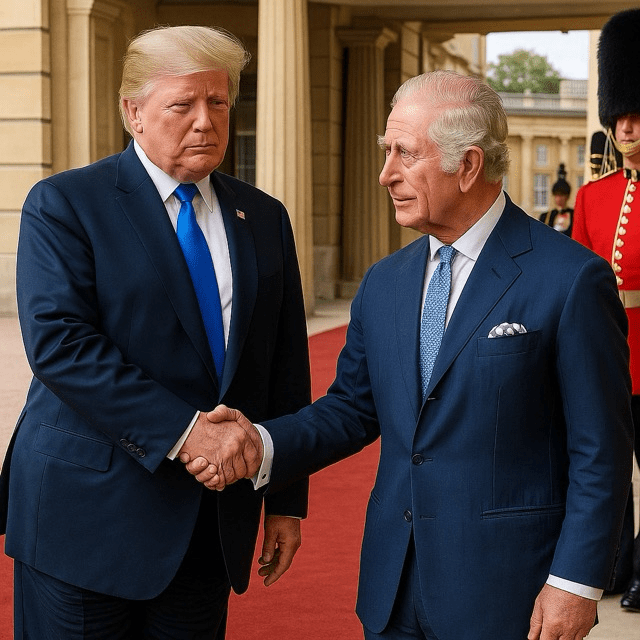
In a highly anticipated meeting that captured global attention, former U.S. President Donald Trump visited Buckingham Palace this week for a formal audience with King Charles III. The visit marked the first official encounter between Trump and the monarch, following their initial meeting at Windsor Castle during Trump’s presidency. With diplomatic protocol on full display, the event underscored the enduring ‘special relationship’ between the United States and the United Kingdom, even as its political dimensions continue to evolve.
Trump arrived in London aboard a private jet, flanked by a delegation including senior advisors and family members. He was greeted at the palace gates by the King’s Equerry and escorted through the flag‑draped corridors into the Throne Room, where multigenerational pageantry blended with contemporary political theatre. The monarch, dressed in a dark military uniform adorned with medals, welcomed Trump with a warm handshake before inviting him to stand at his side for a brief photo opportunity.
During their private discussions, which lasted approximately 45 minutes, Trump and King Charles III are reported to have covered a range of topics—from shared security concerns in Europe and the Indo-Pacific to cultural diplomacy through art and heritage. Although details of their conversation remain under the royal embargo, palace officials hinted at a ‘frank exchange’ on climate initiatives, an area where the King has taken a pronounced public stance, contrasting with policies pursued during Trump’s administration.
Observers noted the subtle dance of protocol and personality. Trump, known for his bold gestures and outspoken remarks, maintained a respectful demeanour in the palace’s formal setting, though his quip about the grandeur of the throne prompted a brief, rippling smile from the monarch. In an unguarded moment captured by photographers, Trump reportedly told the King, “Your Majesty, I think we’d make a great team on trade,” to which Charles replied with measured humor, “Perhaps we shall see.”
The visit also encompassed a ceremonial element. Trump laid a wreath at the tomb of Britain’s Unknown Warrior in Westminster Abbey, acknowledging sacrifices made during past conflicts. He then joined King Charles for a private luncheon in the Palace’s opulent State Dining Room, featuring classic British fare with a subtle American twist—lobster rolls served alongside traditional roast beef. Guests included high commissioners and representatives from the U.S. embassy, underscoring the bipartisan nature of Anglo‑American relations.
Political reaction in both capitals was mixed. In Washington, former colleagues of Trump lauded the visit as a testament to his enduring global influence and an affirmation of transatlantic solidarity. Critics, however, questioned the relevance of engaging a former president in state-level diplomacy, arguing that such interactions risk blurring the lines between official and personal diplomacy. In London, the opposition Labour Party issued a statement urging the government to ensure that state resources are not used for partisan purposes.
King Charles III’s role in state visits is predominantly ceremonial, yet his personal advocacy on environmental issues has introduced new dimensions to royal diplomacy. Palace insiders suggested that the King sought to leverage the meeting to highlight planetary stewardship, possibly encouraging Trump to reconsider his stance on international climate agreements. While Trump did not formally commit to any policy shifts, his expression of respect for the King’s environmental work may signal openings for future dialogue.
Analysts view the visit as part of a broader pattern of former leaders continuing diplomatic engagements beyond their official tenures. The phenomenon raises questions about the unofficial channels of influence that ex‑presidents can still wield. For the United Kingdom, hosting Trump—and others who may follow—presents an opportunity to bolster soft power while navigating the delicate balance between historic tradition and modern political realities.
As Trump departed via the palace’s grand terrace, waving to well‑wishers and media crews, both sides released brief statements expressing satisfaction with the meeting’s tone and outcomes. Buckingham Palace’s communique praised ‘constructive exchanges’ and reaffirmed the enduring friendship between the Crown and the people of the United States. Trump’s statement hailed the King’s ‘gracious hospitality’ and vowed to continue ‘working together for our peoples’ prosperity and security.’
The visit of Donald Trump to King Charles III reflects an evolving chapter in transatlantic relations—one where ceremonial grandeur meets the unpredictability of contemporary politics. Whether the encounter will yield substantive progress on shared issues or remain a symbolic gesture of historical ties will unfold in the months ahead, as both nations confront pressing challenges at home and abroad.


 The Tower Post