Former ECB President Draghi tasked with steering critical EU talks amid geopolitical and economic challenges
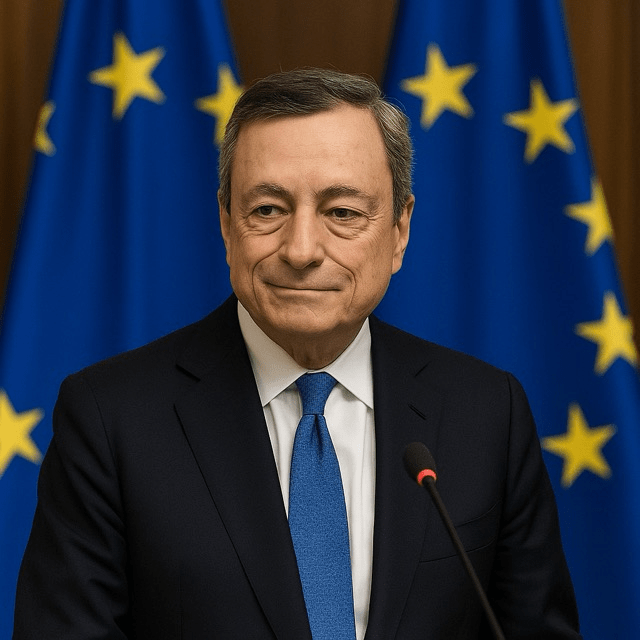
In a strategic move reflecting both confidence and urgency, the European Union has named former European Central Bank (ECB) President Mario Draghi as its Special Negotiator. The nomination, announced by European Commission President Ursula von der Leyen, aims to leverage Draghi’s formidable expertise and diplomatic acumen to navigate a series of high-stakes negotiations that lie ahead for the bloc.
Draghi, who helmed the ECB from 2011 to 2019 and later served as Italy’s Prime Minister, brings to the role a reputation for decisive leadership during some of Europe’s most turbulent economic periods. His tenure at the ECB was marked by bold interventions, including the landmark ‘whatever it takes’ pledge to preserve the euro, which crystallised his standing as a pivotal figure in the EU’s financial history.
The Special Negotiator remit is broad but focused on three main areas: securing gas and energy supply agreements with key international partners, advancing trade talks post-Brexit, and mediating internal disputes over the EU’s multi-year budget framework. According to von der Leyen, Draghi’s task will be to ensure coherent, unified approaches across member states and to bring a sense of urgency to protracted discussions.
Energy security remains top priority after successive crises chilled gas flows from Russia, compelling the EU to seek alternative suppliers. Draghi is expected to engage with major energy-producing nations—and work alongside the Commission’s energy commissioner—to finalise long-term contracts and invest in renewables diversification. “Energy is now geopolitics,” he remarked in a preliminary statement, underscoring the nexus of economics and security in modern diplomacy.
Brexit’s aftershocks continue to reverberate across the Union. Negotiations on financial services access, data privacy, and customs arrangements have stagnated in recent months, hampering trade and investment flows. Draghi’s appointment is seen as a signal that Brussels intends to reinvigorate stalled talks with the United Kingdom, balancing firm defence of single market rules with pragmatic compromise to minimise mutual harm.
Internally, the EU’s seven-year budget—known as the Multiannual Financial Framework (MFF)—faces contentious debates over funding levels, rule-of-law conditionalities, and disbursement mechanisms for cohesion and agricultural funds. Member states such as Poland and Hungary have resisted linking budget payments to judicial reforms, prompting delays in the ratification of the MFF. Draghi’s mediation skills will be critical to forging consensus and finalising this €1.2 trillion package.
Observers note that Draghi’s dual credibility in both economic and political arenas uniquely qualifies him for the role. “He understands the complexities of markets and states,” commented a senior diplomat familiar with the selection process. “His task will be to align short-term political will with long-term strategic interests. That requires both technical expertise and political sensitivity.”
However, challenges are formidable. Member states guard their sovereignty and divergent national interests often complicate unified EU positions. Draghi will need to operate with deft negotiation tactics, balancing firmness on core principles with flexibility to accommodate legitimate concerns. Success will hinge on his ability to convene disparate actors and maintain momentum amid a crowded calendar of international summits and domestic elections.
Critics caution against overreliance on marquee personalities at the expense of institutional processes. They argue that Draghi’s appointment should complement, not supplant, the work of the Commission’s existing negotiation teams and the European External Action Service. Yet supporters counter that the designation of a high-profile negotiator sends a clear political signal both to partner countries and to citizens of member states.
Looking ahead, Draghi’s first assignments will include a series of high-level visits to Washington, Abuja, and Beijing, aimed at securing energy and trade commitments. He will then turn his attention to dialogues in London and within EU capitals over the budget framework. Stakeholders will be watching closely to gauge whether his stewardship can expedite resolutions that have eluded more conventional diplomatic avenues.
As Europe grapples with intertwined economic, security, and political trials, the appointment of Mario Draghi as Special Negotiator underscores the EU’s willingness to employ seasoned leadership in pursuit of unity and stability. If successful, his tenure could set a precedent for ad hoc high-level envoys tasked with bridging gaps in an increasingly fragmented world order.
 The Tower Post