President Macron unveils significant military spending increase amid evolving security landscape
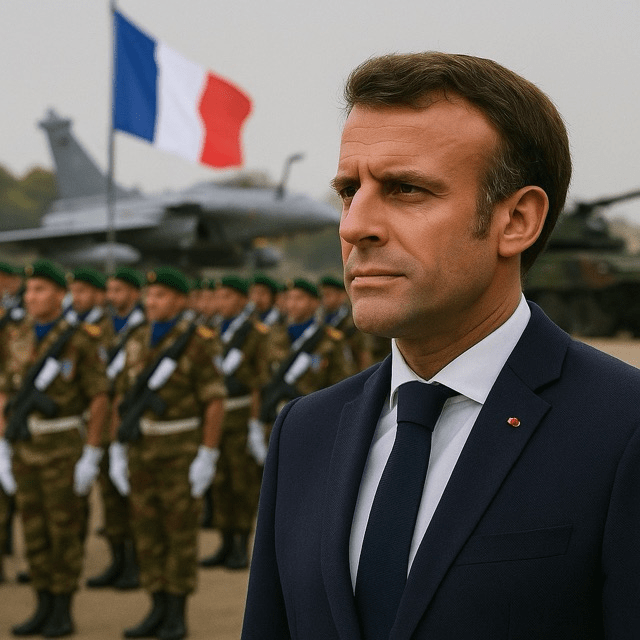
In a strategic move to reinforce France’s defence capabilities, President Emmanuel Macron announced plans to allocate an additional €6.5 billion to the military budget over the next two years. This decision, revealed during a high-profile press conference at the Élysée Palace, reflects Paris’s response to a shifting geopolitical landscape marked by intensifying global rivalries and regional conflicts.
Macron underscored that the funding boost would support a broad range of initiatives, from modernising existing equipment to accelerating research into next-generation technologies. “We face new challenges that demand a robust and flexible military posture,” he stated. “This investment is essential to ensure France can protect its citizens, contribute to European security, and uphold our commitments to NATO.”
Of the €6.5 billion increase, €3 billion will be directed towards procurement of cutting-edge hardware, including Rafale fighter jets, FREMM frigates, and upgraded Leclerc main battle tanks. These assets are expected to replace aging platforms and enhance interoperability with allied forces. An additional €2 billion is earmarked for research and development, focusing on autonomous systems, cyber defence, and hypersonic missile technology.
The remaining €1.5 billion will support personnel and operational readiness, addressing both recruitment and retention challenges. Macron highlighted the importance of investing in the men and women of the French Armed Forces: “Advanced weapons systems are vital, but they must be matched by well-trained and well-equipped personnel.” Measures include improved training programmes, enhanced benefits, and targeted initiatives to attract specialists in technical fields.
France’s defence spending pledge builds on a trend of rising military budgets across Europe following Russia’s invasion of Ukraine. Paris had already committed to reaching 2 percent of GDP on defence by 2025, in line with NATO guidelines. The latest infusion will bring France’s total annual military expenditure to approximately €50 billion by 2026, solidifying its position as Europe’s second-largest defence spender after the United Kingdom.
Industry stakeholders have largely welcomed the announcement. Stéphane Allot, chief executive of Naval Group, praised the clarity of the funding timeline: “Reliable budgets allow us to plan production and invest in innovation. This commitment from the government is exactly what the sector needs.” However, he cautioned that France’s defence industrial base must scale up capacities to meet the accelerated schedule.
Critics warn that rapid procurement carries risks if not managed carefully. A parliamentary report released earlier this year flagged potential delays in complex projects and supply chain vulnerabilities. Macron addressed these concerns by stressing streamlined procurement processes and closer collaboration between the Ministry of Armed Forces and private contractors. “We will reduce red tape and forge long-term partnerships to maintain momentum,” he assured.
International partners have also reacted positively. NATO Secretary-General Jens Stoltenberg lauded France’s renewed commitment, emphasizing that robust European contributions strengthen the Alliance’s deterrence posture. Meanwhile, Germany and Italy have echoed Macron’s stance, announcing their own incremental spending boosts, indicating a broader continental shift towards collective security.
As global tensions persist, particularly in the Indo-Pacific and Eastern Europe, France’s decision marks a critical juncture in its defence policy. The €6.5 billion increase signals to allies and adversaries alike that Paris is prepared to uphold its strategic interests and respond to emerging threats with determination.
Looking ahead, Defence Minister Sébastien Lecornu will present a detailed budgetary roadmap to the French parliament next month. The plan will include phased allocations, major procurement contracts, and R&D milestones. If executed effectively, Macron’s pledge could reshape the capabilities of the French military and set a precedent for European defence cooperation in the years to come.
 The Tower Post