Argentem Creek and Innovatus Capital triumph in legal battle to oust alleged looters and restart Ukraine’s vital grain export hub amid wartime risks
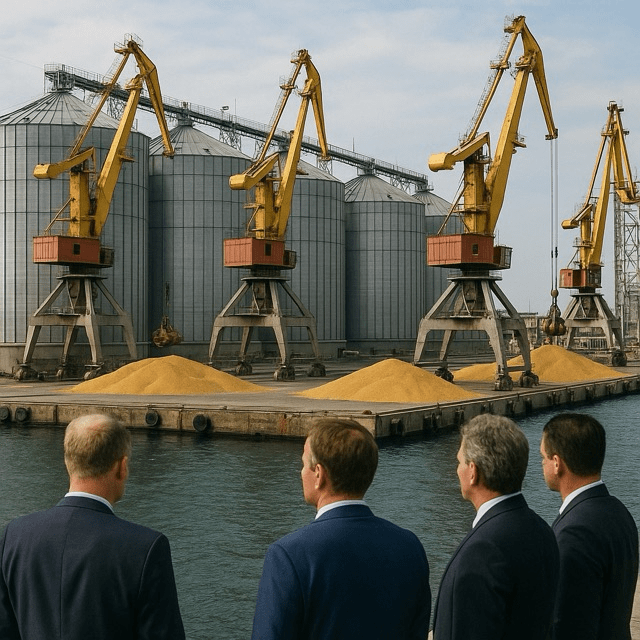
In a significant development for Ukraine’s wartime economy, US-based investment firms Argentem Creek Partners and Innovatus Capital Partners have announced the successful relaunch of the Olimpex grain export terminal in Odesa. The move follows a protracted legal tussle in which the funds wrested control of the facility from operators accused of embezzling loan proceeds and neglecting maintenance obligations. The revival of the terminal underscores both the investor risks and potential rewards of reviving infrastructure amid conflict.
The Olimpex terminal, strategically located on the Black Sea coast, had been designed to handle millions of tonnes of grain annually, forming a crucial link in Ukraine’s role as a global breadbasket. However, after the Russian invasion disrupted port operations in 2022, the terminal fell into disrepair. Allegations of loan fraud emerged late that year when creditors claimed that local managers diverted funds meant for equipment upgrades and crucial repairs, further debilitating an already strained facility.
Argentem Creek and Innovatus Capital, which acquired defaulted debt and equity stakes in the Western NIS Enterprise Fund’s portfolio, took the dispute to international arbitration. In a series of rulings, tribunals sided with the US investors, granting them control of the terminal’s assets and management rights. Legal experts note that the case highlights the complexity of enforcing contracts in jurisdictions under duress, where standard mechanisms of collateral recovery can be thwarted by war and political upheaval.
“Securing the Olimpex terminal was not just a bet on returns, but on Ukraine’s resilience and the global food supply chain,” said a spokesperson for Argentem Creek. The investors have committed an initial $20 million in capital expenditures to repair conveyer systems, replace damaged silos, and restore electrical and loading infrastructure. Their immediate goal is to process at least 500,000 tonnes of grain in the coming harvest window, resuming exports that stalled following the closure of the wider Odesa port corridor.
Local stakeholders have greeted the announcement with cautious optimism. Ukraine’s grain traders rely heavily on Black Sea routes, and alternative corridors—through Poland or Romania—face capacity constraints and higher logistical costs. The terminal’s reopening promises to alleviate bottlenecks and stabilize export volumes. At the same time, Ukrainian authorities have emphasized that security protocols must remain stringent, with port guards and naval escorts ensuring that shipments depart safely under continuing threat of Russian missile strikes.
The legal saga also illustrates the pitfalls faced by foreign investors in war-affected markets. Despite securing arbitration awards, Argentem Creek and Innovatus had to navigate bureaucratic delays and conflicting claims by local courts. In Kyiv, competing rulings attempted to validate the previous operators’ control, forcing the investors to seek enforcement through UK courts and international treaty protections. Such fragmentation of legal authority can prolong asset recovery, increasing holding costs and complicating rehabilitation plans.
To mitigate these risks, the US funds partnered with the Ukrainian agricultural conglomerate Kernel to provide operational expertise and local logistics networks. Kernel will oversee on-the-ground management, grain sourcing, and coordination with shipping agents. This alliance is designed to marry foreign capital and legal leverage with domestic knowledge, a model that lawmakers in Kyiv hope will become a template for attracting further investment into critical infrastructure.
Analysts caution, however, that sustained progress depends on broader improvements to Ukraine’s business environment. “One-off successes are encouraging, but the system must evolve,” remarked Olena Ivanova, a corporate governance specialist at Kyiv School of Economics. She pointed to ongoing concerns over currency controls, export taxes, and ad hoc regulatory changes that can unsettle project economics. Addressing these issues, she suggests, will be vital to converting isolated wins into a durable inflow of foreign direct investment.
International actors are watching closely. The European Bank for Reconstruction and Development (EBRD) and other multilateral agencies are evaluating proposals to co-finance port rehabilitation and logistics corridors. Meanwhile, the US government has signalled support for measures that protect foreign investors, including guarantees against expropriation and improved dispute-resolution mechanisms. These assurances aim to blunt investor worries that wartime exigencies could derail commercial undertakings.
As the rebuilt Olimpex terminal prepares to ship its first cargo under new management, the venture stands as both symbol and test case. Success would demonstrate that even in conflict zones, robust legal frameworks and committed partners can restore essential infrastructure. Failure, conversely, could reinforce investor reticence, depriving Ukraine of vital capital needed for reconstruction and economic recovery.
For now, Argentem Creek and Innovatus remain bullish. “We believe in Ukraine’s future and its strategic importance to global food security,” the joint statement declared. The coming weeks will reveal if their gamble pays off, feeding not only the world’s tables but also confidence in wartime investment and the promise of Ukraine’s post-war renaissance.




 The Tower Post