Central Bank warns a handful of foreign investors as it battles the New Taiwan dollar’s meteoric rise without direct intervention
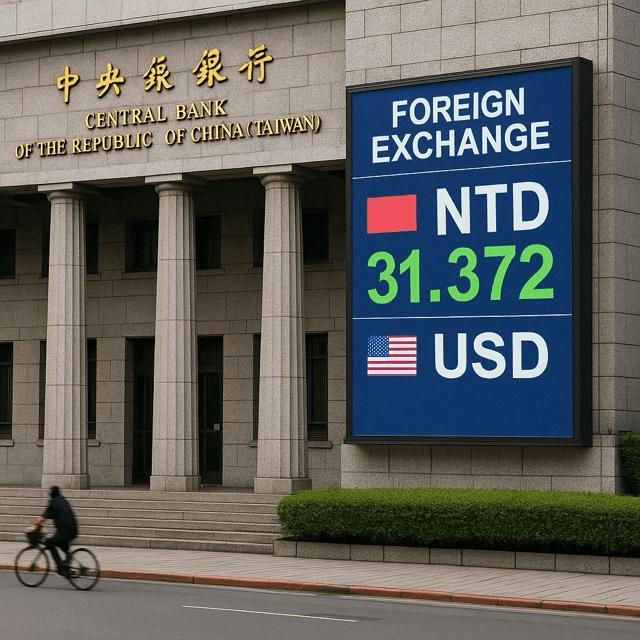
In an unprecedented move to calm the New Taiwan dollar’s (NTD) rapid appreciation, Taiwan’s central bank has privately cautioned “a few foreign investors” against breaching the island’s capital control regulations. The warnings, disclosed exclusively to the Financial Times, signal a strategic shift: instead of mounting large-scale foreign-exchange interventions, the bank is fortifying its regulatory framework to deter speculative short positions that could artificially drive the currency higher.
The NTD surged nearly 5 percent against the U.S. dollar in the past quarter, fueled by robust electronics exports and persistent inflows into Taiwan’s equity markets. While a stronger currency benefits consumers by lowering import costs, it also threatens exporters, whose overseas earnings translate into fewer local dollars. Taiwanese authorities face a delicate balancing act: supporting export competitiveness without triggering accusations of currency manipulation by the United States.
To navigate this dilemma, the central bank has reportedly stepped up scrutiny of foreign fund flows, identifying entities whose trading patterns suggest aggressive short-selling or rapid round-trip transactions. Those flagged received private admonitions reminding them of Taiwan’s tightening capital control regime, which requires approval for certain offshore trades and imposes penalties on non-compliant actors.
Analysts describe the strategy as “closing loopholes and discouraging speculative shorts.” By reinforcing rules rather than wading into the spot market, the bank aims to temper volatility without drawing the ire of Washington. Under U.S. Treasury guidelines, any central bank deemed to be intervening heavily to weaken its currency risks being labelled a currency manipulator—an outcome Taipei is keen to avoid given its geopolitical sensitivities.
Market participants have responded cautiously. “The discreet warnings underscore that regulators are watching,” said Emily Huang, a foreign-exchange strategist at Shanghai-based Olympia Investments. “Traders now have to weigh the risks of regulatory pushback alongside traditional market drivers. That extra friction can slow speculative momentum.”
However, the absence of visible intervention leaves questions about the central bank’s long-term resolve. Some economists argue that only outright dollar sales or higher policy rates could rein in the pace of appreciation. Yet, such measures carry costs: draining foreign reserves, stoking domestic borrowing costs, or inviting criticism from domestic constituents concerned about inflation.
Taiwan’s approach contrasts with neighboring economies. In South Korea and Japan, central banks have periodically stepped into the FX market to counter excessive currency swings. Taipei’s choice to rely on regulatory warnings reflects its smaller reserve buffer and its desire to maintain “flexible exchange rate” credibility, a cornerstone of its monetary policy framework.
Internally, the bank has also broadened communication with banks and securities firms, urging tighter internal compliance and faster reporting of anomalous trades. A senior central bank official emphasized that these measures are “part of a calibrated toolkit” designed to ensure orderly markets without compromising the NTD’s role as a price signal for the economy.
Investors will be watching both the currency’s path and the regulatory environment closely. If appreciation persists unabated, the central bank may have to reconsider more direct tools, possibly including verbal intervention through public statements or adjustments to policy rates. For now, Taipei’s measured stance highlights the complexities small open economies face amid global capital surges and geopolitical scrutiny.
As Taiwan’s central bank refines its defensive playbook, the implicit message is clear: curb speculative shorts or face the consequences. Whether this nuanced approach will prove sufficient to rein in the NTD’s rally remains the defining test for policymakers balancing open markets with economic stability.




 The Tower Post