Despite praise from the US and Israel, aid convoys have exposed desperate Palestinians to deadly risks en route to distribution points
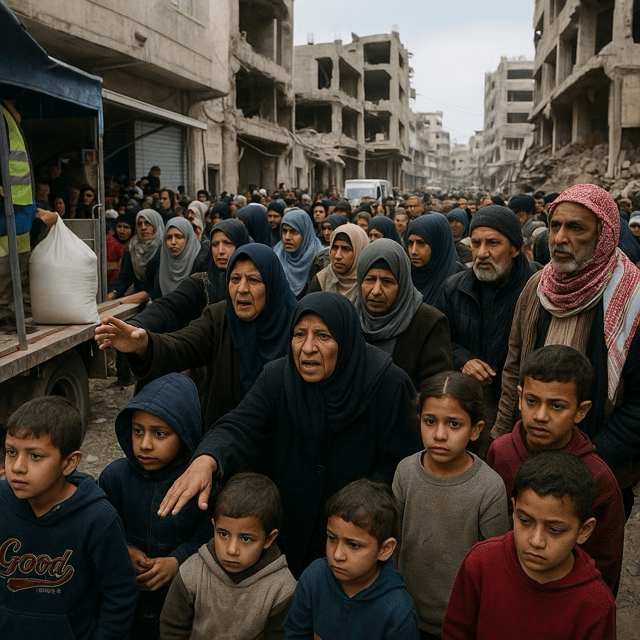
The Gaza Humanitarian Foundation (GHF), launched amid international relief efforts, was hailed by the United States and Israel as a vital lifeline for the enclave’s 2.1 million residents. Yet recent investigations reveal a darker reality: testimony from aid recipients, satellite imagery, and verified video footage show that many Palestinians undertaking the perilous journey to GHF distribution centers face life-threatening dangers—and some never return.
Since its inception, the GHF has coordinated daily convoys carrying food, water, and medical supplies from the Rafah border crossing into central Gaza. The organization’s leadership, comprised of Israeli and international NGOs, underscores rigid security protocols intended to protect civilians. In official statements, US and Israeli officials tout the program’s logistical achievements and adherence to safety measures.
However, first-hand accounts paint a starkly different picture. “We walked for hours across ruined neighborhoods, dodging sniper fire and drone surveillance,” recalled Aisha al-Sayed, a mother of four, who lost her eldest son during a raid near a makeshift distribution hub. Aid workers corroborate such accounts, describing improvised checkpoints set up by armed factions and unpredictable clashes around aid convoys.
Satellite imagery analyzed by independent experts shows the locations of GHF sites starkly demarcated against devastated urban landscapes, often surrounded by cratered streets and collapsed buildings. In some cases, these distribution points sit adjacent to military installations, amplifying the risk of crossfire. “The siting of these centers should consider civilian safety zones, but the data indicates otherwise,” said Dr. Lena Moritz, a geospatial analyst with Humanitarian Watch.
Verified video footage further substantiates these concerns. In one clip, a convoy halted at a UN-marked distribution point comes under sudden artillery barrage, triggering chaos as families scramble for cover. The footage, authenticated by geolocation and metadata analysis, shows aid trucks caught in the open, leaving vulnerable recipients exposed to gunfire and shrapnel.
Critics argue that flawed operational planning and overreliance on Israeli security guarantees have undermined the GHF’s mandate to protect civilians. “Humanitarian corridors must be genuinely safe, not just cordoned off on paper,” asserted Jamal Barghouti, a Gazan human rights advocate. He and other local voices urge international stakeholders to reassess security arrangements and involve Palestinian civil society in site selection and protection protocols.
Israel’s military spokesperson maintains that the GHF operates under “strict rules of engagement” and that any incidents are thoroughly investigated. A recent Israeli Defense Forces (IDF) report states that GHF sites are communicated to operational commanders to prevent inadvertent targeting. Nevertheless, survivors’ testimonies and third-party analyses highlight recurring lapses in communication and coordination.
The human toll extends beyond immediate casualties. Many families report that fear of traveling to distant distribution points has led to reduced aid uptake, exacerbating malnutrition and health crises. Doctors Without Borders reports a spike in pediatric admissions for severe acute malnutrition in areas farthest from GHF centers, suggesting that inaccessible aid is as deadly as outright attack.
As the Gaza Humanitarian Foundation approaches its six-month milestone, calls grow for a comprehensive review. International legal experts emphasize that under international humanitarian law, relief operations must avoid placing civilians at disproportionate risk. Proposals include establishing mobile distribution units, negotiating guaranteed safe passage windows, and leveraging underground networks to circumvent volatile hotspots.
For Gaza’s besieged population, the promise of aid should mean a refuge from conflict, not another gauntlet through danger zones. The GHF’s mandate—to save lives—demands urgent recalibration in light of mounting evidence. Without reform, the program risks perpetuating harm even as it seeks to alleviate suffering.




 The Tower Post