President of the European Commission announces sweeping reciprocal tariffs and sanctions in response to American trade barriers
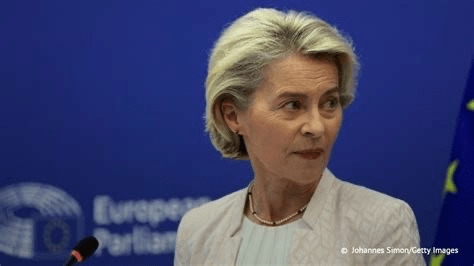
In a landmark address to the European Parliament, European Commission President Ursula von der Leyen announced a package of retaliatory measures against the United States valued at €90 billion. The move comes in response to a series of U.S. tariffs on European steel, aluminum, and luxury goods, which Brussels has long argued violate World Trade Organization (WTO) rules and unfairly penalise European exporters.
Von der Leyen criticised the American actions as “protectionist policies” that threaten the transatlantic partnership. “We cannot stand idly by as European businesses and jobs are jeopardised,” she declared. “Our response will be firm, proportionate, and in full compliance with international trade law. The €90 billion package sends a clear message: Europe defends its interests.”
The measures encompass a broad spectrum of goods, including tariffs on U.S.-made motorcycles, bourbon whiskey, agricultural products such as corn and soy, and energy exports. Additional sanctions target American tech firms involved in government procurement, aiming to curb European market access for select digital services. The commission stressed that while the measures are designed to exert economic pressure, they also allow room for diplomatic de-escalation.
Jean-Claude Juncker, former commission president and trade commissioner, welcomed the announcement as “a necessary step to preserve a level playing field.” He noted that WTO dispute-resolution panels have repeatedly sided with the EU in complaints against U.S. duties, yet Washington has resisted compliance. “After years of legal wins and political inertia, it is time to act,” Juncker said.
Economic analysts estimate that the tariffs will raise U.S. import costs by an average of 15 percent, potentially adding billions to consumer prices in key sectors. The European automotive industry, particularly German manufacturers, stands to benefit from the lifted threat of American levies. Still, businesses on both sides of the Atlantic may face price volatility and supply-chain disruptions as the measures take effect over the next six months.
Von der Leyen emphasised that the EU remains committed to dialogue. A joint statement issued by the commission and the European External Action Service called for urgent consultations under the WTO’s good offices mechanism. “Our door is open,” the statement read. “We prefer cooperation over confrontation, but we will not hesitate to defend European workers, farmers, and industries.”
The U.S. administration, caught between domestic political pressures and allied concerns, responded cautiously. A White House spokesperson acknowledged Europe’s right to countermeasures but warned of “serious implications for global trade stability.” Meanwhile, Republican senators criticised the tariffs as a hindrance to America’s economic recovery and urged swift negotiations to resolve the dispute.
Brussels has signalled readiness to adjust its package if the U.S. lifts its duties on key sectors. In parallel, the commission proposed launching a trade defence instrument review to streamline future responses to unfair trade practices. EU Trade Commissioner Valdis Dombrovskis affirmed that the new framework would enhance the bloc’s agility in a fractious global environment.
As the €90 billion measures move toward implementation, market watchers will track currency fluctuations, commodity prices, and corporate earnings for signs of strain. The dispute also underscores a broader strategic debate over the future of transatlantic relations, with Europe seeking to assert greater autonomy in trade policy while maintaining unity in addressing shared geopolitical challenges.
For now, von der Leyen’s package marks a turning point: a confident Europe ready to leverage its economic clout to defend its interests. Whether the show of strength will prompt U.S. concessions or deepen the trade rift remains to be seen. What is clear is that Brussels no longer sees itself as a passive bystander but as an active shaper of the global trading system.
 The Tower Post