Decades of political inertia and fragmented coalitions consign Italy’s quest for a stable premiership to perpetual stalemate
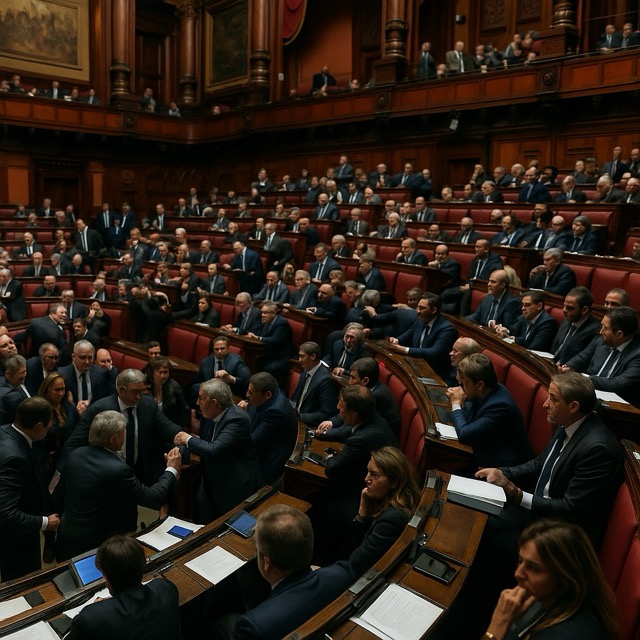
Italy’s long-standing debate over reforming the premiership remains as elusive as ever, with successive governments promising changes that fail to materialize. At the heart of the matter lies a complex interplay of constitutional rigidity, fragmented party politics, and entrenched interests that render any meaningful overhaul of the prime minister’s powers practically impossible.
The Italian Constitution, drafted in the immediate post-war period, intentionally dispersed executive authority to prevent the rise of authoritarian rule. As a result, the role of the prime minister is defined more by convention than by clear legal prerogative, relying heavily on parliamentary confidence and coalition agreements rather than direct electoral mandate.
Efforts to strengthen the premiership have surfaced in various guises, from proposals to introduce a presidential-style executive to tweaking parliamentary procedures for greater stability. However, each initiative has collided with roadblocks: conservative parties fear concentration of power, while smaller factions profit from coalition bargaining and resist reforms that could marginalize their leverage.
In 2006, former Prime Minister Silvio Berlusconi championed a reform to grant the executive greater decree powers and limit parliamentary floor-crossing. The proposal narrowly passed the lower house but stalled in the Senate, where his own coalition fractured under regional and personal rivalries.
More recently, the Renzi government’s 2016 constitutional referendum sought to reduce the Senate’s role and streamline legislative approval, indirectly bolstering the prime minister’s agenda-setting capacity. The resounding ‘No’ vote, fueled by widespread public distrust and opposition from both left and right, underscored the political and societal challenges of structural change.
Experts note that public apathy compounds the issue. Polls consistently show that Italians prioritize economic concerns over abstract institutional reforms, leaving political leaders little incentive to risk contentious constitutional amendments that could backfire at the ballot box.
Moreover, procedural hurdles loom large. Amending the Constitution requires two successive parliamentary approvals and often triggers a confirmatory referendum if a qualified majority is not achieved. This high bar ensures that only the most broadly supported reforms can proceed—an unlikely prospect in a landscape rife with partisan fragmentation.
The recent emergence of technocratic administrations, such as those led by Mario Monti in 2011 and Mario Draghi in 2021, offered temporary respite but did not translate into lasting constitutional change. While these leaders wielded significant informal authority, their mandates were framed as crisis responses rather than vehicles for structural reform.
As Italy grapples with economic and social challenges—from sluggish growth to demographic decline—the institutional status quo persists. Without broad-based political consensus or a unifying crisis to compel action, the premiership reform remains a distant ideal rather than an imminent reality.
Ultimately, Italy’s premiership reform saga highlights a paradox: the dispersal of power protects pluralism but also perpetuates instability. Until a convergence of political will, public engagement, and procedural feasibility occurs, Italy is likely to remain trapped in an endless cycle of unfulfilled reform promises.
For the time being, the premiership’s future will continue to be written in the frenetic backrooms of coalition negotiations rather than the formal pages of constitutional law—a testament to Italy’s enduring capacity for complexity over clarity.



 The Tower Post