Ruchir Sharma sees Israel’s markets solidifying its status as the Middle East powerhouse
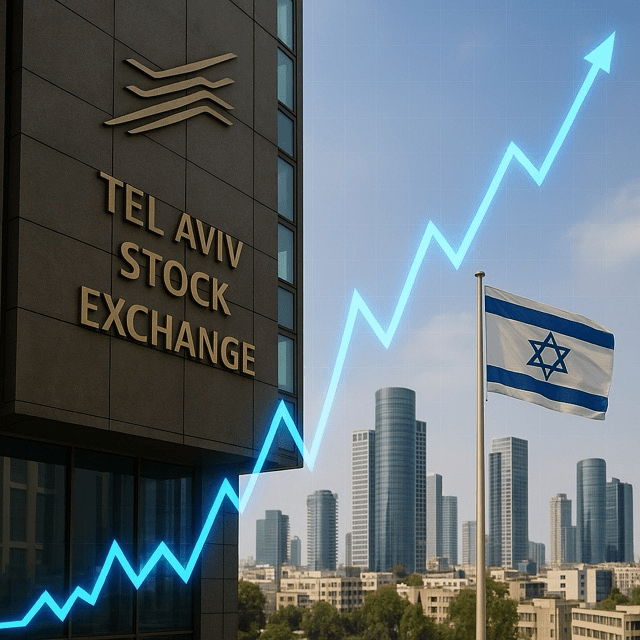
Israel’s stock market has stunned observers with a blistering rally this year, propelling the Tel Aviv 125 Index to record highs and outpacing regional peers by a wide margin. According to renowned investor and strategist Ruchir Sharma, this surge underscores Israel’s emergence as the undisputed economic superpower of the Middle East. From the bustling tech hubs of Tel Aviv to the robust performance of blue-chip banks, the country’s financial markets are sending a clear signal: Israel’s blend of innovation, resilience, and global integration has created a formidable engine for growth.
Sharma attributes much of the rally to Israel’s booming technology sector, where startups and established giants alike have leveraged artificial intelligence, cybersecurity, and life sciences to capture global markets. Venture capital inflows have surged, with overseas investors drawn by the promise of high returns and the country’s reputation for entrepreneurial dynamism. ‘‘The depth of Israel’s tech ecosystem is unparalleled in the region,’’ writes Sharma, noting that the sector now accounts for a significant share of equity market capitalization and trading volume on the Tel Aviv Stock Exchange.
Beyond tech, Israel’s financial institutions have also ridden the wave. Major banks reported healthy earnings growth, boosted by rising interest rates and a pick-up in consumer and corporate lending. Insurance companies and asset managers similarly benefited from market volatility, as investors sought professional guidance and diversified portfolios. The stability of the banking sector—anchored by strong regulatory oversight and prudent risk management—has reinforced confidence in Israel’s broader economic framework.
Foreign investment has played a pivotal role in the market’s ascent. Institutional investors from Europe, North America, and Asia have increased their allocations to Israeli equities, drawn by attractive valuations and growth prospects. Sovereign wealth funds and pension funds, in particular, have established significant stakes in leading Israeli companies, further validating the country’s appeal. Sharma highlights that foreign ownership of Tel Aviv-listed securities has reached historic levels, signaling a long-term commitment rather than a short-lived speculative fad.
Geopolitical factors have also contributed to the rally. The normalization of relations with several Arab states under the Abraham Accords has opened new avenues for trade, tourism, and cooperation, bolstering economic sentiment. While security concerns remain, investors appear reassured by Israel’s military deterrence and the government’s effective crisis management. ‘‘Market participants have demonstrated an impressive ability to look beyond tensions,’’ Sharma observes, ‘‘focusing instead on the fundamentals that underpin sustainable growth.’’
Comparatively, other Middle Eastern markets have lagged behind. Oil-dependent economies faced headwinds from fluctuating crude prices and efforts to diversify away from hydrocarbons. Larger exchanges in Dubai and Saudi Arabia showed modest gains but failed to match the consistent upward trajectory seen in Tel Aviv. Analysts suggest that Israel’s diversified economic base—anchored in knowledge industries rather than natural resources—gives it a structural edge over regional peers.
Looking ahead, Sharma warns that no market is impervious to risks. Global central bank policy, shifts in US foreign policy, and potential security flare-ups could trigger volatility. However, he remains optimistic that Israel’s institutional strength, deep capital markets, and entrepreneurial culture will sustain growth momentum. ‘‘The story of Israel’s stock market is one of transformation,’’ he concludes. ‘‘What began as a regional player has become a beacon of economic dynamism in a complex neighborhood.’’
For investors eyeing the Middle East, Israel’s performance offers both a template and a cautionary tale. While the rewards of innovation-led growth can be significant, success depends on sound governance, robust institutions, and resilience in the face of adversity. As Israel cements its status as the region’s economic superpower, the lessons it offers may well shape the future trajectory of emerging markets around the globe.



 The Tower Post