Decision marks the end of an exceptional domestic deployment amid civic unrest
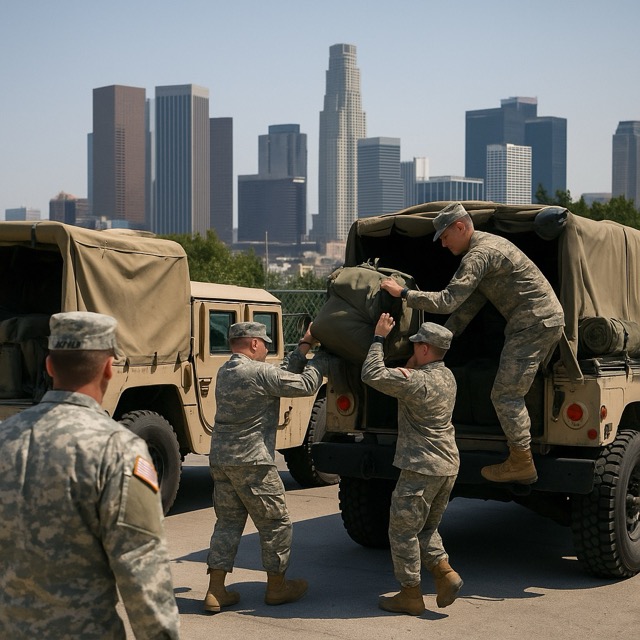
LOS ANGELES, July 19, 2025 — In a strategic move signaling a shift back toward normalcy, the Department of Defense announced today that approximately 2,000 members of the California Army National Guard, who have been stationed in Los Angeles since late May, will begin a phased withdrawal this weekend. The decision follows weeks of declining protest activity across the city and comes after local leaders urged a reduction in military presence.
The deployment, initially ordered in response to widespread demonstrations and civil disturbances following high-profile incidents of police-involved shootings, represented one of the largest domestic National Guard mobilizations in recent decades. Guard units have been credited with bolstering security at critical infrastructure sites, aiding overwhelmed local law enforcement, and providing logistical support during curfews imposed in key neighborhoods.
“Our troops have done an outstanding job in supporting the city of Los Angeles,” said Brig. Gen. Michelle Ramirez, commander of the 40th Infantry Division, during a press briefing at the Guard’s command post in downtown LA. “With the situation now stabilized and local agencies fully prepared to resume independent operations, we will gradually redeploy our forces back to their home armories.”
Los Angeles Mayor Karen Mitchell praised the announcement as a “welcome step” toward restoring the city’s everyday rhythms. “The National Guard’s assistance was crucial during an unprecedented period of civic tension,” Mitchell said. “Their gradual departure allows our communities to rebuild trust and continue healing.” She confirmed that the city is coordinating with state authorities to ensure a seamless handover of security responsibilities.
Civil rights advocates, while supportive of the drawdown, cautioned that systemic issues at the heart of the unrest remain unresolved. “Removing soldiers from the streets is positive, but it cannot replace accountability and meaningful police reform,” stated Alicia Freeman, director of the Los Angeles Justice Initiative. “We urge elected officials to capitalize on this moment to enact lasting change.”
Economic analysts believe that the Guard’s presence, which at times required restricted access to downtown districts, contributed to a downturn in small-business activity. Reports from the Los Angeles Chamber of Commerce estimate losses exceeding $15 million during the height of the deployment. Business owners expressed optimism that the withdrawal will revitalize foot traffic and encourage consumers to return to affected areas.
The drawdown will be executed over a seven-day period, with units rotating out in groups of 400 to 500 soldiers. By July 24, barring unforeseen developments, all personnel are expected to be back at their home stations across California. The state’s Adjutant General, Maj. Gen. Thomas Hart, affirmed that the Guard remains ready to respond to any resurgence of violence or emergencies in Los Angeles County.
As Los Angeles transitions away from its militarized posture, residents are left reflecting on the extraordinary chapter of having uniformed National Guard troops patrolling familiar streets. For many, the sight of soldiers on city corners served as a stark reminder of deep-seated tensions, even as it provided a measure of security. The coming days will test whether civic leadership can harness this momentum to foster genuine reconciliation and progress.



 The Tower Post