A New Era of Automation: Robots Working Alongside Humans
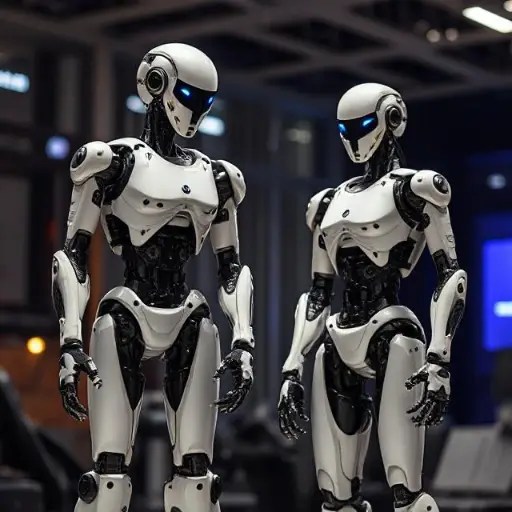
In a significant shift towards collaboration over replacement, humanoid robots are entering the industrial mainstream, transforming how companies approach automation. These machines, capable of walking through factories and using tools, are being placed into existing operations, particularly useful for companies dealing with worker shortages and rising labor costs.
According to Hexagon’s ‘Future of Robotics 2035’ report, the technology centers on collaboration rather than replacement. The report found that 82% of organizations increased automation investments in the past year, with executives from Nvidia, Turner Construction, and other companies emphasizing the importance of robots working alongside humans.
“This report clearly indicates that the future isn’t going to be a clash of robot vs. human. It’s going to be about robots working with humans,” says Burkhard Boeckem, Chief Technology Officer at Hexagon. “We believe the most resilient and competitive organizations will be those that treat autonomy as a scaffold for human potential, not a replacement for it.”
Despite the promise of humanoid robots, deployment continues to pose difficulties for many companies. Hexagon’s research shows that 41% of organizations have trouble integrating humanoid robots with their existing manufacturing systems, citing issues such as connecting new robots with older control systems, safety equipment, and production software.
However, companies that prioritize human factors alongside technical considerations achieve better outcomes. When manufacturers involve workers in deployment planning and maintain transparent communication about robot capabilities and limitations, employee acceptance improves significantly. This approach often leads to unexpected benefits, with workers becoming advocates for the technology rather than obstacles to implementation.
The success of humanoid robots is exemplified by Hexagon’s new robot, AEON, launched in June 2025 to address worker shortages in industrial settings. AEON uses Hexagon’s sensor technology with AI-controlled movement systems, includes battery swapping for continuous operation, and is being tested in real production environments through partnerships with established manufacturers.
Ola Rollén, Chairman of the Board at Hexagon, positions the development within the company’s broader technology strategy. “Hexagon’s legacy in precision measurement and sensor technologies has always been about enabling next-generation autonomy. Hexagon is one of the best-placed companies in the world to lead and shape the field of humanoid robotics.”
The business case for humanoid robotics becomes particularly compelling in high-cost manufacturing regions where labor shortages and rising wages threaten competitiveness. Roman Emmenegger, VP Manufacturing at Pilatus, views AEON as addressing fundamental challenges facing Swiss manufacturing. “Facing today’s challenges of manufacturing in Switzerland, we believe that AEON will become a contributing solution in sustaining our competitiveness in more than ever tougher global markets.”
With AEON set to expand its deployment following initial tests, Hexagon is advancing physical AI to tackle real operational challenges. “With AEON, we’re bridging cutting-edge technology with practical industry needs,” says Arnaud Robert, President of Hexagon’s Robotics division. “Over the next six months we’ll be deploying AEON in production environments before expanding our commercial rollout.”




 The Tower Post