A bold aerial operation highlights the complexities of Israel’s border security and minority protections
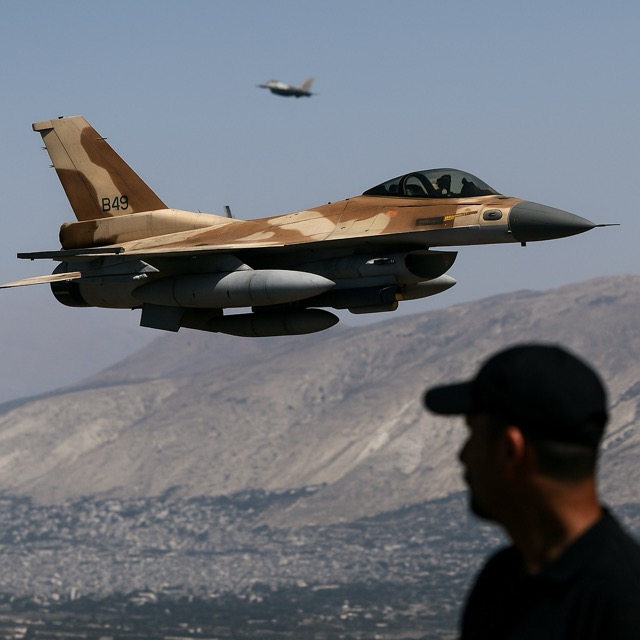
Israel Defense Forces (IDF) launched a precision airstrike targeting a series of military installations in southern Syria. According to a statement released by the IDF Spokesperson’s Unit, the operation was conducted with the explicit aim of disrupting hostile elements that posed an imminent threat to the Druze population living in the Golan Heights and adjacent areas. While Israel has previously carried out cross-border operations in response to attacks from militant factions, the latest mission underscores a rare public acknowledgment of protective intent towards the Druze community—a distinct ethnic and religious minority with deep historical ties to both Syria and Israel.
The Druze, numbering approximately 40,000 in Israel’s northern regions and an estimated 30,000 within Syrian-controlled territory, have often found themselves caught between regional powers. Since the outbreak of the Syrian civil war in 2011, the Druze in Syria have maintained a delicate neutrality, even as various armed groups vie for control. In Israel, the Druze serve in the IDF and hold full citizenship rights, setting them apart from other Arab minorities. Despite these differences, ties between Druze families across the border have remained resilient, and recent intelligence suggested that a Syrian-based militia was planning a cross-border incursion that could endanger Druze villages.
“Our decision to strike was driven by credible and immediate threats,” Brig. Gen. Eliav Maor, a senior IDF commander, stated at a press briefing in Tel Aviv. “We do not take these actions lightly, but when the safety of our minority citizens and their kin across the border is at stake, we must act decisively.” Satellite imagery released by the IDF displayed fighter jets soaring over mountainous terrain before precision-guided munitions impacted two Syrian army depots and a weapons storage facility.
Damascus condemned the strikes as a blatant violation of Syrian sovereignty and accused the Israeli government of exploiting the Druze narrative for political gain. In a rare address, President Bashar al-Assad asserted that any harm to the Druze would be Syria’s responsibility to investigate internally. However, independent analysts note that the Syrian military has often shared strategic coordination with local Druze leaders, blurring the lines between government-held and Druze-majority areas.
International reactions were mixed. The United States, a key ally of Israel, affirmed Israel’s right to self-defense but urged restraint to avoid further escalation. Russia, which maintains a military presence in Syria under a 2015 agreement, called for an emergency United Nations Security Council session to address what it termed “an act of aggression.” Meanwhile, human rights organizations have expressed concerns about civilian safety, stressing that any military action in densely populated regions carries the risk of collateral damage.
For the Druze community, the strikes stirred both relief and apprehension. Local leader Sheikh Wahid Halabi in Majdal Shams praised the IDF for its protective stance but warned that such operations often heighten regional tensions. “We value our connection to Syria, yet we are grateful for the security provided by our Israeli citizenship,” he said. “Our hope is for lasting peace that does not force us to choose sides.”
As tensions simmer, analysts caution that the latest airstrikes could set a new precedent for Israel’s engagement policy along the Syrian frontier. By framing military action as a defense of a minority community, Israel may be signaling a shift towards more overt humanitarian justifications for future cross-border operations. Whether this strategy will deter hostile factions or further entangle regional actors in a spiraling conflict remains to be seen.



 The Tower Post