President’s Criticism of ‘Past Supporters’ Highlights Rift Over Handling of Sensitive Documents
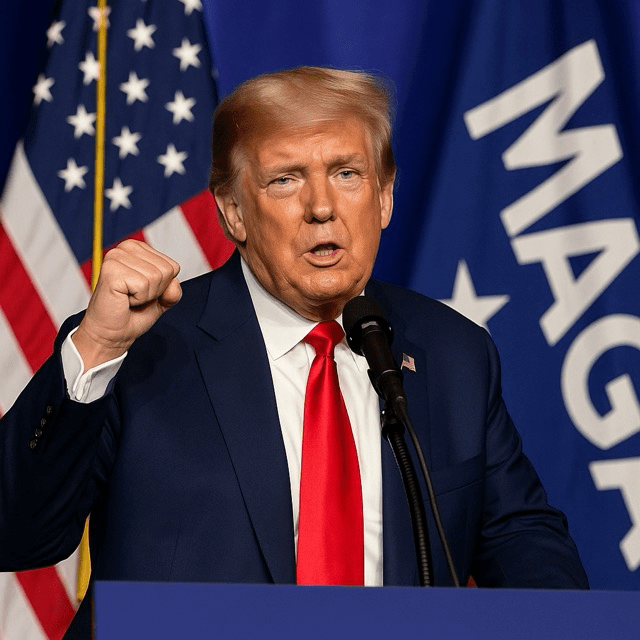
Washington D.C. – President Donald Trump has launched a blistering attack on his “past supporters” amid growing controversy over his administration’s handling of files related to the late financier and convicted sex offender Jeffrey Epstein. As the White House grapples with questions about document security and selective disclosures, the president’s MAGA base finds itself increasingly fractured, with some loyalists bristling at what they view as political expediency.
The dispute erupted last week, when the Department of Justice released a tranche of heavily redacted materials connected to Epstein’s controversial plea deal in 2008 and subsequent allegations of trafficking. Critics accused the administration of slow-walking the release and shielding high-profile figures who had links to Epstein. In response, Trump took to his social media platform to chide former backers who voiced dissatisfaction, accusing them of ingratitude and undermining his accomplishments.
“My past supporters—they love me when I’m winning,” the president wrote, “but as soon as the fake news and radical left start peddling lies about Jeffrey Epstein, they turn their backs. No loyalty!” His comments, posted late Friday night, set off a frenzy among MAGA influencers, some of whom defended the president’s right to control sensitive information, while others warned that attacking long-time allies risked alienating the movement’s grassroots base.
Sarah Carlisle, a prominent Trump ally and podcast host, told listeners that the president was right to guard national security interests. “These documents contain names of people who need protection until the facts are laid bare,” she argued. “We can’t have a free-for-all—there must be a responsible process.” However, in the same episode she cautioned that “public trust is on the line if these files are perceived as being manipulated.”
On the other side, hardline MAGA advocates such as former congressional candidate Kyle Jensen have accused the administration of a cover-up. “Why hide the names?” Jensen demanded in a video statement. “If you’ve done nothing wrong, then stand by your word and release the files in full.” His message echoed among grassroots activists who have long decried establishment interference, leading to heated exchanges on right-wing forums and at local rallies.
The White House has defended its approach, with Press Secretary Laura Mitchell stating that the redactions were necessary to protect ongoing investigations and the privacy of witnesses and victims. “We understand the public’s interest, but we balance transparency with legal obligations,” Mitchell told reporters. She also noted that additional documents would be reviewed by a special panel and released in phased stages.
Despite reassurances, the episode has underscored a broader shift in the relationship between Trump and the MAGA rank and file. Political analysts point to a growing divergence: while the president navigates the corridors of power and statecraft, his grassroots movement increasingly demands uncompromising ideological purity and instant disclosure.
“This tension is not new, but it’s becoming more pronounced,” said Dr. Elaine Peters, a political science professor at Georgetown University. “Populist movements thrive on direct engagement and transparency. When leaders make pragmatic decisions—especially on sensitive judicial matters—they risk coming into conflict with their base’s expectations.”
Last month, Trump’s allies celebrated his executive order establishing a Victims’ Rights Task Force, aimed at reviewing systemic failures in the Epstein case. Yet, the perceived gap between policy pronouncements and document releases has left supporters skeptical. Some local MAGA chapters have begun circulating petitions demanding a special congressional committee to conduct a full, unredacted public inquiry.
Meanwhile, Democrats have seized the moment to criticize the administration’s selective transparency. Senate Judiciary Committee member Senator Maria Lopez (D-CA) called the redactions “a desperate attempt to protect political patrons” and threatened subpoenas if Congress does not receive comprehensive access. “The American people deserve the whole truth, not bits and pieces filtered through a political lens,” she said.
In the heartland, veteran Trump supporters express a mix of loyalty and frustration. At a rally in Des Moines, Iowa, attendee Mark Henderson said he backed the president’s broader agenda but wanted more clarity on the Epstein files. “We got his back, but we need him to have ours,” Henderson told this reporter. “Don’t leave us hanging when it matters most.”
The schism has led to calls for Trump to recalibrate his messaging. Some advisors reportedly suggest that a public roundtable with victims’ advocates, legal experts, and bipartisan stakeholders could defuse tensions. However, others warn that too much openness could expose the administration to legal risks and political attacks.
As the debate continues, the relationship between Trump and his movement appears irreversibly changed. The era when the president and MAGA were synonymous is giving way to a more complex dynamic, in which institutional imperatives collide with populist demands.
Observers note that similar fractures emerged during Trump’s handling of classified documents controversies and his COVID-19 policies. Each time, the president’s pragmatic course sparked rebellion among purist elements, only to be followed by a cycle of public apologies or clarifications.
For now, the Epstein file saga stands as the latest test: can Trump satisfy both the imperatives of governance and the unyielding expectations of his base? Or will the discord deepen, reshaping American populism in the process? If past patterns hold, the answer may lie in the next tweet—where President Trump’s instinct for direct communication will once again collide with the movement’s demand for raw transparency.




 The Tower Post