Investigation into Alleged Rule Breaches Pushed Back as Brussels Prioritises Transatlantic Trade Deal
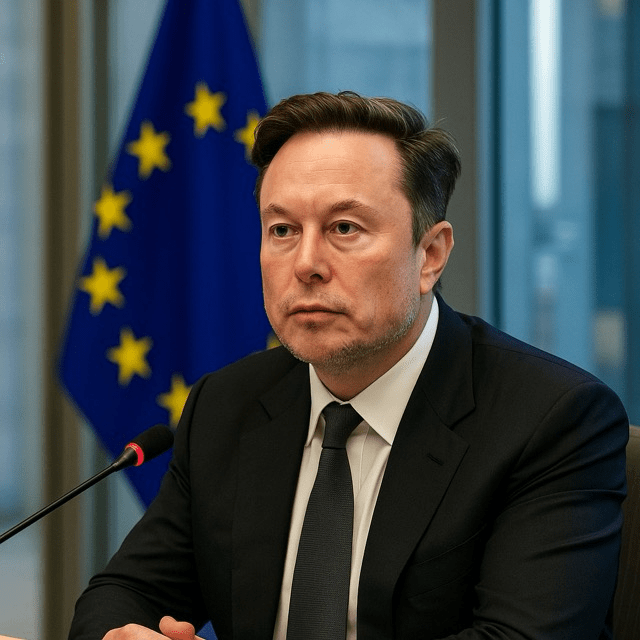
Brussels – The European Commission has postponed its long-anticipated inquiry into Elon Musk’s social media platform X (formerly Twitter), according to officials familiar with the matter. Observers say the delay is linked to sensitive trade negotiations with the United States, where both sides are eager to finalise a comprehensive trade and technology partnership before year’s end.
Under the EU’s Digital Services Act (DSA), online platforms with more than 45 million monthly active users must comply with stringent transparency and content moderation standards. Failure to adhere to these rules can trigger formal investigations and substantial fines. X, which boasts over 75 million European users, was flagged earlier this year for alleged lapses in transparency reporting, misleading statements about algorithmic content curation, and potential breaches of advertising disclosure requirements.
Commissioners had signalled in March that a formal case was imminent and had set an internal deadline to conclude preliminary fact-finding by late July, just before the EU Parliament’s summer recess. However, trade officials in both Brussels and Washington now say that the probe will miss that timeline, and may not be wrapped up until autumn—a postponement that underscores the political sensitivities entwined with the transatlantic relationship.
“We are in the final stretch of very delicate trade talks with our American counterparts,” said one senior EU official, speaking on condition of anonymity. “It became clear that moving forward on the X investigation at full speed could complicate negotiations on key issues, from tariffs on industrial goods to cooperation on critical raw materials and technology standards.”
Discussions between the EU and the US under the joint Trade and Technology Council (TTC) framework aim to streamline customs procedures, align digital regulations, and secure supply chains for semiconductors and electric vehicle batteries. Sources suggest that the US has privately expressed “concerns” over high-profile EU cases against major American tech firms, warning that aggressive enforcement could derail broader trade ambitions.
Elon Musk’s purchase of Twitter in late 2022 and the subsequent rebranding to X triggered waves of policy changes on the platform, including alterations to content moderation policies and verified badge criteria. Critics in Brussels argued that these moves undermined user trust and transparency obligations. In March, the Commission sent X a “request for information” under the DSA, seeking detailed data on content removal rates, advertising clients, and algorithmic decision-making processes.
X responded in April with a 120-page dossier defending its practices, asserting that it had made significant strides in clarifying removal protocols, enhancing user reporting tools, and publishing regular transparency reports. “We remain fully committed to compliance with the DSA and will continue constructive engagement with the Commission,” read a statement from X’s Brussels office.
Despite X’s assurances, EU regulators reportedly remained unconvinced by the platform’s documentation on third-party content takedowns and ad placements. A follow-up audit was scheduled for June but was quietly shelved as trade talks gained urgency. According to insiders, officials decided to pause the audit to avoid presenting an adversarial posture that Washington might interpret as targeting American companies.
Parliamentary debates in Strasbourg have grown heated, with members of the European Parliament (MEPs) from both left and right urging the Commission to proceed swiftly. “Digital sovereignty cannot become a mere bargaining chip,” declared Tiina Rand, chair of the Internal Market Committee. “If we delay enforcement for political reasons, we signal that the DSA is negotiable, not a firm rule of law.”
Industry groups have voiced mixed reactions. The Computer & Communications Industry Association (CCIA), which represents major tech firms, praised the EU for demonstrating “flexibility” in aligning enforcement with strategic trade goals. Conversely, civil society organisations like the European Digital Rights (EDRi) coalition condemned the postponement as “a worrying sign that political expediency can override public interest safeguards.”
Analysts warn that stretching out the investigation could have unintended consequences. “Regulatory certainty is crucial,” noted Dr. Martin Keller, a digital policy expert at the Hertie School in Berlin. “Platforms need clear timelines and expectations. An open-ended probe risks creating a vacuum where neither regulators nor platforms know where they stand.”
The Commission has yet to issue an official statement on the delay, but a spokesperson indicated that “all DSA processes remain active” and that the inquiry into X “will be taken forward with due diligence and in alignment with broader policy objectives.” The spokesperson declined to comment on the potential impact of trade negotiations.
In Washington, White House officials welcomed the EU’s willingness to coordinate on digital and trade issues. “We value our partnership with the EU and look forward to concluding discussions on digital standards and fair trade practices that benefit both sides,” said a senior US trade representative.
As summer recess approaches, the spotlight will shift to the next round of TTC meetings in late September, where digital and trade ministers are expected to review progress. Observers will closely watch whether the X probe is relaunched in earnest or further delayed amid competing policy priorities.
For now, X users and advocacy groups remain in a holding pattern. The platform continues to operate under existing DSA interim guidelines, and any finding of non-compliance could still trigger fines of up to 6% of global turnover—potentially amounting to billions of euros for the Musk-owned firm.
Whether the EU can balance robust enforcement of its new digital rulebook with the imperative of transatlantic trade harmony remains a defining question. In the age of intertwined tech and diplomacy, the fate of the X investigation may prove to be a bellwether for how Europe and America navigate the complex intersection of regulation, commerce, and geopolitics.




 The Tower Post