From Wimbledon to the NFL, AI is Revolutionizing the World of Sports
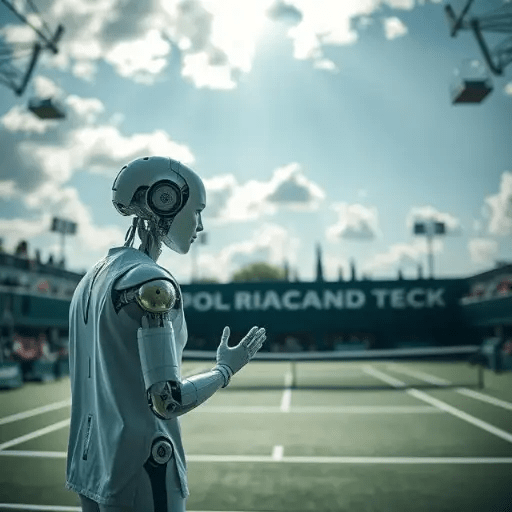
In the world of sports, technology has long been seen as a threat to human judgment and tradition. However, the recent incidents at Wimbledon have sparked a heated debate about the role of artificial intelligence in sports. The introduction of AI-powered line-judging systems has been met with skepticism, but the facts suggest that technology is far more accurate than human officials.
The recent failures of the electronic line-judging system at Wimbledon have been widely publicized, with some critics arguing that technology is robbing us of our jobs and cherished traditions. However, the reality is that the system used at Wimbledon is a souped-up version of the same Hawk-Eye system that has been employed since 2007. And while there have been some embarrassing incidents, the broader reality is that technology is far better than the human eye.
Research has shown that line judges get around 8% of close calls wrong, while players’ judgments are even worse. In fact, a study of challenges made by players at Wimbledon last year found that only 25% were overturned, with players mistakenly thinking the ball was out three out of four times. This is a far cry from the accuracy of technology, which can analyze a dive or a serve in less than a tenth of a second.
The use of technology in sports is not just about accuracy, but also about protecting the integrity of the game. With the rise of social media, officials are under increasing pressure to make decisions that are fair and unbiased. Technology can help to reduce the influence of crowds and ensure that decisions are made based on facts, not emotions.
The International Olympic Committee has already showcased the potential of AI in sports, using it to analyze dives and award fairer scores. At the 2024 conference, the IOC demonstrated a system that could analyze a diver’s jump in real-time, providing a detailed breakdown of the dive’s quality. The system was able to analyze the dive in less than a tenth of a second, providing a far more accurate assessment than human judges.
The NFL is also set to adopt AI technology, replacing its “chain gang” of officials with Hawk-Eye technology. This move is seen as a significant step forward for the league, which has long been plagued by controversy over officiating decisions. By using AI to analyze plays and make decisions, the NFL hopes to reduce the influence of human error and ensure that games are played fairly.
But what about the critics who argue that technology is taking away from the human element of sports? While it’s true that technology can make some aspects of sports more efficient and accurate, it’s also true that it can enhance the fan experience. By providing real-time analysis and insights, technology can help fans understand the game better and appreciate the skill and strategy involved.
In fact, many sports fans are already embracing the use of technology in sports, using apps and websites to track scores, follow live commentary, and analyze player performance. By providing a more immersive and engaging experience, technology can help to build a stronger connection between fans and the game.
So, what’s the verdict on the role of AI in sports? Is it a threat to human judgment and tradition, or a necessary step forward? The facts suggest that technology is far more accurate and fair than human officials, and that it’s here to stay. As the International Olympic Committee, the NFL, and other sports organizations continue to adopt AI technology, it’s clear that the future of sports is being shaped by technology.
The Benefits of AI in Sports
Improved accuracy: AI technology can analyze plays and make decisions with a higher degree of accuracy than human officials.
Increased efficiency: AI technology can automate many tasks, freeing up officials to focus on more complex and nuanced decisions.
Enhanced fan experience: AI technology can provide real-time analysis and insights, helping fans understand the game better and appreciate the skill and strategy involved.
Reduced controversy: AI technology can help to reduce the influence of human error and ensure that games are played fairly.
Increased transparency: AI technology can provide a detailed breakdown of plays and decisions, helping fans understand the reasoning behind the outcome.




 The Tower Post