Commerce Secretary Howard Lutnick Cites Recent Trade Discussions as Catalyst for Policy Shift
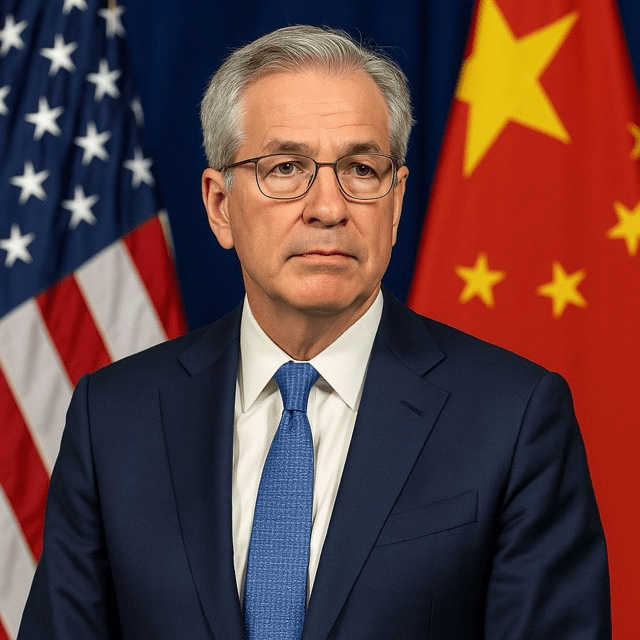
Washington D.C. – In a notable policy turnaround, the U.S. Department of Commerce announced yesterday that it would ease restrictions on exports of advanced Nvidia graphics processing units (GPUs) to select Chinese entities. Commerce Secretary Howard Lutnick attributed the reversal to constructive trade discussions held last week with Chinese officials in Beijing, where rare earth mineral supply was at the heart of negotiations.
The decision marks a significant shift from the administration’s earlier stance, which had imposed stringent controls on cutting-edge semiconductor exports in an effort to curb China’s artificial intelligence (AI) and defense capabilities. Introduced in late 2024, those restrictions barred shipments of high-end AI chips to Chinese tech firms and research institutions, prompting concerns from U.S. manufacturers about lost sales and global competitiveness.
“During our recent talks, China reaffirmed its commitment to stabilizing rare earth exports to the United States,” Secretary Lutnick told reporters at a press briefing. “In return, we have agreed to recalibrate our export controls on select Nvidia GPUs for non-sensitive applications. This outcome aligns with our broader objective of securing critical mineral supplies while ensuring American technological leadership.”
Rare earth elements, including neodymium and praseodymium, are essential components in a wide range of high-tech products—from electric vehicle motors to wind turbines and military hardware. China currently dominates global rare earth production, accounting for roughly 60% of output. U.S. industry officials have long warned that supply disruptions could hamper domestic manufacturing and national security.
Under the revised rules, U.S. exporters may ship Nvidia’s A800 and H800 GPUs—capable of performing up to one petaflop of AI computation—to approved Chinese cloud service providers and non-governmental research labs. However, the most advanced A100 and H100 series remain restricted, with licenses still required for any sales to entities on the Commerce Department’s Entity List.
Industry reaction was swift. Jensen Huang, CEO of Nvidia, praised the decision as “a balanced approach that supports our global customers while protecting national security imperatives.” He added that the eased curbs would allow Chinese companies engaged in healthcare research and autonomous driving development to continue leveraging AI platforms without disruption.
Chinese state media also welcomed the announcement, framing it as a testament to the pragmatic spirit of the trade talks. Xinhua News Agency quoted a Ministry of Commerce spokesperson affirming China’s readiness to “expand cooperation on critical minerals” and “create favorable conditions for responsible technology exchange.”
Analysts highlight the delicate equilibrium policymakers must strike between safeguarding sensitive technologies and maintaining open markets. “This move underscores how intertwined semiconductor supply chains and rare earth trade are,” said Dr. Emily Carter, a technology policy expert at the Center for Strategic and International Studies. “By securing commitments on mineral exports, the U.S. gained leverage to moderate chip controls without ceding strategic ground.”
Despite the compromise, some lawmakers expressed reservations. Senator Mark Thompson (R-WI), a member of the Senate Commerce Committee, criticized the administration for “backtracking on vital security measures.” He warned that even mid-tier GPUs could be repurposed for malign uses, urging stricter end-user verification and oversight mechanisms.
On the House side, Representative Linda Park (D-CA) commended the diplomatic breakthrough. “Ensuring a stable supply of rare earths is critical for America’s green energy transition,” Park stated. “This agreement not only alleviates immediate pressure on our industries but also strengthens our long-term strategic partnership with key allies.”
The rare earth component of the talks culminated in a preliminary framework under which China would grant U.S. companies access to additional quotas for exporting vital minerals, while the U.S. would expedite approval of joint ventures aimed at developing domestic rare earth processing facilities. These measures aim to bolster U.S. resilience against supply shocks and reduce dependence on a single source.
Looking ahead, the Commerce Department plans to host follow-up meetings with industry stakeholders to refine licensing procedures and ensure compliance. A new “Trusted Exporter” program is expected to streamline applications for companies demonstrating robust supply chain security and end-use accountability.
For Nvidia, the policy update could translate into an estimated $2–3 billion in additional revenue opportunities over the next 12 months. Other semiconductor manufacturers, such as AMD and Intel, are closely monitoring the situation to assess whether similar license relaxations might extend to their AI-focused products.
The rare earth trade pact is also likely to influence broader U.S.–China technology relations. As both sides navigate an increasingly complex geopolitical landscape, these incremental breakthroughs may pave the way for more comprehensive dialogues on data security, intellectual property protection, and joint research initiatives.
In the meantime, U.S. exporters are advised to consult the Commerce Department’s updated Export Administration Regulations and seek guidance through the new export support hotline. Companies that fail to secure the required licenses risk facing significant fines and reputational damage.
Ultimately, the negotiation’s dual focus—rare earth supply assurances in exchange for calibrated semiconductor access—reflects a pragmatic approach to modern trade diplomacy. By leveraging interdependent supply chains, Washington and Beijing have signaled a willingness to find common ground, even amid broader strategic competition.
Whether this equilibrium endures remains to be seen. Stakeholders from Capitol Hill to Silicon Valley will scrutinize how effectively the revised controls and mineral commitments are implemented. For now, the administration’s policy pivot underscores the intricate balancing act at the core of 21st-century tech diplomacy: securing critical resources while sustaining the innovation ecosystem that drives economic growth.



 The Tower Post