President Promises Jobs and Streamlined Permits to Boost Economy and Approval Ratings
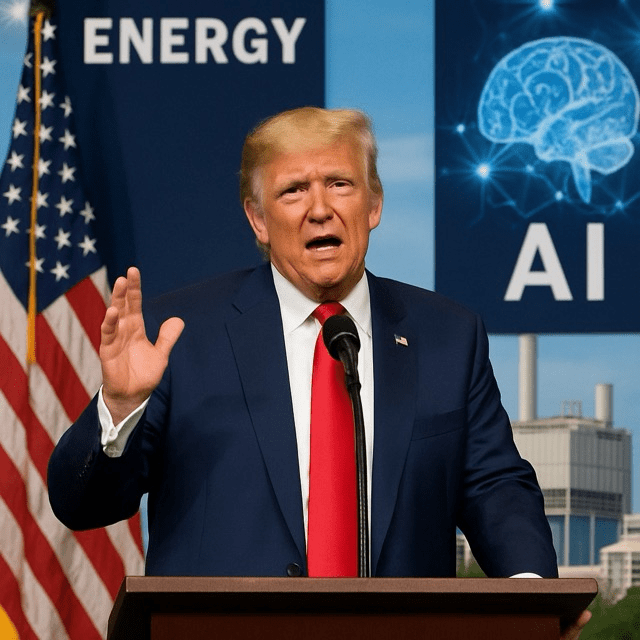
Harrisburg, PA – Speaking at a high-profile business forum in the heart of Pennsylvania’s industrial corridor, President Donald Trump on Thursday announced a sweeping package of energy and artificial intelligence investments worth “tens of billions” of dollars. The pledge, aimed at revitalising economic prospects in key battleground regions, is part of a broader effort by the president to fulfil campaign promises and reverse sliding approval ratings ahead of the 2024 general election.
In his address, Trump detailed plans to allocate substantial federal funding and tax incentives for natural gas infrastructure, renewables, and cutting-edge AI research facilities. “We are going to invest billions and billions in your state – building new power plants, modernising pipelines, and bringing the future of artificial intelligence right here to Pennsylvania,” the president declared to applause from a crowd of executives, union leaders, and local dignitaries.
Central to the announcement was a commitment to expedite federal permitting processes for electric generation facilities, including combined-cycle gas plants and next-generation nuclear reactors. Trump assured that under his administration, environmental and safety reviews would be accelerated without compromising standards. “No more endless red tape,” he stated. “You’ll get permits faster than ever before, and you’ll see those projects built in record time.”
Pennsylvania’s economy has long hinged on its rich energy resources and manufacturing base. The Marcellus Shale region, which supplies a significant portion of America’s natural gas, stands to benefit directly from enhanced pipeline capacity and processing plants. Simultaneously, Governor Josh Meyer praised the AI investment component, noting that “world-class research institutions” in Pittsburgh and Philadelphia would partner with private firms to develop new applications in healthcare, logistics, and cybersecurity.
Economic analysts reacted to the president’s remarks with cautious optimism. Dr. Elena Rodriguez, an energy economist at Penn State University, commented: “If executed effectively, accelerated permitting and targeted investment could lower energy costs, create thousands of jobs, and enhance regional competitiveness. However, the devil will be in the details—particularly the balance between speed and rigorous environmental oversight.”
Union representatives, long supporters of robust job creation in energy and manufacturing sectors, welcomed Trump’s emphasis on employment. Sean O’Malley, president of the Pennsylvania Building Trades Council, highlighted that infrastructure projects typically yield high-paying union roles. “This is a welcome commitment,” O’Malley said. “We need concrete timelines and assurances that domestic, union labor will be at the forefront of these developments.”
On the AI front, the president announced grants for university research centres and tax credits for tech start-ups that leverage machine learning to address challenges in agriculture and public health. The White House released a fact sheet indicating that the initiative could foster the creation of at least 5,000 specialized positions over the next five years, ranging from data analysts to robotics engineers.
Critics from the environmental community voiced concerns over the administration’s dual focus on fossil fuels and deregulation. Sierra Club spokesperson Melissa Greene argued that fast-tracking gas and nuclear facilities without stringent emissions checks could undermine climate goals. “We urge the president to prioritise truly clean energy solutions, like solar and wind, and enforce rigorous environmental standards,” Greene said in a statement.
Despite opposition, the president’s visit appeared calculated to sway undecided voters in a state that narrowly backed him in the 2020 election. Campaign insiders report that the economic message—centred on job creation and regional investment—resonates strongly in working-class and suburban communities grappling with industrial decline.
Trump’s Pennsylvania trip also included meetings with local business leaders and a tour of a steel mill in Bethlehem, where he lauded domestic manufacturing. “We’re bringing back steel, bringing back energy, and we’re leading the world in technology,” he proclaimed as sparks flew from a live welding demonstration.
Looking ahead, the administration plans to introduce formal regulations to codify the expedited permit timelines, with proposed rulemaking expected later this year. Republican lawmakers in Congress have signalled support for legislation to enshrine these provisions, while Democratic counterparts have called for safeguards to ensure community input and environmental reviews remain robust.
As the forum concluded, Trump reaffirmed his broader economic agenda—promoting American energy independence, bolstering advanced industries, and delivering jobs to regions that have seen factories shuttered and wages stagnate. “We’re not just making promises; we’re writing history,” he said, before departing under tight security to the next stop on his campaign trail.
Whether the president’s grand investment scheme will translate into tangible economic gains and improved approval remains to be seen. For now, Pennsylvanians have been offered a bold vision of revitalisation, punctuated by pledges of prosperity, innovation, and rapid bureaucratic reform.
 The Tower Post