Land sales in China’s lower-tier cities have plummeted to their lowest levels since at least 2011, exposing deeper cracks in the country’s property sector
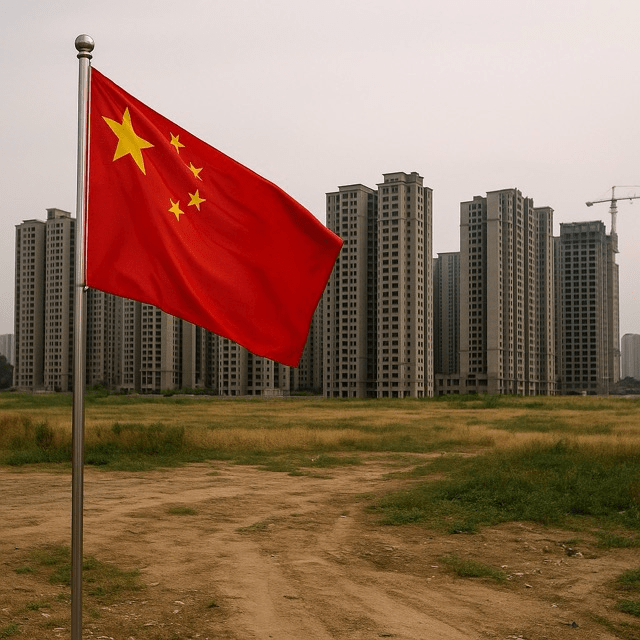
A fresh wave of concern is sweeping through China’s property sector as land sales across the country’s smaller and less affluent cities plunge to their lowest levels in over a decade. According to recent government data, revenue from land sales — a crucial source of income for local governments — has declined to its weakest point since at least 2011, raising alarm over the sustainability of regional finances and the broader health of the Chinese real estate market.
In a nation where property has long been viewed as a pillar of growth, the sharp drop in land transactions underscores the profound challenges facing lower-tier cities. Unlike the wealthier metropolitan hubs of Beijing, Shanghai, or Shenzhen, these smaller urban centers lack the economic resilience and investor confidence needed to weather a sustained downturn.
The causes of the slump are manifold. Beijing’s ongoing crackdown on leverage in the property sector, aimed at curbing excessive speculation and debt accumulation, has drastically reduced the ability of developers to purchase land. At the same time, weak housing demand in less developed areas has made land investment increasingly unattractive.
“The land market in Tier 3 and Tier 4 cities has essentially frozen,” said a Shanghai-based analyst. “Developers are reluctant to commit capital in regions where property sales are stagnant and prices are falling.”
This situation poses a dual threat: to the solvency of local governments, many of which rely heavily on land sales for budgetary funding, and to employment in construction and related sectors, which have already been hit by the collapse of major developers like Evergrande.
With fewer land transactions, local authorities are struggling to maintain public services and infrastructure investments. The fiscal strain is also complicating Beijing’s broader efforts to stimulate the economy without reigniting a dangerous real estate bubble.
Some officials are quietly pushing for policy relaxation to boost developer activity and stabilize prices. However, the central government remains cautious, wary of reigniting the debt-driven growth model that contributed to the current malaise.
In the absence of bold policy moves or a sudden resurgence in demand, many analysts expect land sales to remain depressed through the second half of the year. As a result, the gap between China’s prosperous megacities and its struggling hinterlands may widen further.
For China’s vast landscape of smaller cities, once buoyed by the dream of urbanization and middle-class aspiration, the new reality is sinking in: the land boom may be over, and what lies ahead could be years of financial reckoning.




 The Tower Post