More than 100 people are being killed each day in Israeli air raids, many while waiting for food, according to local reports
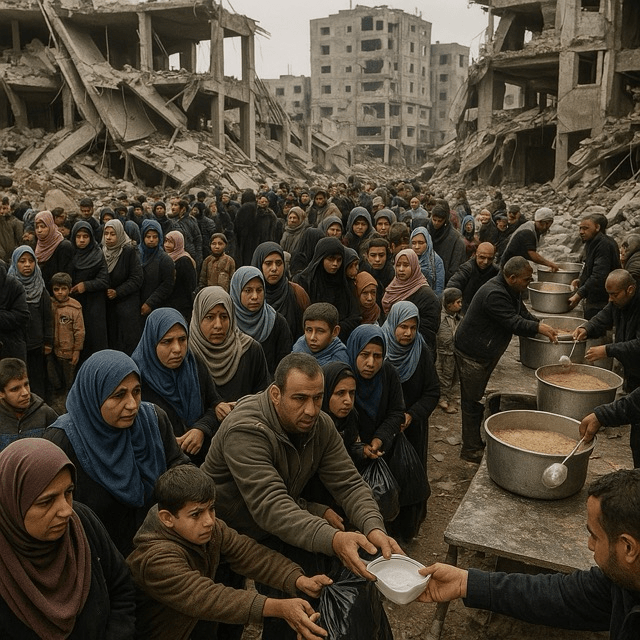
A humanitarian catastrophe is unfolding in Gaza as daily air raids by Israeli forces claim the lives of more than 100 people, most of them civilians and many reportedly killed while waiting in line for food aid. The relentless bombardment, now in its tenth consecutive month, has left residents trapped in a deadly cycle of violence, hunger, and despair.
Local health officials and aid organizations describe scenes of devastation near food distribution centers and shelters. “People were queuing up for bread when the missile struck,” said one volunteer with a local NGO. “Bodies were everywhere — many of them women and children.”
The United Nations and humanitarian groups operating on the ground have repeatedly warned that the situation in Gaza is spiraling out of control. With food and medical supplies running dangerously low, large crowds have begun forming daily around trucks carrying humanitarian aid. These gatherings, often in open areas with little shelter, have become frequent targets in the ongoing conflict.
The Israeli military has stated that it targets militant infrastructure and accuses Hamas of operating in civilian areas. However, the scale of civilian casualties has raised international concern. The UN Secretary-General has called for an immediate ceasefire and an independent investigation into attacks on aid distribution sites.
“These are not isolated incidents,” said a spokesperson for Doctors Without Borders. “There is a pattern emerging where civilians — desperate for food — are paying the highest price.”
Gaza’s population, already impoverished before the latest escalation, is now facing extreme levels of food insecurity. A recent report by the World Food Programme stated that more than 80% of residents are surviving on one meal or less per day. The blockade of border crossings and repeated attacks on infrastructure have further hindered the delivery of basic necessities.
Survivors speak of unbearable conditions: families sheltering in collapsed buildings, children digging through rubble in search of water, and hospitals functioning without electricity or anesthetics. “We no longer fear death — we expect it,” said Ahmed, a father of three waiting near a food truck in central Gaza. “All we want is bread for our children.”
Calls for an international response are growing louder. Several humanitarian agencies have urged the UN Security Council to intervene, while protests have erupted in cities across Europe and the Middle East demanding an end to the violence.
Despite mounting pressure, a lasting solution remains elusive. Ceasefire negotiations have stalled, and efforts to establish humanitarian corridors have faced logistical and political obstacles. In the meantime, the people of Gaza continue to wait — for food, for aid, and for peace that feels increasingly out of reach.
As the world watches, the question lingers: how many more must die waiting for a loaf of bread?




 The Tower Post