The Israeli strike on the Catholic Church of the Holy Family in Gaza kills three and injures Father Romanelli, prompting protests from Pope Leo and President Trump—and a rare apology from Prime Minister Netanyahu.

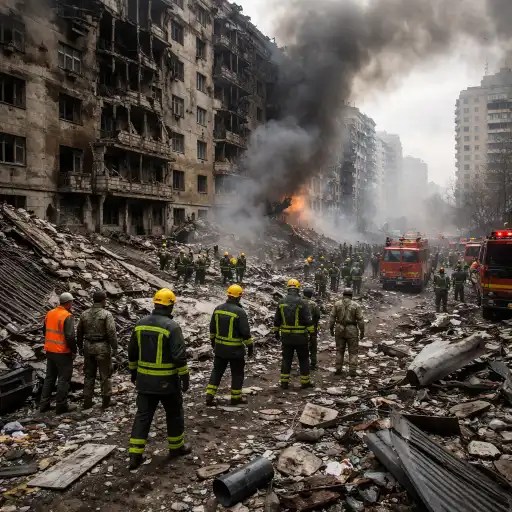
On a quiet Sunday morning in Gaza City, worshippers gathered at the historic Catholic Church of the Holy Family when a precision-guided munition tore through the sanctuary, killing three parishioners and wounding the parish priest, Father Matteo Romanelli. The incident, which the Israeli military says targeted a nearby militant hideout, has reverberated around the world, igniting fierce condemnation from religious and political leaders alike.
Casualties and Context
According to Gaza’s Health Ministry, three civilians—a mother, her teenage son, and an elderly church volunteer—died instantly in the blast. Father Romanelli suffered shrapnel wounds and was rushed to Al-Shifa Hospital, where he remains in stable condition.
The Church of the Holy Family, built in the mid-20th century, has long served as both a house of worship and a community center for Gaza’s small Christian minority. Witnesses report that the building displayed no signs of military activity, and parishioners have denied any connection to armed groups.
Global Outcry
News of the bombing was met with immediate outrage. Pope Leo, in a rare public rebuke of Israeli actions, condemned the strike as “a grave affront to human dignity and the sanctity of sacred spaces.” The Vatican’s Secretary of State, Cardinal Pietro Parolin, echoed the sentiment, warning that it was “legitimate to doubt” Israel’s claim that the church was not the intended target.
In Washington, President Trump joined the chorus of condemnation. “Attacking a church in wartime is unconscionable,” he tweeted. “I urge all parties to show restraint and protect civilians and religious sites.” His comments marked one of his strongest criticisms of Israel since taking office.
Netanyahu’s Response
Faced with mounting diplomatic pressure, Prime Minister Benjamin Netanyahu personally phoned Pope Leo to offer his “deepest apologies” and to clarify that the bombing was a tragic mistake. During the call, Netanyahu extended a formal invitation for the pontiff to visit Israel, a move analysts see as an effort to mend ties with the Catholic Church.
An Israeli Defense Forces (IDF) spokesman stated that the strike was aimed at an underground tunnel used by militants, located roughly 200 meters from the church. He expressed regret for the civilian loss and pledged a full review of targeting procedures.
Vatican’s Unvarnished Dismay
Cardinal Parolin did not mince words, emphasizing that “accidents” of this magnitude cannot be dismissed without an independent, transparent investigation. He called on Israel to cooperate fully with international observers and stressed the importance of safeguarding religious heritage in the conflict zone.
For Gaza’s Christian community—numbering fewer than 2,000 people—the bombing represented yet another blow in a conflict that has increasingly blurred the lines between civilian and combatant.
Broader Implications
International law protects places of worship during armed conflict, yet each day brings new reports of damage to schools, hospitals, and mosques in Gaza. Experts warn that continued attacks on civilian infrastructure risk fueling further radicalization and eroding hopes for a negotiated peace.
As diplomats call for calm, church bells in Gaza fell silent. For Father Romanelli, the path to recovery will be long, and for the families of the victims, justice may demand more than words of regret.
Whether Prime Minister Netanyahu’s apology will placate global criticism remains uncertain. One thing is clear: the bombing of the Church of the Holy Family has become a symbol of the war’s human toll—a reminder that even places of sanctuary are not immune from the ravages of conflict.


 The Tower Post