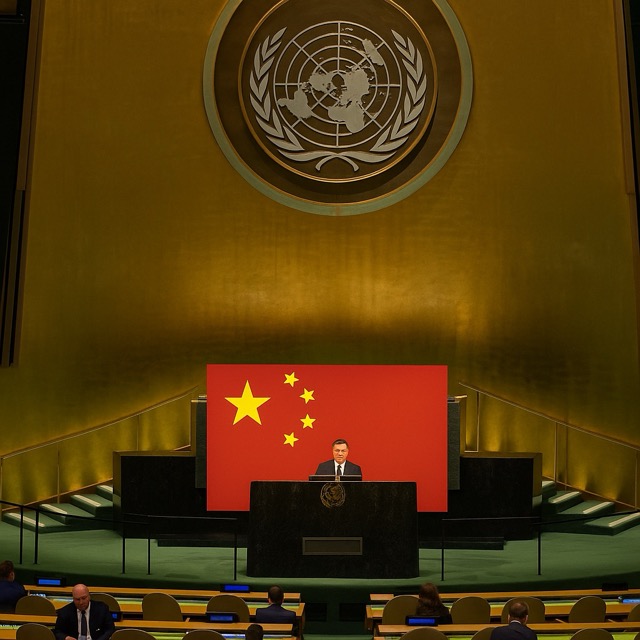
China exploits U.S. disengagement to deepen its sway in the United Nations
New York – In recent months, China has stepped up efforts to reshape the power dynamics of the United Nations, capitalizing on President Donald Trump’s retreat from multilateralism to embed Beijing-friendly officials across key agencies and advance its global agenda. Western diplomats monitoring the UN80 reform process warn that the Chinese government is systematically leveraging staffing, funding and diplomatic coalitions to tilt decision-making in its favor.
According to internal UN data reviewed by the Financial Times, China’s representation in UN professional ranks has surged by 15 percent over the past year. While Beijing still trails the United States in overall UN staffing, it has outpaced nearly every other permanent Security Council member in recruitment and promotions, placing nationals in strategic posts at the International Telecommunication Union and the World Health Organization.
Beyond personnel changes, China has increased its voluntary contributions to specialized UN agencies, allowing it to earmark funds for projects aligned with its Belt and Road and digital-governance initiatives. In Geneva, for instance, Beijing has underwritten conferences on “equitable Internet governance,” a phrase that diplomats say serves as a Trojan horse for expanding China’s model of cyber-sovereignty. Sources on the UN budget committee report that Chinese funding now constitutes nearly 8 percent of voluntary contributions—up from 6 percent a year ago—while U.S. contributions have declined correspondingly.
China’s diplomatic corps has also been forging new alliances within the UN’s General Assembly, courting the Group of 77 and Non-Aligned Movement with promises of infrastructure financing and policy support. Diplomats from small island nations and African states say they have received expedited Belt and Road loans in exchange for backing Chinese resolutions—or blocking Western-initiated measures on human rights and transparency. One Caribbean representative told Reuters, “We needed new roads, ports, and telecommunications. China delivered—so we voted with them.”
Western envoys caution that the appointment of Chinese nationals to senior roles—including Resident Coordinator positions in countries like Ethiopia and envoy slots on climate and digital policy—poses a long-term challenge to impartiality at the UN. An anonymous European diplomat lamented, “The very architecture of the UN is being subtly reengineered. When more secretariats think like Beijing, you get decisions that prioritize state sovereignty over individual rights.” The diplomat urged G7 countries to develop coordinated measures to counter this shift.
Donald Trump’s UN envoy pick, former Congressman Mike Waltz, has signaled a tougher U.S. posture, vowing to counter China’s advances if confirmed by the Senate. Waltz, echoing administration talking points, criticized the UN for drifting from its founding peacekeeping role and called for a 20 percent staff reduction to curb Beijing’s influence. “The U.S. must reassert its leadership,” Waltz told lawmakers on July 15, noting that America still covers 22 percent of the UN’s regular budget and 27 percent of peacekeeping expenses.
Yet Trump’s broader scaling back of U.S. engagement—his administration paused or withdrew funding from multiple UN programs, from climate initiatives to the Human Rights Council—has left a void that Beijing is eager to fill. A recent Senate Democratic report warned that the lack of a coherent U.S. strategy has allowed China to expand its sway in UN bodies in ways detrimental to American economic and security interests. Lawmakers urged Washington to restore funding and adopt a unified diplomatic offensive to reclaim influence.
As the UN navigates budget cuts and reform under Secretary-General António Guterres’ UN80 plan, diplomats say the stakes have never been higher. China’s methodical recruitment, financial diplomacy and coalition-building represent a long game—one that risks weakening the UN’s liberal underpinnings if unchecked. With the 80th anniversary of the United Nations approaching, experts warn of a multipolar UN where Beijing plays both referee and contender.
Key Facts at a Glance
Staff surge: China’s UN professional ranks grew by 15 percent in 12 months; second only to the U.S. among Security Council members.
Financial footprint: $500 million pledged to WHO; China supplies 8 percent of voluntary UN contributions vs. 6 percent from the U.S.
Strategic posts: Chinese nationals installed in senior roles at ITU, WHO, resident coordinator offices, climate and digital envoys.
Diplomatic coalitions: Beijing secured the 2027 World Radiocommunication Conference, cementing its agenda-setting power.
U.S. response: Nominee Mike Waltz promises to counter Chinese expansion; Democrats call for reversing Trump-era budget cuts.

 The Tower Post