July 2025 political update: Chancellor Merz’s fledgling grand coalition faces polls, policy fissures and a restless far‑right
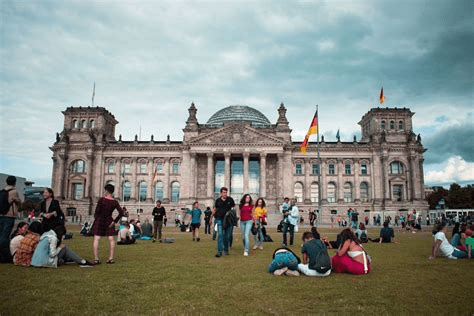
Berlin — Five months after Germany’s snap election upended the political chessboard, Friedrich Merz’s newborn grand coalition is already showing hairline cracks. The conservative chancellor spent the week of 18 July touring TV studios and the Federal Press Conference to insist his CDU/CSU–SPD partnership has a “stable foundation.” Yet the numbers tell a harsher story of fragile majorities, sliding approval ratings and an opposition hungry for missteps.
February’s ballot, triggered by the 2024 collapse of Olaf Scholz’s traffic‑light government, delivered a fragmented Bundestag: the CDU/CSU bloc came first on 28.5 percent, the far‑right Alternative für Deutschland (AfD) surged to 20.8 percent, and the Social Democrats slumped to a historic low of 16.4 percent. After tortuous negotiations and failed overtures to the Greens and the nascent Bündnis Sahra Wagenknecht (BSW), Merz and SPD leaders Saskia Esken and Lars Klingbeil unveiled a grand‑coalition deal on 9 April.
That alliance almost collapsed out of the gate. On 6 May the Bundestag stunned observers by denying Merz an outright majority in the first chancellor vote—the first such rebuff in post‑war history. He scraped through on the second ballot with 325 of 630 votes, a reminder that up to 18 coalition MPs were already in open revolt. The cabinet was sworn in on 8 May; within hours, the AfD declared the government “DOA”.
Fast‑forward ten weeks and public scepticism is deepening. A YouGov survey published 17 July found only 22 percent of voters perceive improvements since Merz took office, while 32 percent see deterioration and 37 percent no change at all. The same poll shows just 17 percent agreeing with Merz’s claim that his is “one of the best governments in decades.” Even among Union supporters, barely half share his optimism.
The coalition’s first major skirmish erupted over the confirmation of supreme‑court nominee Frauke Brosius‑Gersdorf, an academic lawyer proposed by the SPD. Conservative rebels objected to her stances on abortion and vaccine mandates, forcing a postponement of the vote and provoking rare public scolding from veteran CDU whip Jens Spahn. The debacle emboldened AfD leaders Alice Weidel and Tino Chrupalla, who brand the coalition a ‘paper tiger’.
Fiscal politics pose an even sterner test. Merz inherited a slowing economy and a record‑high public debt ratio of 69 percent of GDP. On 18 March the Bundestag approved a €1 trillion “Future Germany” spending bill, stuffed with defence, rail and green‑tech investments. Now finance minister Carsten Linnemann must draft the 2026 budget without breaching the constitutional debt brake—a feat that will require €44 billion in savings or new revenue. Early leaks suggest cuts to ministry programmes, an end to the electricity‑tax rebate for households and a controversial surcharge on high‑income earners; the SPD warns it will not support what it calls “austerity by stealth.”
Energy is the second fault line. While the coalition agreed to prolong three nuclear plants until 2030, CDU backbenchers demand looser emissions targets and a slower coal exit; SPD ministers counter that reversing green‑transition deadlines would erode Germany’s credibility in Brussels and jeopardise EU climate funds. Industry lobbies, meanwhile, complain of ‘policy ping‑pong’ that discourages investment.
In foreign affairs, Merz has largely mirrored Scholz’s Zeitenwende: steadfast support for Ukraine, sharper rhetoric toward Moscow and a pledge to raise defence spending to 2.5 percent of GDP by 2027. But a looming Donald Trump comeback in Washington has revived doubts about Europe’s security umbrella. Defence Minister Boris Pistorius is pressing for a €15 billion supplement to the 2025 budget to accelerate Patriot and F‑35 procurement—another potential fissure with the SPD left.
Opposition forces sense blood in the water. AfD polls at a stubborn 21–22 percent nationally and leads in three eastern states heading into autumn elections. On the centre‑left, a rejuvenated Greens leadership is contesting every climate rollback, while BSW siphons SPD protest votes with its blend of populism and old‑left economics.
What next? Merz insists dissolution is “off the table,” but under the Basic Law he could call another election should the budget collapse or a no‑confidence vote succeed. SPD strategists dismiss the threat as bluff: fresh polls suggest the coalition would lose its majority, handing AfD king‑maker clout. For now, the chancellor must nurse a wafer‑thin majority through July’s legislative sprint and pray his first 100‑day narrative survives the summer recess.
Key Facts – July 2025
Government: Grand coalition (CDU/CSU + SPD) sworn in 8 May 2025; majority 328/630 seats.
Chancellor election: Merz elected in second ballot, 6 May 2025, with 325 votes.
Public mood: 22 % feel improvement, 32 % deterioration, 37 % no change (YouGov, 11–14 July).
Budget horizon: €1 tn multi‑year investment plan approved; 2026 draft due 30 Aug, aims to hit debt brake by 2028.
Opposition polling: AfD ~21 %; Greens 12 – 13 %; BSW 5 %.
Whether Merz’s “great experiment” stabilises or sinks will hinge on three numbers: the budget deficit, his fractious majority—and the AfD’s relentless climb. Germany has entered an uneasy truce between mainstream pragmatists and insurgent populists. July 2025 may be remembered as the month that truce began to fray.


 The Tower Post