As IDF forces roll into Deir al‑Balah, the Vatican sides with Palestinians and 25 nations urge an immediate halt to the war
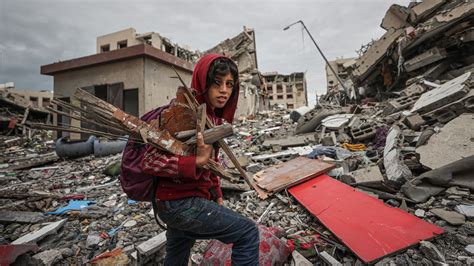
Jerusalem — Israeli forces unleashed what senior commanders are calling the “decisive phase” of the 21‑month Gaza offensive on Monday, sending columns of Merkava tanks, armored bulldozers and mechanized infantry into Deir al‑Balah, the only major city in the enclave that had so far been spared a full‑scale ground assault. The push was preceded by a 48‑hour aerial barrage of drones and F‑35 strike fighters that Gaza’s Health Ministry said killed at least 134 people in a single day, bringing the territory’s death toll above 59,000 since the war began in October 2023.
Residents described overnight skies lit by constant air‑to‑ground missile flashes and the whine of unmanned aerial vehicles as they hovered over evacuation corridors. “It was like noon at midnight,” said Umm Khalil, a mother of four reached by mobile phone while walking north toward the Nuseirat camp. “The drones never leave and the tanks followed at dawn.” Videos posted by local journalists showed Israeli armored combat‑engineering vehicles flattening rows of homes to widen access roads, a tactic the Israel Defense Forces (IDF) says is designed to destroy tunnel shafts and clear lines of fire.
Rear Adm. Daniel Hagari, the IDF’s chief spokesperson, framed the operation as a final effort to dismantle what Israel insists are the last intact Hamas battalions and to rescue an estimated 20 of the 50 remaining Israeli hostages whom intelligence believes are being held in underground cells beneath Deir al‑Balah. “We are applying overwhelming force—on land, at sea and from the air—to collapse the enemy’s final stronghold,” Hagari told reporters at a briefing outside army headquarters in Tel Aviv. He declined to confirm whether the incursions mark the end of major combat, saying only that Israel “will fight as long as Hamas fights.”
Human‑rights monitors reported at least nine separate strikes on aid distribution points over the weekend, including one that witnesses said killed 80 people waiting for flour coupons outside a UN warehouse. The IDF said it fired only “warning shots” after militants blended into the crowd, a claim rejected by UNRWA and the International Committee of the Red Cross, which jointly warned of “systematic obstruction” of humanitarian relief. With 88 percent of Gaza now under evacuation orders, according to the UN Office for the Coordination of Humanitarian Affairs, more than 2 million people are crammed into 12 percent of the territory, and UNICEF warns that infant deaths linked to malnutrition are “spiraling.”
The latest assault triggered fresh diplomatic shockwaves. Within hours of the tanks’ entry into Deir al‑Balah, the foreign ministers of 25 nations—among them Australia, Canada, France, Italy, Japan and the United Kingdom—issued a rare joint declaration insisting the war “must end now” and demanding that Israel respect international humanitarian law. The statement also called for unhindered aid access and a “sustainable cease‑fire” that would pave the way for renewed negotiations on a two‑state solution.
Israel dismissed the initiative. Foreign Minister Israel Katz branded the signatories “naïve appeasers” who fail to grasp, in his words, “the existential nature of Israel’s fight against genocidal terror.” Prime Minister Benjamin Netanyahu, facing mounting domestic criticism over the handling of hostage talks, promised to press ahead. “Pressure will not deter us,” he said after a late‑night cabinet meeting. “We will finish the job.”
Perhaps the most striking rebuke came from the Vatican. Pope Leo XIV personally phoned Palestinian Authority President Mahmoud Abbas—known widely as Abu Mazen—on Monday evening to express what the Holy See later described as “deep anguish” over the assault. According to a transcript released by the Palestinian presidency, the pontiff condemned the war’s “barbarity,” echoing language he used in Sunday’s Angelus prayer, and reiterated a plea for the warring parties to “return to the dictates of international law.”
This is the second time in a week that the Vatican has weighed in pointedly on Gaza. Last Thursday the Pope publicly mourned three Gazans killed when an Israeli shell damaged the Holy Family Catholic parish in Gaza City, the Strip’s only Christian place of worship. Vatican diplomats have since been working with Italy and Spain on a resolution they hope to table at the UN Security Council, calling for an arms embargo on both Israel and Hamas and the appointment of a special envoy to investigate alleged war crimes.
Israel’s relationship with the Vatican has been strained before, but never in the era of Pope Leo has the Holy See openly sided so clearly with the Palestinian cause, says Father Paolo Montalbano, a policy analyst at Rome’s Pontifical Gregorian University. “This is not simple moral equivalence,” he said. “The Pope is assigning primary culpability to Israel for the humanitarian collapse, and that is new territory.”
Inside Israel, public sentiment is equally fraught. Families of the remaining hostages staged a candle‑light vigil in Tel Aviv’s Habima Square, chanting “Bring them home” and accusing the government of prioritizing military victory over human lives. Opinion polls published by Channel 12 show 62 percent of Israelis now favor an internationally brokered cease‑fire even if that means Hamas remains partially intact, up from 41 percent in April.
Meanwhile, Gaza’s civilian misery deepens. Surgeons at the Martyr Ayyoub Hospital in Deir al‑Balah said the facility had enough fuel to run operating theaters for only 48 more hours. “We conduct amputations without anesthetics sometimes,” Dr. Ahmed al‑Khaldi said via a satellite phone provided by Médecins Sans Frontières. “When the generators stop, the morgue will become an oven.”
With roads cut, thousands of Palestinians fled toward the Mediterranean coast, hauling mattresses, children and plastic jugs of water. Most had already been displaced multiple times. “There is nowhere left to go,” said Khaled Abu Rami, who set up a makeshift shelter on the sand dunes north of the city. “We are just waiting to die.”
As the offensive grinds on, all eyes turn to Qatar and Egypt, whose negotiators continue shuttle diplomacy to salvage a hostage‑for‑cease‑fire package. U.S. Secretary of State Linda Greenfield, in Madrid for a NATO summit, said Washington supports the 25‑nation declaration but stopped short of threatening consequences. Analysts say the next 72 hours could determine whether Gaza enters an uneasy cease‑fire or descends into an even deadlier final act.
For the moment, Israeli drones still buzz overhead, tanks rumble through shattered streets, and the Gaza Strip—already one of the most densely populated places on earth—edges closer to total ruin. Whether the Vatican’s moral weight and the diplomatic chorus of 25 nations will be enough to halt the bombardment remains, as ever, a question of political will.




 The Tower Post