From economic forecasts to peace agreements, Kigali navigates challenges and opportunities in mid-2025
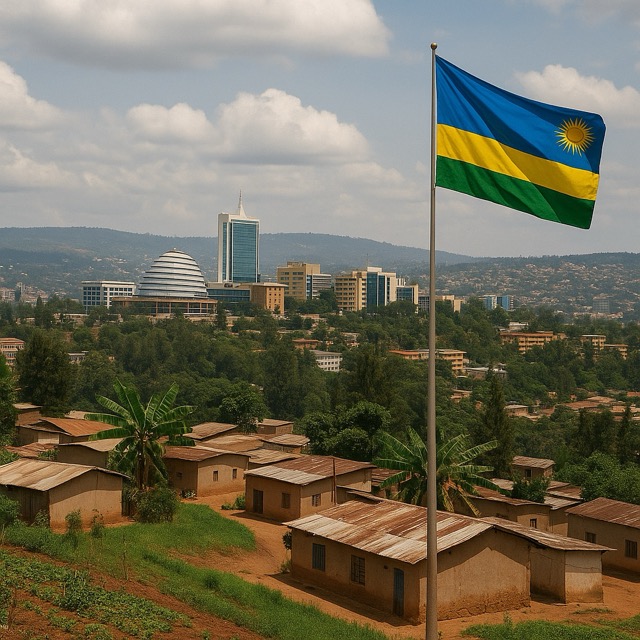
Rwanda’s economy is projected to decelerate to 7.1% growth in 2025, down from 8.9% in 2024, according to Finance Minister Yusuf Murangwa. The government’s draft budget for the 2025/26 fiscal year has increased to 7.03 trillion Rwandan francs ($5.01 billion), reflecting expanded domestic revenue efforts alongside loans and grants. Meanwhile, the World Bank reports that the country maintained a 9.7% real GDP increase in the first half of 2024, driven by tourism and manufacturing, setting the stage for continued momentum into 2025–26.
On the political front, President Paul Kagame’s Rwandan Patriotic Front (RPF) remains firmly in power, though critics point to increasing political repression. Freedom House highlights pervasive surveillance, intimidation, and arbitrary detention of dissenters, while Human Rights Watch documents ongoing restrictions on independent media and the controversial conviction of prison officials for the ill-treatment of detainees at Rubavu prison in April 2025.
In regional diplomacy, Rwanda has taken a leading role in brokering a landmark ‘Critical Minerals for Security and Peace’ deal with the Democratic Republic of Congo. Signed in Washington on June 27, the agreement aims to stabilize eastern Congo by coordinating mineral security and reinforcing state authority—though experts warn that addressing underlying causes such as governance issues and refugee repatriation will be key to lasting success.
The broader DRC conflict saw further progress with a declaration of principles for a permanent ceasefire between the DRC government and the M23 rebel group—accused by Kinshasa of having Rwandan backing. The deal, facilitated by Qatar and the African Union, pledges an immediate ceasefire and sets the stage for formal peace talks, though disputes over troop withdrawals and territory control.
Social and cultural initiatives continue to flourish, exemplified by Rwanda’s hosting of the inaugural East Africa Kiswahili Symposium in Kigali on July 6–7, drawing over 300 participants. The event, convened by UNESCO, underscored Kiswahili’s role in fostering cross-border collaboration and inclusive development across the region.
Tourism, a pillar of the economy, is showing signs of robust recovery with a rebound in international arrivals and new hotel developments in Kigali and national parks. Manufacturing output has also risen, buoyed by government incentives and foreign investment—factors credited by the World Bank for bolstering first-half growth and supporting the government’s optimistic outlook for 2025–26.
Human rights organizations continue to monitor Kigali’s record closely. In July, Human Rights Watch submitted evidence to the UN Universal Periodic Review, highlighting concerns over freedom of expression, extraterritorial repression of exiled critics, and the need for judicial reforms to address allegations of torture and forced disappearances in previous years.
Looking ahead, Rwanda’s leadership faces the challenge of balancing economic growth targets, regional diplomacy commitments, and domestic calls for political liberalization. With net-zero strategies and Vision 2050 development goals on the horizon, the government’s ability to address governance critiques and sustain investor confidence will determine whether Kigali’s current momentum translates into long-term stability and prosperity.


 The Tower Post