Berlin and Paris unite Europe to confront Trump administration through targeted economic measures
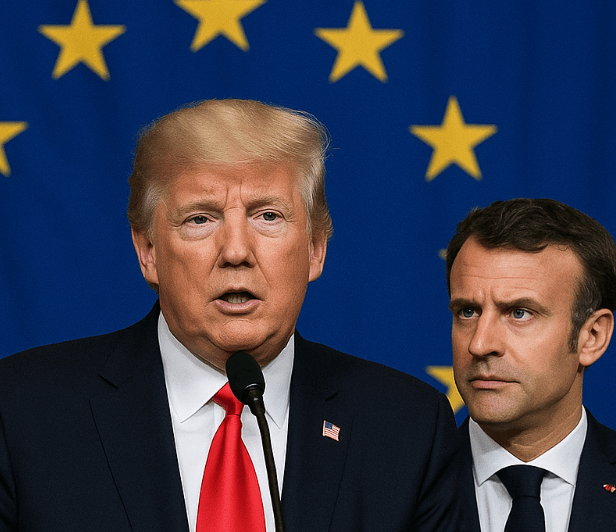
Germany, which once sought diplomatic avenues to resolve trade tensions with former President Donald Trump, has shifted its approach and is now spearheading a stronger stance within the European Union. Alongside France, Germany is rallying EU member states to back retaliatory tariffs against U.S. businesses if Washington refuses to compromise on controversial trade measures.
Insiders familiar with discussions among EU diplomats indicate that Germany’s change in tactics represents a significant departure from Chancellor Angela Merkel’s previously cautious diplomatic approach. Germany had originally been hesitant to escalate tensions, prioritizing negotiation to preserve economic relations. However, patience in Berlin seems to have worn thin amid continuous threats from the Trump administration.
France, under President Emmanuel Macron, has long favored a more assertive approach, advocating retaliatory duties as a method to exert pressure on Washington. Paris argues that the EU must demonstrate it is not a passive actor in global trade and is prepared to defend its interests vigorously.
“Germany’s alignment with France on this issue sends a powerful message to Washington,” said Julia Leclerc, a trade policy analyst based in Brussels. “It shows unity and determination within Europe, which could compel the Trump administration to reconsider its aggressive trade posture.”
The two economic powerhouses are seeking widespread backing from fellow EU members, hoping to solidify a united front that Washington cannot ignore. Countries previously hesitant about retaliatory measures, including the Netherlands and Sweden, are reportedly beginning to consider backing Germany and France’s stronger stance.
The shift comes in response to sustained U.S. threats to impose additional tariffs on European products, ranging from automobiles to agricultural goods. Europe fears these tariffs could severely disrupt the continent’s export-driven economies, particularly Germany’s automotive sector and France’s luxury goods market.
European leaders hope that clearly communicated retaliatory measures will provide sufficient leverage to return the Trump administration to the negotiating table under more favorable conditions. “We need to make sure Washington understands that protectionism has a price,” explained Martin Schäfer, an economist specializing in transatlantic trade relations.
European Commission President Ursula von der Leyen recently reiterated Europe’s preference for dialogue over escalation, but acknowledged the EU must be ready to respond firmly if provoked. “Europe stands ready to protect its economic interests,” von der Leyen stated, signaling that the bloc is preparing concrete actions behind closed doors.
Despite Germany’s new assertiveness, some within the EU warn against escalating tensions, cautioning that a trade war would harm businesses and consumers on both sides of the Atlantic. Nevertheless, the consensus emerging among EU leaders is that Washington’s hardline approach necessitates a firm, united European response.
As the clock ticks and negotiations stall, European capitals will watch carefully, prepared to deploy retaliatory measures that could significantly reshape transatlantic trade dynamics.


 The Tower Post