Egyptians mark historic anniversary amid festivities, while Iran declares a public holiday to conserve dwindling water supplies
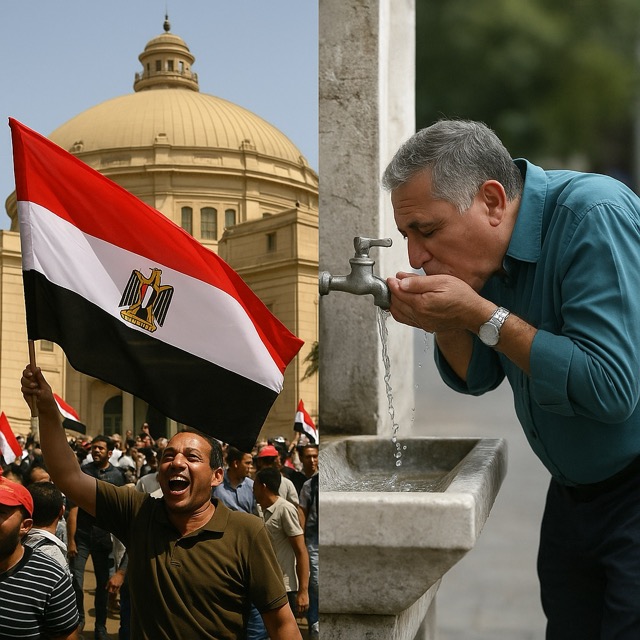
In a tale of stark contrasts across the Middle East, Egypt today marked Revolution Day with celebrations across the nation, while Iran simultaneously declared a public holiday in a drastic move aimed at curbing water consumption amidst a severe shortage.
Egypt’s streets were vibrant and festive as citizens commemorated the anniversary of the 1952 revolution that ended the monarchy and led to the establishment of a republic. Parades, concerts, and fireworks dominated Cairo’s skyline, while Egyptian flags adorned public squares, buildings, and homes across the country. The Egyptian President presided over an elaborate military parade in Cairo, reaffirming national pride and unity.
“This is a day that reminds us of the sacrifices made by previous generations for freedom and independence,” President Abdel Fattah el-Sisi stated during his address. “We celebrate today to honor their legacy and to reaffirm our commitment to a prosperous future for all Egyptians.”
Amidst the celebrations in Egypt, a completely different scenario unfolded in neighboring Iran, where authorities declared today a nationwide public holiday as part of emergency measures to address critical water shortages. The unusual step was announced to reduce water consumption drastically, as reservoirs across the nation hit alarmingly low levels.
The decision to shut down schools, government offices, and many private businesses was aimed at sharply reducing water usage in major urban centers, particularly Tehran, Isfahan, and Shiraz. Iranian President Ebrahim Raisi highlighted the severity of the crisis, urging citizens to conserve water and warning of further potential restrictions if consumption levels did not drop significantly.
“This is not a symbolic gesture, but a critical necessity,” said President Raisi. “Our nation faces unprecedented challenges due to drought, and collective action is needed to overcome this environmental emergency.”
The public holiday decision underscores the severity of Iran’s worsening water crisis, exacerbated by years of drought, climate change, and inefficient resource management. Reports indicate that multiple reservoirs across Iran have reached dangerously low capacities, prompting urgent action from the government.
Experts warn that without significant rainfall or drastic changes in water management policies, Iran’s water shortage could evolve into a humanitarian and economic crisis, affecting agriculture, industry, and daily life profoundly.
“Today’s measures are just the beginning,” explained Dr. Farhad Karimian, a water management expert from Tehran University. “We need comprehensive reforms in water usage policies, agricultural practices, and public awareness to address the long-term impacts effectively.”
Back in Egypt, the festive mood was undisturbed by regional challenges, reflecting stability and optimism following years of political and economic reforms. Yet, as celebrations continued into the evening, analysts noted the broader regional picture, highlighting the divergent paths and challenges facing Middle Eastern nations.
The juxtaposition of Egypt’s joyous celebrations with Iran’s struggle for environmental sustainability offers a vivid illustration of the diverse realities and pressing challenges confronting the Middle East today.




 The Tower Post