Decision excludes global consultancy giant from a highly profitable emerging market, reflecting growing US-China tensions
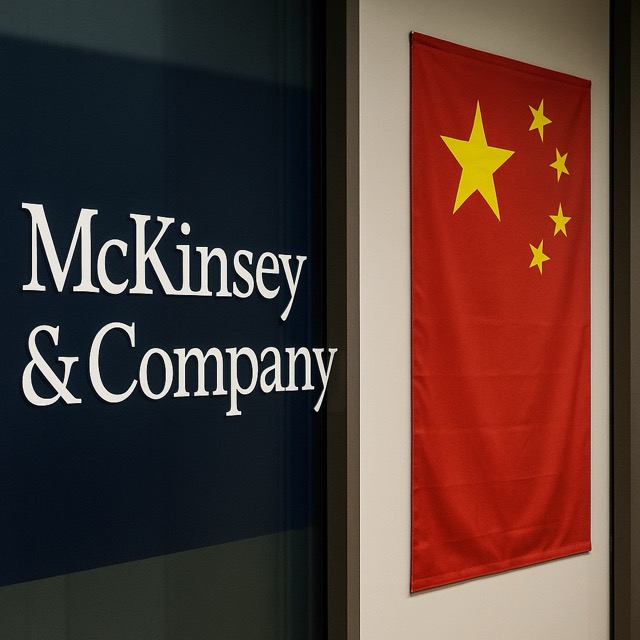
In a significant move reflecting escalating geopolitical tensions, global consultancy powerhouse McKinsey & Company has suspended its generative artificial intelligence (AI) consulting services within China. The decision effectively excludes the firm from one of the country’s most promising and lucrative technology sectors, signaling heightened caution among multinational corporations operating amid strained US-China relations.
Generative AI, known for its ability to create human-like content, is poised to revolutionize industries worldwide, from finance and healthcare to media and entertainment. Consulting firms, including McKinsey, have identified the technology as a critical growth area. However, rising concerns about data security, intellectual property rights, and technological sovereignty have led McKinsey to reassess its engagement within the Chinese market.
A spokesperson from McKinsey stated, ‘Given the evolving geopolitical environment, we have taken the strategic decision to pause our generative AI consulting activities in China. We remain committed to supporting our clients with other services but must navigate carefully in areas involving sensitive technologies.’
This withdrawal underscores the broader implications of escalating tensions between the United States and China, particularly in high-tech industries. The rivalry between the two nations has increasingly seen technology become a battleground, with both sides imposing restrictions and regulations to protect national interests and economic security.
China, which has rapidly advanced in AI research and development, represents one of the largest markets for generative AI technologies, making McKinsey’s decision a significant sacrifice. Experts estimate the Chinese market for generative AI-related services could reach billions of dollars within the next few years, highlighting the financial impact of McKinsey’s choice.
Market analysts speculate that other international consultancy firms may follow McKinsey’s lead, reassessing their strategies due to the tightening regulatory landscape and geopolitical risks. Michael Zhang, an analyst at ChinaTech Insights, remarked, ‘McKinsey’s decision may prompt similar moves from other foreign companies, marking a shift toward caution in their China strategies, especially regarding emerging and sensitive technologies.’
Within China, the government has increasingly prioritized technological self-reliance, advocating for domestic innovation to reduce dependence on foreign technologies. McKinsey’s withdrawal could further accelerate this trend, providing an opportunity for local consultancy firms to expand their influence and capture market share.
The broader consequences of McKinsey’s decision extend beyond business implications. Geopolitical experts warn that the increasing segregation of technological ecosystems may exacerbate divisions, making international collaboration and technology transfers increasingly difficult.
As multinational companies continue to navigate the complex terrain of US-China relations, McKinsey’s decision serves as a stark reminder of how deeply political considerations are reshaping global business strategies. For now, the consultancy giant will focus on less politically sensitive services in China, though the long-term impacts of this move remain uncertain.



 The Tower Post