Once a proponent of global engagement, Marco Rubio now champions isolationism and skepticism toward foreign aid
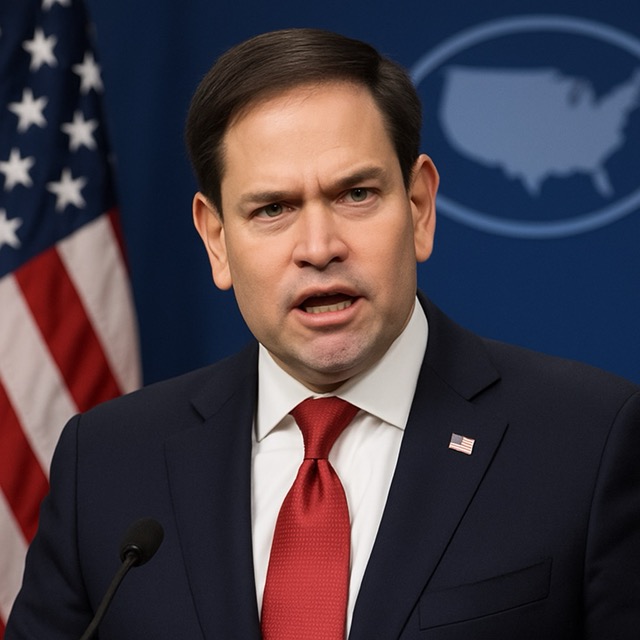
In a striking political transformation, U.S. Secretary of State Marco Rubio has emerged as a key figure aligning with the “Make America Great Again” (MAGA) ethos, marking a significant departure from his earlier advocacy for soft power and global cooperation.
Rubio, once considered a foreign policy hawk with a deep belief in diplomacy, international alliances, and the moral weight of American leadership abroad, now espouses a distinctly MAGA-aligned worldview. His recent speeches, policy decisions, and diplomatic posture suggest a leader increasingly skeptical of foreign entanglements, impatient with traditional aid diplomacy, and focused squarely on U.S. self-interest.
In recent public remarks, Rubio called for a “reassessment of our role in the world,” arguing that “American strength does not mean writing blank checks for the rest of the world.” The comments reflect a clear ideological shift from his 2016 presidential campaign days, when he extolled the virtues of American influence through economic support and strategic partnerships.
This pivot has surprised many of Rubio’s former allies and foreign policy experts who once lauded his commitment to international development and democratic institution-building.
“Rubio’s evolution mirrors the broader transformation of the Republican Party in the Trump era,” said Dr. Elaine Matthews, a political analyst at the Brookings Institution. “There’s a growing emphasis on retrenchment, on prioritizing domestic concerns over traditional global leadership roles.”
Under Rubio’s leadership, the State Department has slashed foreign aid budgets, pulled back from multilateral commitments, and signaled a tougher stance toward allies seen as not contributing enough to shared goals. Critics warn that this approach risks diminishing America’s long-term influence and weakening critical alliances.
Supporters, however, argue that Rubio’s realism is long overdue. “Taxpayers are tired of financing endless programs abroad with little return,” said conservative strategist Mike Halstead. “Rubio is tapping into the national sentiment that foreign policy must serve American interests first.”
Rubio’s rhetoric echoes the “America First” doctrine of former President Donald Trump, with whom the Secretary now maintains close alignment. His trips abroad have emphasized bilateral deals, economic nationalism, and sovereignty over multilateralism. On a recent visit to Latin America, Rubio downplayed democracy-promotion efforts, instead emphasizing border security and trade enforcement.
Despite criticism from traditional allies and foreign policy veterans, Rubio’s transformation has cemented his position within a MAGA-influenced Republican Party. Observers note that the shift could be politically strategic, positioning him for future roles within a party that remains deeply shaped by Trump’s legacy.
Yet the reinvention is not without its consequences. Diplomats and aid organizations report confusion over U.S. goals, with some development projects abruptly defunded. “We’re seeing the effects of unpredictability and diminished trust,” said Fatima Qureshi, a spokesperson for an NGO operating in sub-Saharan Africa.
As global challenges from climate change to conflict demand coordinated international responses, Rubio’s critics warn that an insular America risks ceding influence to competitors like China and Russia.
Still, Rubio shows no signs of slowing down or reversing course. In his latest remarks to a conservative think tank, he declared, “America leads best by example, not by charity.”
For better or worse, Marco Rubio’s transformation signals a new era in U.S. diplomacy—one less concerned with the hearts and minds of the world, and more focused on hard-nosed national calculation.
 The Tower Post