Experts say scaling robotaxi services nationwide demands massive investments in infrastructure, regulation, and technology development.
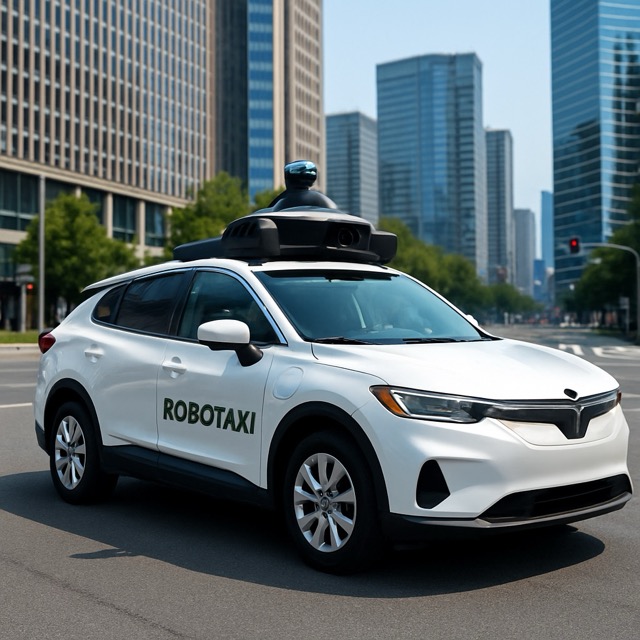
The promise of robotaxis revolutionizing urban mobility is real, but scaling the technology beyond a handful of American cities presents daunting financial challenges. Industry analysts estimate that expanding autonomous taxi services nationwide would require tens of billions of dollars in new investments.
While robotaxis currently operate in limited areas—primarily tech-friendly cities such as San Francisco, Phoenix, and Las Vegas—the dream of nationwide accessibility is still far from reality. Significant investments in infrastructure, vehicle technology, safety regulations, and public acceptance efforts will be essential to move beyond these early deployments.
Experts from the transportation and technology sectors emphasize that the current costs are just the tip of the iceberg. “Initial rollouts are expensive but manageable. The true financial challenge arises when scaling from controlled environments to diverse urban and suburban areas nationwide,” said transportation analyst Michael Stevens.
Major autonomous vehicle (AV) companies like Waymo, Cruise, and Zoox have already invested billions of dollars to develop and deploy initial robotaxi fleets. Yet, according to industry insiders, these amounts pale in comparison to the funds needed for a full-scale national deployment. Infrastructure upgrades alone—such as enhanced roads, traffic management systems, and vehicle communication technologies—could consume billions in public and private capital.
Regulatory hurdles represent another major expense. Federal, state, and local governments have yet to establish unified regulations, complicating the expansion process. Navigating these fragmented regulatory environments demands extensive lobbying efforts and costly legal expertise.
Moreover, public skepticism remains a significant barrier. Convincing the general public that robotaxis are safe and reliable requires sustained investments in public education campaigns, extensive safety demonstrations, and rigorous testing and validation programs.
Nonetheless, there are optimistic signals within the market. Venture capitalists and tech giants continue to invest in robotaxi ventures, betting on long-term profits once these initial barriers are overcome. Companies like Alphabet’s Waymo and General Motors’ Cruise regularly raise funds from investors eager to back the potentially lucrative sector, despite the risks.
However, even these well-funded companies acknowledge that no single entity can shoulder the costs alone. Partnerships between private companies, government bodies, and academic institutions will likely be necessary to achieve the scale required for nationwide robotaxi operations.
As stakeholders grapple with these financial realities, the future of robotaxis hangs in a delicate balance between technological optimism and economic pragmatism. Achieving widespread adoption will undoubtedly be costly, but proponents argue the societal benefits—ranging from improved mobility and reduced accidents to lower emissions—justify the massive investments required.
The coming years will be critical in determining whether robotaxis become a ubiquitous feature of American urban life or remain a niche service confined to the nation’s wealthiest and most technologically advanced cities.




 The Tower Post