From media lawyer to de facto power broker, Zelensky’s chief of staff polarises allies and critics amid fears of authoritarian drift
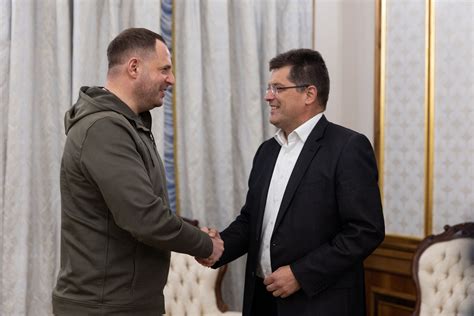
Ukraine’s President, Volodymyr Zelenskyy, remains a globally recognised figure: the former comedian turned wartime leader. But behind the scenes, perhaps no one wields more influence—nor triggers more controversy—than his chief of staff, Andriy Yermak. Once obscure to most Ukrainians, Yermak has become a central figure in policy-making, diplomacy, and internal power plays. Yet his meteoric rise raises fundamental questions about the boundaries between wartime necessity and democratic erosion.
From Filmmaker to Powerhouse
Yermak’s story traces back to the worlds of copyright law and entertainment. A Taras Shevchenko University graduate, he became active in legal counsel for media companies before founding Garnet International Media Group, producing films like Rule of Battle. He met Zelensky in 2011 through shared media interests and later joined his political team. By early 2020, he became Head of the Office of the President and, since the outbreak of full-scale invasion, has coordinated Ukraine’s presidential administration and humanitarian efforts.
Centralising Authority under Wartime Conditions
With Ukraine under martial law, Yermak has solidified his standing as an instrumental architect of wartime governance. Western media describe him as “perhaps the most powerful chief of staff in Ukraine’s history” and FT dubbed him “Ukraine’s other wartime leader,” noting his control over diplomacy, personnel appointments and even military strategy.
National and International Pushback
But this concentration of power has prompted alarm. Independent anti-corruption bodies face subordination to the presidential office under controversial new legislation pushed through in July 2025, triggering mass demonstrations in Kyiv. Critics see the move as centralising power, diminishing judicial independence, and undermining hard-won reforms.
Diplomats and analysts warn that while wartime centralisation may seem pragmatic, it risks undermining democratic institutions post-war. Political observers in Kyiv and Washington have expressed frustration with Yermak’s micromanagement and growing “tsar-like” influence, with some even asking, “Who is calling the shots—Zelenskyy or Yermak?”
Controversies and Concerns
Yermak’s record is not without blemish. Critics point to the botched “Wagnergate” operation in 2020, which some claim was aborted at his order. Allegations of nepotism and judicial interference swirl around his inner circle. The NSDC’s use of politically motivated sanctions—executed without judicial oversight—has been decried as unconstitutional, raising concerns that Yermak may be weaponising governance rather than defending it.
The Tightrope Ahead
Supporters argue that Yermak’s capabilities justify his trust. He helped build international coalitions and secured key diplomatic engagements—like the Swiss peace summit of June 2024—and championed humanitarian initiatives. His rapid decision-making is credited with preserving unity and momentum during crisis.
Yet the debate rages: once the guns fall silent, will these wartime structures adapt or ossify into authoritarianism? Analysts stress that Zelenskyy remains Yermak’s employer—and only he can recalibrate power dynamics. But with Yermak’s appointees now entrenched at the forefront of policy and reform, reversing the centralisation he engineered will not be effortless.
Conclusion
Andriy Yermak is both architect and avatar of Ukraine’s wartime governance: an energetic technocrat whose communication skills, international stature and control over the presidential apparatus have made him indispensable. But his ascent also reveals a tension at the heart of democracies under duress—balancing effective wartime leadership with the preservation of institutional integrity.
For Ukrainians, the question now echoes beyond the battlefield: Can the country reclaim democratic controls once peace returns, or has choice given way to command?


 The Tower Post