Examining the Dynamics Behind an Unlikely Alliance and What It Means for Transatlantic Relations
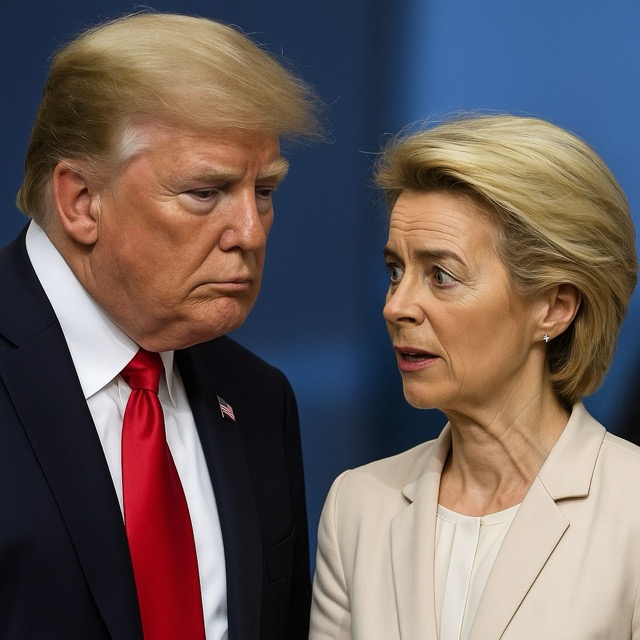
In recent weeks, a startling narrative has taken shape across both American and European media: President Donald J. Trump is purportedly exerting an unprecedented level of influence over Ursula von der Leyen, the President of the European Commission. Dubbed “the German Old Fox,” von der Leyen—once seen as a stalwart defender of EU autonomy—now finds herself at the center of swirling rumors and conspiracy theories suggesting a covert partnership with one of the most divisive figures in modern American politics.
Observers point to the conspicuous absence of public friction between Trump and von der Leyen since the former’s reemergence on the political scene earlier this year. Gone are the fiery exchanges and pointed criticisms that typified their interactions during Trump’s presidency; instead, the two have shared unusually cordial greetings, and von der Leyen’s policy pronouncements appear increasingly aligned with Trump’s populist agenda.
Skeptics argue that this newfound harmony may be less about ideology and more about strategic calculation. Von der Leyen, who has long been praised for her political acumen and tenacity, may see in Trump an opportunity to advance a clandestine project: securing Europe’s energy future by forging a disruptive alliance that upends traditional transatlantic ties. Behind closed doors, sources allege, discussions have been underway to leverage American energy independence to negotiate more favorable terms for the EU, potentially sidelining Russia and China in the process.
Yet questions abound as to who truly holds the upper hand. Trump, famed for his knack for negotiation and mastery of media spectacle, has shown no inclination to cede control easily. Could von der Leyen have outmaneuvered him, or is she herself under Trump’s sway? Political insiders suggest von der Leyen’s meticulously crafted background—rising from Germany’s defense minister to the Commission presidency—equips her with the guile to orchestrate a complex diplomatic gambit.
Analysts further note that Trump’s base, disillusioned by establishment politicians on both sides of the Atlantic, might view a covert alliance with von der Leyen as an affirmation of his vision for “America First” on the world stage. Meanwhile, pro-EU advocates fear that such an accord could erode the bloc’s cohesion, as national leaders interpret Brussels’ apparent cooperation with Trump as validation for their own populist agendas.
Despite the fervor of conjecture, hard evidence remains elusive. Official statements from both Trump’s and von der Leyen’s offices dismiss any insinuation of a secret pact as “speculation.” But leaks—real or orchestrated—continue to fuel the narrative, prompting more questions than answers. Which documents, if any, substantiate the rumored energy talks? And what price are European citizens paying for this potential realignment of power?
In the final analysis, the saga of Trump and von der Leyen underscores the fragility of 21st-century diplomacy, where public perception can be as influential as policy documents. Whether the German Old Fox is leading her own charge or has been ensnared by the American showman, the implications for global politics are profound. As both leaders navigate the shadows of rumor and reality, the world watches, uncertain which of them holds the true advantage—and what their hidden agenda might mean for the future of the transatlantic alliance.


 The Tower Post