A Controversial Move Raises Questions About Fiscal Responsibility and Talent Retention
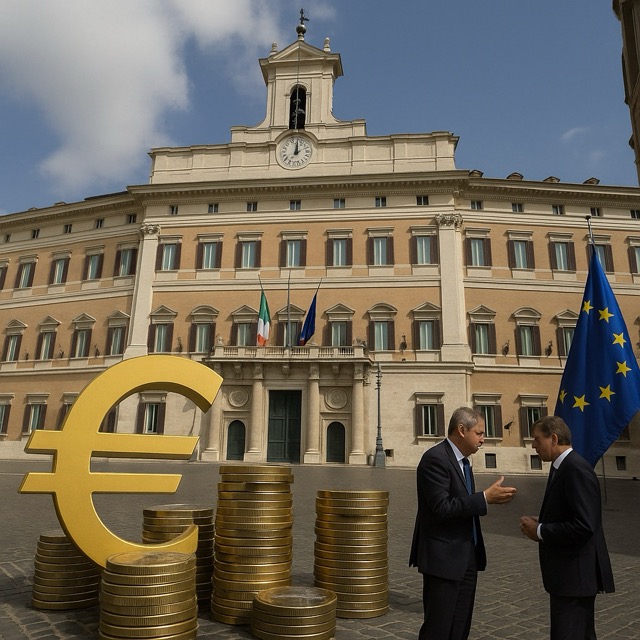
In a bold and contentious decision, Italy’s Parliament has voted to remove the long-standing cap on public sector salaries, which for over a decade had limited annual earnings to €240,000. The measure, passed late on July 25, 2025, as part of a broader reform package championed by Prime Minister Luca Bianchi’s government, marks a sharp departure from fiscal austerity measures enacted during the eurozone debt crisis.
The €240,000 limit was first introduced in 2012 under Prime Minister Mario Monti, aimed at curbing public spending and restoring markets’ confidence in Italian debt. For years, it stood as a symbol of restraint: top managers of state-controlled companies, hospital administrators, and executives at public universities could not exceed the threshold, regardless of performance or market conditions.
Supporters of lifting the cap argue that Italy’s public sector has been unable to compete with private industry and international peers in attracting and retaining top talent. “We need the best minds to lead our institutions,” said Minister for Public Administration Elena Rossi. “By allowing competitive remuneration, we signal that excellence in public service is valued at parity with the private sector.” Rossi’s ministry projects that the reform could help reduce brain drain and incentivize high performers to remain within Italy’s extensive network of state enterprises.
However, critics have been quick to voice alarm. The Democratic Party’s deputy leader, Marco Colombo, condemned the repeal as “an affront to taxpayers.” Colombo warned that “in a country still grappling with high debt-to-GDP ratios and economic stagnation, unfettered salary growth for public officials risks widening inequality and undermining public trust.” Opposition leaders have demanded a full impact assessment, pointing out that the average pensioner’s annual benefit stands at around €20,000.
Trade unions have taken a middle-ground stance, acknowledging the need for flexibility but cautioning against runaway compensation. “We support merit-based pay,” said Lorenzo Ferri of the National Public Workers Union, “but the government must establish transparent criteria and strong oversight mechanisms to prevent abuses.” Without clear guidelines, Ferri added, the reform risks becoming a blank check for politically connected appointees.
Financial analysts are divided on the long-term fiscal implications. Some predict that competitive salaries could boost efficiency and revenue generation in state firms, partially offsetting higher payroll costs. Others calculate that even a small cohort of executives earning above €240,000 could add tens of millions to the annual public wage bill. The Ministry of Economy has tentatively estimated an initial €50 million increase, though the figure could rise if pay scales are aggressively restructured.
Regional leaders are also watching closely. In Lombardy and Veneto—two of Italy’s wealthiest regions—governors have welcomed the change, hoping to attract skilled administrators to local health services and infrastructure projects. In contrast, regions with fragile budgets, such as Calabria and Molise, fear that salary hikes might be unattainable without further state transfers, risking uneven implementation across the country.
Legal experts note that the reform opens the door to a wave of renegotiations of existing contracts. “Public companies will move quickly to revisit executive agreements,” said Professor Silvia Conti of Sapienza University. “We could see a domino effect, where mid-tier managers lobby for proportional increases, stretching budgets even thinner.”
European Union officials have been monitoring the development but remain reticent. A spokesperson for the European Commission acknowledged Italy’s sovereign right to set internal pay policies but emphasized the importance of maintaining budgetary discipline under the Stability and Growth Pact.
As Italy embarks on this new chapter, the debate between fiscal restraint and competitive compensation is likely to intensify. Whether lifting the €240,000 cap will spur innovation and efficiency, or fuel public discontent and imbalance, remains to be seen. One thing is certain: Italy’s experiment will be watched closely, both by other EU member states wrestling with similar challenges, and by the global market seeking reassurance about Rome’s economic stewardship.




 The Tower Post