U.S. President sets a tight deadline, escalating diplomatic pressure on Russia
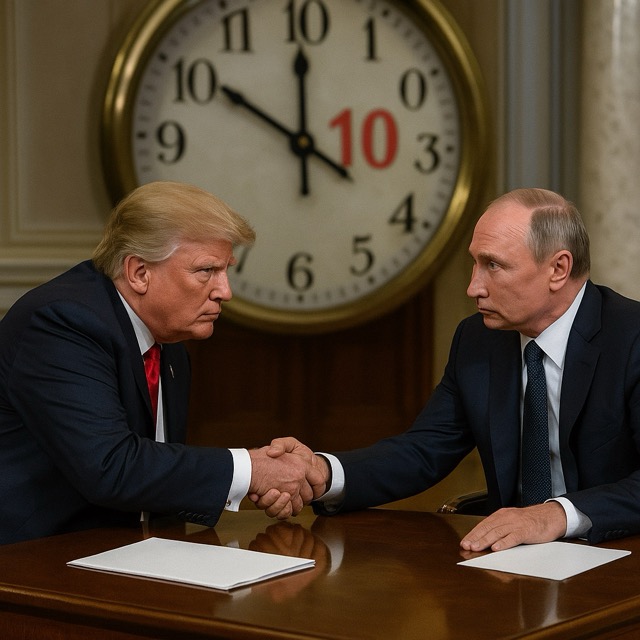
In a move that has sent ripples through international diplomatic circles, President Donald Trump announced a revised ultimatum to Russian President Vladimir Putin, granting him just ten days to cease military operations in Ukraine. The announcement, made from Trump’s Mar-a-Lago estate, represents his latest foray into global affairs and underscores his continued influence on foreign policy debates within the United States.
Trump’s statement departs from his earlier, more lenient timelines, tightening the window by half. “I gave him a month,” Trump explained to gathered reporters, “but we’ve watched too many lives lost and too much destruction. Now it’s ten days—no more excuses.” The dramatic shift in tone has been hailed by some analysts as an attempt to project strength, while others question its enforceability.
According to experts, the ultimatum carries no formal backing from the current U.S. administration, which has maintained a more collaborative stance with NATO allies. Nevertheless, Trump’s announcement has been embraced by segments of the Republican base, who view the president as the only figure willing to take a hard line with Moscow.
In response, the Kremlin issued a muted statement, acknowledging the deadline but dismissing it as “rhetoric from an unofficial source.” Russian Foreign Ministry spokeswoman Maria Zakharova emphasized that only multilateral negotiations, not unilateral deadlines, can resolve the conflict. “Real peace requires dialogue, not threats,” she stated.
European leaders have reacted with caution. German Chancellor Olaf noted that while any push for de-escalation is welcome, setting an arbitrary ten-day limit could risk derailing ongoing diplomatic efforts. French President Emmanuel Macron similarly warned that “we must avoid creating false deadlines that only raise expectations without realistic pathways to enforcement.”
Humanitarian organizations welcomed Trump’s urgency but stressed that ceasefire negotiations must prioritize civilian safety. The International Rescue Committee reported that over three million Ukrainians remain displaced, with many lacking access to basic necessities. “If this ultimatum leads to tangible progress, it could save countless lives,” said IRC spokesperson Sarah Ahmed.
Political strategists see Trump’s announcement as part of a broader strategy to reassert his foreign policy credentials ahead of the 2026 election cycle. “He’s staking a claim as the dealmaker,” commented Dr. Michael Thompson of the Washington Policy Institute. “By setting a short timeline, he’s creating urgency and positioning himself as decisive.”
Back in Moscow, state-controlled media downplayed the ultimatum, focusing instead on domestic solidarity and national security. Russian news outlets highlighted footage of Putin meeting with military commanders, underscoring the message that Russia will not be cowed by external pressures.
As the ten-day clock ticks down, attention now turns to whether any breakthrough negotiations will materialize. Observers caution that without credible enforcement mechanisms, the ultimatum may amount to little more than symbolic posturing. Yet in a conflict marked by stalemate, even symbolic gestures can shift the narrative and apply moral pressure on the parties involved.
Ultimately, the success of Trump’s ultimatum may hinge on its ability to galvanize both international actors and domestic constituencies around a renewed push for peace. With the international community watching closely, the next ten days could prove decisive in shaping the future of Europe’s security landscape.



 The Tower Post