Human rights organizations and leading thinkers break decades-long taboo, demanding accountability from the prime minister
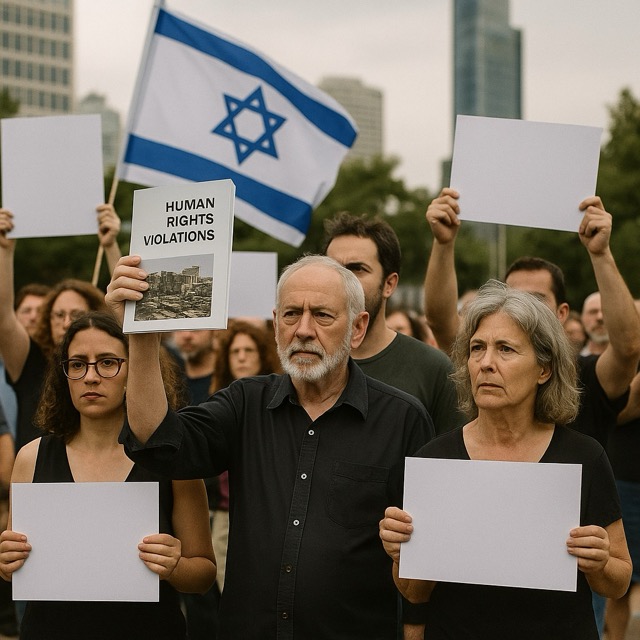
On July 28, 2025, a seismic shift occurred in Israeli public discourse as two of the nation’s most respected human rights organizations—B’Tselem and Physicians for Human Rights–Israel—publicly accused Prime Minister Benjamin Netanyahu of committing genocide in Gaza. Their joint report, released amidst mounting evidence of civilian suffering, marks the first time leading Israeli NGOs have made such a grave charge against their own government, breaking a decades‑long wall of silence surrounding government conduct in the occupied territories.
B’Tselem’s analysis details systematic targeting of civilian infrastructure, including hospitals, water networks, and residential areas. The report contends that Israel’s blockade and military operations were conducted with ‘clear intent’ to destroy the Palestinian population in Gaza as a distinct group. Physicians for Human Rights–Israel corroborated these findings, documenting widespread malnutrition, outbreaks of disease, and the collapse of healthcare services—conditions they argue amount to crimes against humanity.
The NGOs’ unprecedented accusation reverberated across Israel’s political spectrum. Prime Minister Netanyahu’s office swiftly condemned the report as ‘baseless and politically motivated,’ insisting that operations targeted only Hamas combatants and that Israel upheld the highest ethical standards in warfare. Yet, within hours, prominent Israeli intellectuals and former officials voiced their support for the NGOs, signaling a profound shift in public willingness to critique the government’s policies.
Among the voices joining the call for accountability was novelist David Grossman, whose works on grief and conflict have long resonated in Israeli society. Grossman declared that remaining silent in the face of civilian suffering ‘betrays the very values on which the state was founded.’ Acclaimed writer Etgar Keret wrote an op‑ed in Haaretz, stating, ‘We can no longer pretend that war absolves us of moral responsibility’.
Academic circles also erupted. Renowned philosopher Avishai Margalit, author of ‘The Ethics of Memory,’ argued that Israel must confront its actions to preserve its democratic fabric. ‘Denial today sows the seeds of future violence,’ he warned at a Jerusalem symposium calling for an independent inquiry. Speakers from Israeli universities underscored the necessity of scholarly engagement to document and assess government policies without fear of reprisal.
International reaction was swift. The United Nations human rights office welcomed the NGOs’ courage, urging Israel to establish an impartial commission. The European Union’s foreign policy chief, Josep Borrell, described the report as ‘a watershed moment,’ suggesting that the EU would reconsider military assistance pending full transparency and accountability.
Within Israel’s Knesset, opposition leaders seized on the moment. Merav Michaeli, head of the Labor Party, called for Netanyahu’s resignation and pushed a no‑confidence motion. Meanwhile, far-right legislators decried the NGOs as ‘traitors,’ intensifying the polarized debate over national security and civil liberties.
The NGOs’ report arrives against a backdrop of increasing legal pressure on Netanyahu. Earlier this year, the International Criminal Court issued arrest warrants for top officials, including Netanyahu, for alleged war crimes during the 2023–2024 Gaza conflict. Critics argue that domestic acknowledgment of wrongdoing could strengthen international cases and pressure Israel’s judiciary to act.
Public sentiment in Israel appears to be shifting. Opinion polls indicate that 62% of Israelis now support an independent investigation into government actions in Gaza—up from just 35% last year. Civil society groups have organized vigils and solidarity protests in Tel Aviv and Haifa, demanding ‘Truth and Justice’ for Palestinian civilians. The atmosphere suggests that silence may no longer be sustainable.
As Israel grapples with the fallout, the rupturing of its ‘wall of silence’ signals a pivotal moment for its democracy. Whether Netanyahu and his government will engage with these challenges or further entrench their stance remains uncertain. What is clear, however, is that a new chapter of public accountability has begun—one that could redefine Israel’s moral and political landscape for years to come.



 The Tower Post