Bank of England governor and Chancellor clash over fintech’s UK banking ambitions
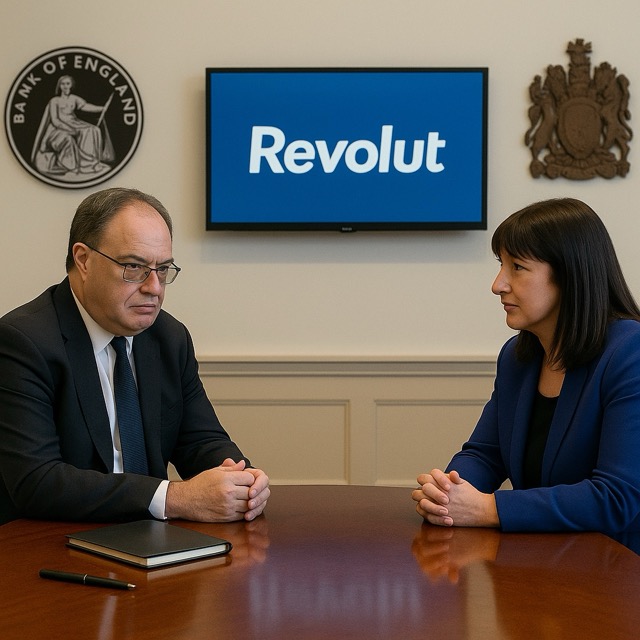
In late July 2025, a high-profile dispute erupted between the Bank of England and the UK Treasury when Governor Andrew Bailey intervened to halt a three‑way meeting that Chancellor Rachel Reeves had sought to arrange between financial watchdogs and fintech giant Revolut. The proposed gathering was intended to address Revolut’s longstanding quest to secure a full UK banking licence and discuss regulatory pathways for the firm, which boasts over 18 million customers worldwide.
Reeves, who has positioned herself as an advocate for ‘regulation for growth’, viewed the meeting as an opportunity to bridge dialogue between the Prudential Regulation Authority (PRA), the Financial Conduct Authority (FCA), and Revolut’s leadership. Her office believed that direct engagement could clarify outstanding concerns and expedite the licensing process for the $65 billion‑valued fintech, which has cited “extreme bureaucracy” as a hurdle to its UK expansion.
However, Bailey, citing the Bank’s operational independence and the necessity to shield regulatory processes from political influence, instructed that the meeting be called off. According to insiders, he feared that involvement of the Chancellor risked politicising the Bank’s prudential oversight role and undermining its credibility in safeguarding financial stability.
The clash underscores a broader tension over the direction of City regulation. Reeves has openly criticised post‑crisis safeguards—describing some as a “boot on the neck” of British businesses—while Bailey has warned against dismantling measures that prevent systemic failure. In testimony to the Treasury Committee earlier in July, Bailey defended ring‑fencing rules and cautioning that loosening them could repeat pre‑2008 mistakes.
Revolut’s bid for a UK banking licence has been arduous. After gaining restricted approval last year, the firm has been unable to offer the full suite of banking services. Revolut co‑founder Nik Storonsky has publicly lobbied for greater support, asserting that the fintech contributes to economic growth and innovation in financial services.
In response to Bailey’s intervention, Reeves’ spokesperson affirmed the Chancellor’s respect for the Bank’s independence but emphasised the Treasury’s commitment to fostering a competitive financial sector. “Constructive dialogue between regulators and industry is vital,” the spokesperson stated, noting that Reeves remains open to alternative collaborative forums.
City stakeholders reacted with mixed views. Major banks, which have long called for ring‑fencing reforms to free up capital for lending, expressed sympathy for Reeves’ objectives but acknowledged the importance of maintaining robust oversight. Conversely, consumer groups warned that hastening approvals without rigorous checks could expose customers to risk.
Financial analysts say the dispute may delay Revolut’s full UK launch further while signalling to other fintechs that political backing cannot override regulatory criteria. “This episode sends a clear message: the Bank of England sets the guardrails, not the Treasury,” commented economist Sarah Li of Oxford Economics.
The episode arrives as Reeves prepares the next phase of her regulatory review, slated for publication in the autumn. Observers will watch closely to see whether she treads carefully between pro‑growth reforms and preserving financial safeguards.
Ultimately, the Bailey‑Reeves‑Revolut impasse lays bare the fine balance between encouraging innovation and upholding stability in the City of London. With the UK seeking to boost its fintech sector post‑Brexit, how regulators and politicians reconcile their approaches will shape the future of British financial services.




 The Tower Post