Investment binge in AI, robotics, batteries and solar panels deepens overcapacity and tests growth sustainability
Across China’s vast provincial landscape, local officials are locked in a high-stakes race to meet ambitious GDP targets set by central planners. In recent years, this pressure has translated into a torrent of investment flowing into industries deemed strategic: artificial intelligence, robotics, batteries and solar panels. What began as a policy-driven push for technological leadership has morphed into a costly glut, straining corporate balance sheets and underscoring the limits of China’s manufacturing-led growth model.
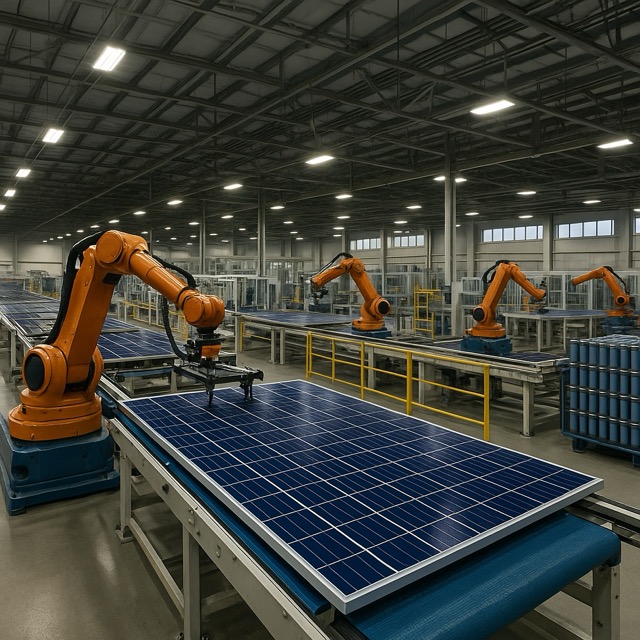
In Guangdong province, for example, municipal governments have allocated subsidies covering up to 50% of project costs for EV battery plants, prompting a wave of new facilities along the Pearl River Delta. Similar incentives in eastern Jiangsu and Zhejiang provinces have triggered a rapid expansion of solar panel production capacities—pushing global supply beyond demand and driving down prices to unsustainable levels. Industry insiders warn that profit margins have plunged into single digits, threatening the viability of smaller players.
“Local governments are effectively gambling on growth numbers,” says Liu Wei, a former senior economist at the People’s Bank of China. “When growth slows, they double down on capex to hit the targets. The result is chronic overcapacity—a repeating cycle that deepens dependence on heavy industries.”
In the northeast rustbelt, where once-thriving steel and shipbuilding yards have fallen on hard times, officials have spearheaded conversions of idle factories into robotics and AI hubs. Yet without matching demand, these greenfield projects struggle to secure orders. “We have the robots, but no clients,” admits a manager at a state-backed automation enterprise in Heilongjiang. “The central government’s vision has not filtered down to the market reality.”
The financial repercussions are severe. State-owned enterprises and local government financing vehicles (LGFVs) have amassed mounting debts to underwrite these investments. Moody’s estimates that LGFV debt reached 60% of provincial GDP last year, elevating default risks and tying local administrations’ fortunes to the fate of these industries.
Meanwhile, rural and service sectors lag behind. Despite rapid urbanization, domestic consumption has failed to pick up enough slack to absorb excess output. Retailers and service businesses cite weak household incomes and rising living costs as barriers to spending, leaving industrial production as the primary growth lever.
Breaking the cycle will require a fundamental shift in policy priorities. Economists recommend empowering the private sector, reducing reliance on investment-driven expansion, and redirecting capital toward social welfare, digital services, and green finance. Such a pivot would alleviate regional disparities and spur consumption-led growth, but it may also invite short-term economic pain.
Beijing, for its part, has signaled openness to reform. Recent directives emphasize “quality over quantity” in GDP growth and urge localities to adopt “tailored” approaches rather than blanket subsidies. Early signs are mixed: some provinces have begun trimming solar capacity, while others continue to offer land and tax breaks for AI startups.
Analysts caution that political incentives remain misaligned. Local officials’ promotions are still tied to headline growth figures, creating a potent disincentive to curb investment. Unless the central government adjusts evaluation metrics—rewarding innovation, environmental performance, and income growth—overcapacity risks persisting.
China’s experiment with targeted industrial warfare may have vaulted it to the forefront of several strategic sectors, but it also laid bare the dangers of growth addiction. The coming years will test Beijing’s ability to wean local cadres off the easy boost of manufacturing capex and chart a more sustainable path for the world’s second-largest economy.




 The Tower Post