Assessing Whether Botswana’s Populist Government Truly Aims to Control the Diamond Giant or Merely Seeks Revenue Relief
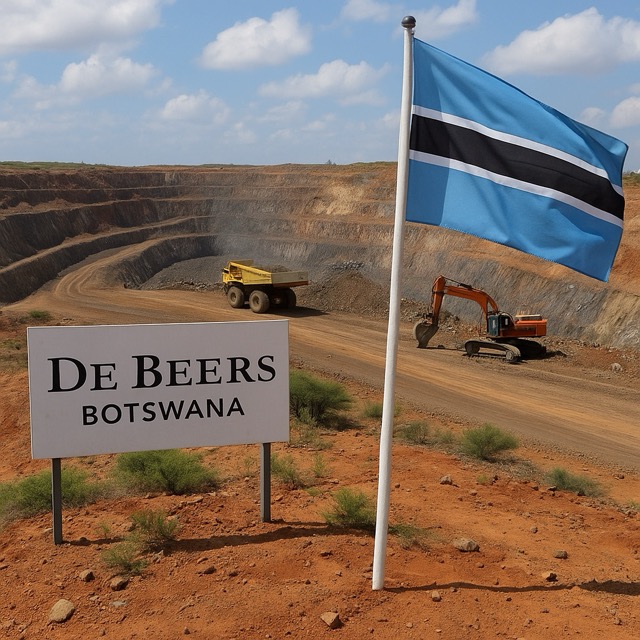
Botswana, the world’s leading producer of gem-quality diamonds, has signaled its intent to assume greater control over De Beers, the historic mining firm in which the state already holds a 15% stake alongside Anglo American. President Naledi Masilo’s administration, which swept to power on promises of resource nationalism, says the move could secure larger revenues and ensure that Botswana captures more value from its diamond wealth. Yet critics question whether the proposal reflects genuine strategic ambition or mere financial brinkmanship by a government strapped for cash.
De Beers, established in 1888, has long been synonymous with global diamond supply and marketing. Its joint venture with Botswana—Debswana—accounts for roughly one-third of global diamond output by value. Debate over revising the ownership structure has simmered for years, but was reignited in June 2025 when the Ministry of Minerals issued a white paper proposing a 51% government majority share. The paper cites the need to fund expanded social programs and diversify an economy still heavily reliant on diamond earnings.
Supporters of the takeover argue that de facto control over Debswana would allow Botswana to negotiate higher prices and reinvest more profits domestically. “We envision a sovereign diamond company that prioritizes national development over shareholder dividends,” said Minerals Minister Thabo Kgositsile. He highlighted that Botswana’s per capita GDP remains modest compared to advanced economies, despite decades of diamond-driven growth.
However, analysts warn that wresting control from De Beers, which provides technical expertise, global marketing channels, and managerial acumen, could backfire. Negotiations may disrupt operations, deter foreign investment, and incur hefty compensation costs if existing shareholding agreements are overturned. “De Beers brings indispensable experience in exploring new deposits, managing production, and maintaining diamond prices,” notes Eleanor Reid, a mining sector consultant. “Botswana risks undermining the very partnership that fueled its economic miracle.”
Financial pressures on Masilo’s government are undeniably acute. With public debt climbing to 45% of GDP and fiscal deficits widening due to expanded welfare programs, the diamond sector remains the crown jewel in the treasury’s coffers. Observers question whether the takeover proposal serves less as a visionary blueprint and more as leverage to secure a favorable renegotiation of royalties and dividends, without altering shareholding structures in the end.
Complicating matters is the evolving landscape of global diamond demand. Lab-grown diamonds, potentially priced at a fraction of mined gems, are capturing increasing market share. De Beers itself launched a synthetic line in 2024, but the transition has provoked price erosions and brand dilution concerns. Botswana’s bid for greater control may therefore collide with broader industry disruptions, raising doubts about the timing and timing and wisdom of staking its economic future on a single commodity.
The outlook hinges on the coming months of negotiations between Gaborone and De Beers’ parent company, Anglo American. Industry insiders expect a phased approach: first, securing higher royalty rates—currently set at 25%—and increased dividends, followed by a potential incremental rise in equity. Few anticipate an abrupt 51% government takeover, given the legal complexities and the need to maintain operational stability.
As debate intensifies in Botswana’s parliament and boardrooms in London, the broader question looms: can a resource-rich nation leverage populist momentum into sustainable prosperity without alienating the global expertise and capital that underpin its success? Botswana’s leaders will need to demonstrate not only fiscal resolve but also strategic foresight in stewarding the legacy of De Beers for future generations.




 The Tower Post