Commissioner Tzitzikostas highlights ‘unaccountable fortress’ of roads, bridges, and railways ill-equipped for NATO reinforcements
In a stark warning that has reverberated through European defense circles, EU Transport Commissioner Apostolos Tzitzikostas cautioned that the European Union’s transport infrastructure is ill-prepared to support rapid military deployments in the event of a crisis. Speaking to the Financial Times, Tzitzikostas described the current network of roads, bridges, and railways as effectively “unfit for purpose” and likened the legal framework governing these assets to an “unaccountable fortress.”
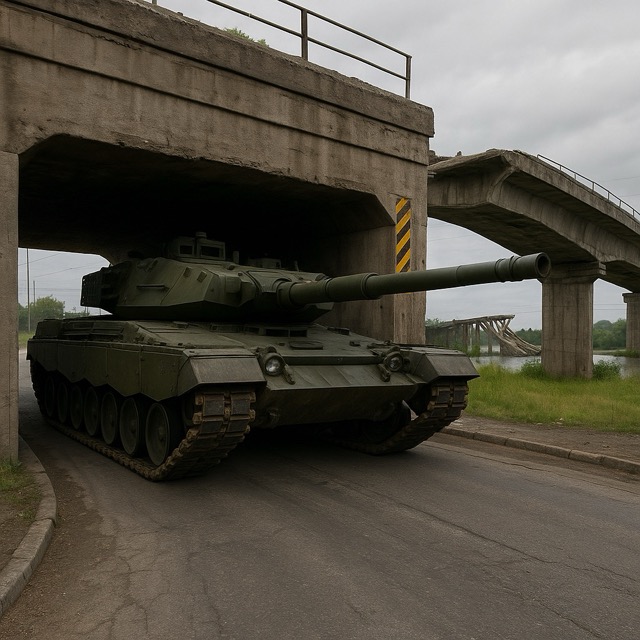
Tzitzikostas emphasized that key transit routes—particularly those forming NATO’s so-called military corridors—feature critical chokepoints. “We have old tunnels that cannot accommodate the width of modern tanks,” he said. “Narrow or structurally weak bridges could collapse under the weight of armored vehicles. And excessive border procedures mean that what should take hours could stretch into weeks or months.”
The commissioner’s remarks come amid growing concern over Russia’s military posture in Eastern Europe and NATO’s interest in streamlining reinforcements across the bloc. Currently, the EU plans to invest €17 billion in upgrading some 500 projects along four strategic corridors spanning from Portugal and Spain in the west to the Baltic States and Poland in the east. These initiatives include widening tunnels, reinforcing bridges to carry weights of up to 70 tonnes, and cutting bureaucratic red tape at internal borders.
However, EU staff and critics argue that the proposed measures merely scratch the surface of deeper governance issues. Underpinning the infrastructure network is a labyrinth of national regulations and exemption clauses that, according to union representatives, can be used to delay or deny necessary upgrades. Some have characterized the system as a “legal fortress,” shielding decision-makers from accountability and leaving planners unable to coordinate cross-border projects efficiently.
Beyond physical constraints, legal experts point to the EU’s unique treaty-based status, which grants the European Central Bank and other supranational bodies considerable internal autonomy. While such independence was originally intended to protect monetary and regulatory functions, detractors contend it has evolved into a barrier to reform. “We’re dealing with a patchwork of regulations that no single authority can override,” explained Dr. Helena Puig, a transport policy scholar at the College of Europe.
In response to these critiques, the EU Commission has proposed creating a streamlined ‘military mobility office’ tasked with consolidating project oversight and fast-tracking approvals. Yet the office’s mandate remains undefined, and some member states are wary of ceding further control over national infrastructure budgets.
European Parliamentarians have reacted forcefully. In a recent debate, MEP Tomasz Grodzki called for binding deadlines to complete upgrades before the next NATO summit, arguing that “infrastructure readiness is as vital as troop readiness.” Other MEPs urged transparent criteria for project selection, warning that opaque processes fuel mistrust among eastern and western member states.
Analysts caution that delays in implementation could carry heavy consequences. According to a study by the European Defense Agency, failure to modernize key routes could hamper reinforcement times by up to 70% during a crisis. Such bottlenecks, the report warns, could force NATO to rely on costly airlifts rather than more sustainable land routes, undermining collective deterrence.
The debate over military mobility also intersects with civilian concerns. Transport associations worry that prioritizing heavy military traffic could exacerbate wear on public roads and disrupt commercial logistics. Representatives of the International Road Transport Union have called for dual-use solutions, such as reinforced bypass lanes and modular bridge components that can be deployed rapidly but remain hidden during peacetime.
As Europe grapples with these complex trade-offs, the urgency of Tzitzikostas’s warning is clear: without swift and coordinated action, the EU risks leaving its defenses hobbled by the very infrastructure on which its security depends. Whether policymakers can break down the legal fortress and lay the rails for a truly mobile Europe remains a pressing test for transatlantic solidarity.




 The Tower Post