From Hellish Workouts to High-Tech Training: How the Premier League’s Referees Are Being Pushed to the Limit
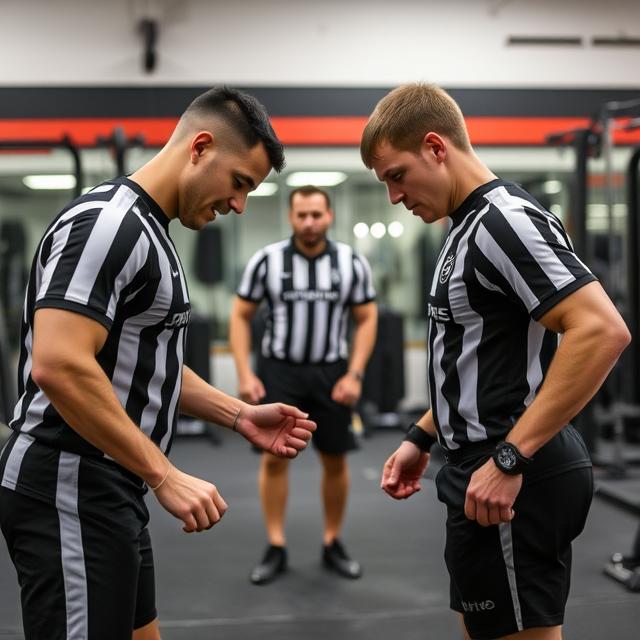
In a bid to stay ahead of the game, the Premier League’s referees are undergoing a radical transformation. Gone are the days of casual, laid-back training sessions. Today, they are subjected to grueling workouts, cutting-edge technology, and a focus on mental well-being.
At the heart of this shift is the PGMO’s (Professional Game Match Officials) commitment to establishing unconscious competence regarding physical demands. This means that referees must be in top physical condition to perform at their best. To achieve this, they undergo a six-minute all-out run, known as the maximal aerobic speed (Mas) test, which pushes their bodies to the limit.
“We don’t want to just cope in games but perform,” says Matt Willmott, the PGMO’s lead performance coach. “If you’re not worrying about those physical demands, you can focus purely on decision-making and it puts you in a better position.”
The Mas test is just one part of the referees’ training program, which also includes the use of technology such as Playermaker, straps that attach to boots and can read running gaits, track how quickly officials change direction and identify injuries. The data collected from these tests is used to create personalized training plans, ensuring that each referee is tailored to their specific needs.
But physical fitness is just one aspect of the referees’ transformation. They are also receiving support for their mental well-being, with access to psychologists and sports scientists who can help them cope with the pressures of the job.
“We know the job they do is done under a brighter spotlight than ever,” says Howard Webb, the chief refereeing officer. “There is undoubtedly a lower level of forgiveness… if someone doesn’t agree with a decision, then they’re not slow or shy to comment upon that.”
To combat this, the PGMO is providing referees with a range of support services, including one-on-one chats with psychologists and access to confidential counseling. This approach is designed to help referees manage the stress and pressure of the job, and to prevent them from suffering in silence.
“It’s not just about the bad times; you need them in the good times as well because you have to keep your feet on the floor,” says Peter Bankes, a top-flight referee. “You are emotionally drained if a high-profile incident has not gone your way and that is where the psychological support is invaluable.”
As the Premier League continues to grow in popularity, the demands on referees are increasing. They must be able to keep up with the pace of the game, make split-second decisions, and withstand the scrutiny of millions of fans.
“It’s a peak and trough industry,” says Andy Madley, a Premier League referee. “You need that professional advice: ‘This is how we can get you back on the bike,’ whether it is after an injury or a decision you can’t shake off.”
The PGMO’s commitment to supporting its referees is a testament to the changing nature of the game. As the stakes grow higher, the need for top-class officials has never been greater. And with their physical and mental well-being at the forefront of their training, the Premier League’s referees are better equipped than ever to handle the demands of the job.




 The Tower Post