Prague cites alignment with existing EU positions, Rome opts for bilateral initiatives and caution
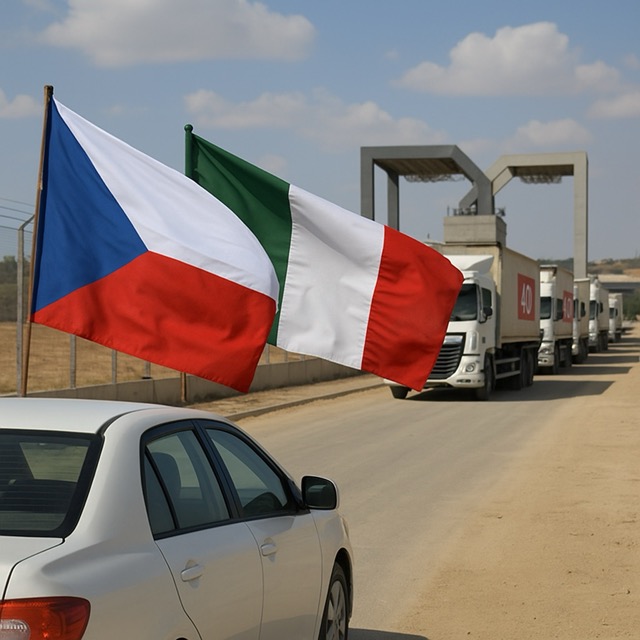
On July 27, 2025, a United Kingdom–led initiative saw 30 countries urge Israel to lift restrictions on humanitarian aid into Gaza. Notably absent from the declaration were two EU member states—Czechia and Italy—each for markedly different reasons, highlighting fissures in European solidarity over the Gaza crisis.
According to the Czech Ministry of Foreign Affairs, Prague was not approached to join the call and considers itself fully aligned with existing EU statements by the European Council and European Commission empowered by Vice‑President Kaja Kallas. “These positions already express unequivocal support for humanitarian assistance and infrastructure restoration in Gaza,” Deputy Minister of Foreign Affairs explained. However, former Foreign Minister Tomáš Petříček argued that Czechia missed an opportunity to send a stronger signal. “This is a clear humanitarian moment; we could and should have signed the declaration,” he told Český rozhlas Plus.
Italy’s abstention, by contrast, reflects its preference for targeted, bilateral action over broad political pronouncements. In mid‑June, Rome evacuated 17 medical patients from Gaza under the EU Civil Protection Mechanism, transporting them to Italian hospitals alongside relief teams. Commissioner for Crisis Management Hadja Lahbib praised Italy’s role as “tangible solidarity” with civilians in need. Prime Minister Giorgia Meloni has underscored that Italy remains committed to humanitarian support but cautioned against “blanket declarations” that lack enforceable follow‑through. “The urgency is to end the war and deliver aid,” she told La Repubblica, warning that symbolic gestures risk obscuring practical outcomes.
The divergence between Prague and Rome underscores broader EU challenges in forging a unified Middle East policy. While some member states press for consistent multilateral messaging, others emphasize domestic politics and bilateral tools. Analysts suggest that moving forward, Brussels may need to recalibrate its approach—ensuring all capitals feel both consulted and empowered to act decisively.
For now, the Czech and Italian positions exemplify how EU unity on humanitarian crises can fracture over questions of diplomatic process and political strategy. Whether these distinctions will hamper future collective action on Gaza remains an open question.




 The Tower Post