Relief at avoiding trade war is tinged with regret at not taking a firmer stand from the start
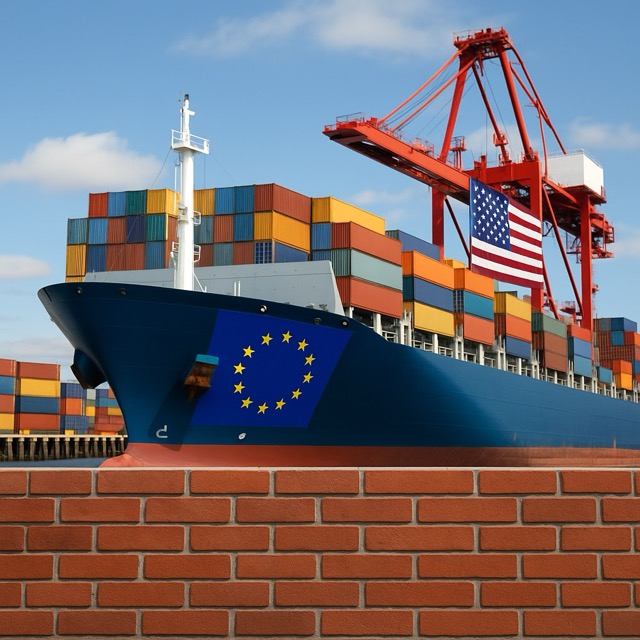
Just two days ago, on July 27, 2025, in a seaside retreat in Ayrshire, Scotland, U.S. President Donald Trump and European Commission President Ursula von der Leyen signed a landmark agreement aimed at stabilizing transatlantic trade ties. The deal, unveiled at Trump’s Turnberry resort, freezes existing tariffs on nearly 45% of U.S. imports to the EU and suspends threatened increases on a further 10%, ostensibly averting a full‑blown trade war.
While Brussels spared itself from the steep escalation of duties President Trump had once signaled—tariffs that would have matched levels not seen since the 1930s—the relief among EU capitals is tinged with regret. Many policymakers lament that the bloc’s initial hesitancy and fractured response afforded Trump the leverage to dictate terms on his own turf.
Under the terms of the Scotland accord, the EU agreed to maintain its 25% levy on U.S. steel and 10% on aluminum, so long as the U.S. holds off on raising duties on European goods. In exchange, Brussels secured commitments from Washington to reopen negotiations on farm exports—particularly American soybeans and pork that had been caught in retaliatory tariffs earlier this year.
Critics argue that by accepting these conditions, the EU granted President Trump a victory lap: the tariff wall he erected remains largely intact, and European exporters continue to pay the price. “This agreement shores up our short‑term stability but cements long‑term structural damage,” says trade expert Dr. Marianne Köhler of the Berlin School of Economics.
The Scottish setting was no accident. By hosting von der Leyen at his resort, President Trump underscored his own sense of dominance in the negotiations, forcing the EU president to travel on his turf. Several commissioners privately complained that the optics undercut Brussels’ standing, reinforcing the narrative of an EU eager to placate rather than confront.
Domestic audiences in Europe reacted with a mix of relief and unease. In Berlin, Chancellor Friedrich Merz hailed the deal as “the lesser evil,” stressing the importance of certainty for German carmakers. In Paris, President Emmanuel Macron was more reserved, noting that “we have contained the crisis, but we must now rebuild our strategic autonomy.”
Reflecting on the missteps, insiders point to the EU’s lack of a unified negotiating mandate and divergent national interests—some member states like Poland and Hungary pushed for a tougher line, while Italy and Spain prioritized quick tariffs relief to safeguard their embattled manufacturing sectors.
Moving forward, Brussels plans to launch an internal review of the bloc’s trade defense instruments and consider a more coordinated approach to future tariff threats. Ursula von der Leyen is expected to propose a “European Trade Shield” by year’s end, combining rapid‑response mechanisms with deeper market diversification strategies.
For now, the EU emerges from Scotland neither victorious nor vanquished. It has dodged a worst‑case scenario, yet the deal underscores the urgent need for a stronger, more coherent transatlantic strategy capable of standing up to coercive economic tactics.

 The Tower Post