Libyans Demand Cairo Leverage Peace Efforts Amid Intensifying Regional Tensions
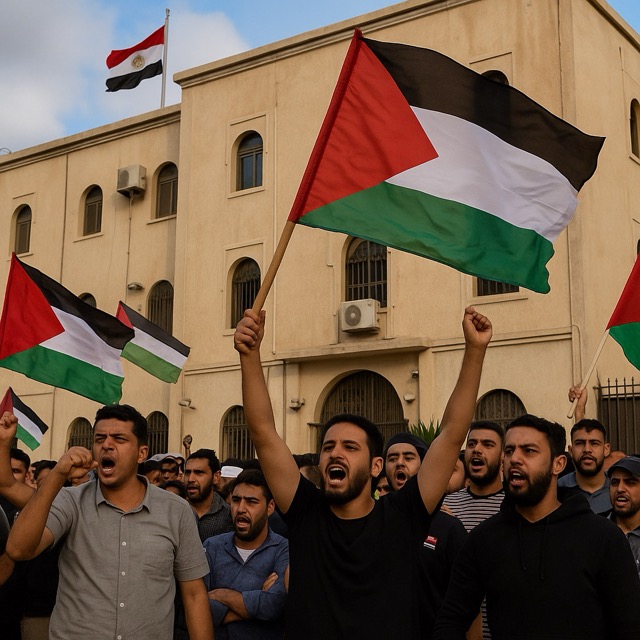
On July 30, 2025, hundreds of Libyan activists and sympathizers gathered outside the Egyptian embassy in central Tripoli, waving Palestinian flags and chanting slogans demanding stronger Cairo intervention to halt escalating violence in Gaza. The demonstration, organized by a coalition of local civil society groups, underscores mounting public frustration over the broader Arab response to the renewed Israel-Hamas conflict that erupted earlier this summer.
Protesters assembled along Martyrs’ Square at dawn, setting up placards bearing images of besieged Gazan neighborhoods and calling for an immediate ceasefire. Many participants—young and old, male and female—traversed the dusty streets from the Tariq al-Sikka district, united by a shared grievance: the perception that Egypt, as a key mediator and neighbour to Gaza, has not done enough to pressure Israeli and Palestinian leaders toward peace.
“We are here to tell Egypt: open the Rafah crossing, speak for our brothers and sisters in Palestine, and use your diplomatic weight to end the bloodshed,” declared Amal al-Harithi, a 27-year-old university student and one of the demonstration’s principal organizers. Al-Harithi criticized Egypt’s recent border tightness and its perceived reluctance to confront Israeli military actions, arguing that such stances undermine Egypt’s historic role as a regional arbiter.
In response, embassy officials remained largely behind closed doors, and diplomatic staff did not publicly engage with the protestors’ demands. The Egyptian government has maintained that its diplomatic efforts continue through back-channel negotiations, emphasizing its cooperation with international actors, including the United Nations, to secure humanitarian pauses and prisoner exchanges.
Nonetheless, protesters argue that these efforts are insufficient. Several speakers at the Tripoli rally invoked Egypt’s signing of past peace accords and its management of the Gaza border as evidence of Cairo’s unique leverage. “Egypt has the keys to Gaza,” proclaimed protest leader Habib al-Salem, referencing the Rafah crossing. “If we stand silent, we betray our duty to justice and to humanity.”
Security forces monitored the demonstration from a discreet distance, deploying plainclothes officers along adjacent streets. No major disturbances were reported, though tensions flared briefly when young protesters attempted to advance closer to the embassy gates before being repelled by a line of riot-control barriers erected overnight.
Analysts note that Libya’s pro-Palestine protests reflect a broader shift in public sentiment across the Middle East, where populations weary of protracted conflicts demand more assertive action from their governments. Libya’s own history—marked by revolution, civil war, and foreign intervention—adds a layer of complexity, as many Libyans empathize with Gaza’s besieged civilians yet fear regional spillover.
Amid Tripoli’s fragmented political landscape, the protest also serves as a rare moment of unity. Participants represented a cross-section of Libya’s divided communities: former rebel fighters, Islamic activists, secular youth, and displaced families from the east and west. “Today, we stand together—for Palestine and for our own national conscience,” said Mustafa Abdi, a municipal council member from Janzur.
The demonstration concluded peacefully by midday, with organizers announcing plans for a follow-up sit-in if Egyptian authorities fail to respond within ten days. In the meantime, protesters pledged to intensify advocacy efforts, including letter-writing campaigns to the Egyptian presidency in Cairo and coordination with international human rights organizations.
As regional tensions escalate, the Tripoli protest underscores the power of grassroots mobilization and the enduring resonance of the Palestinian cause in Libyan society. While the Egyptian government continues diplomatic negotiations behind the scenes, Libyan demonstrators have made clear their demand: tangible, visible actions to alleviate Gaza’s humanitarian crisis and advance a genuine path to peace.




 The Tower Post