A Disturbing Present and a Dangerous Future for the Middle East
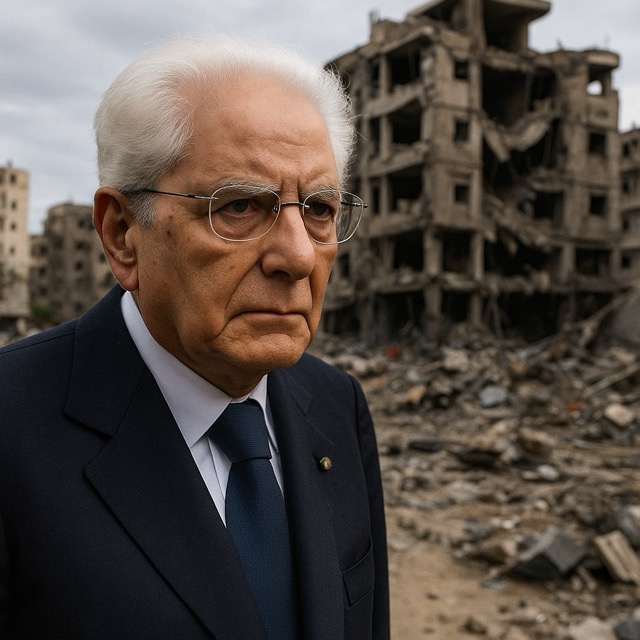
In a rare and stark condemnation, Italian President Sergio Mattarella has openly criticized Israel’s ongoing military campaign, calling it “inhumane” and suggesting that its actions may constitute war crimes. His words resonate with growing international outrage as the humanitarian crisis in Gaza deepens and the images of devastation, displacement, and despair become harder to ignore.
Mattarella’s statement is a clarion call to the international community, urging a reevaluation of moral and legal responsibilities in the face of disproportionate military responses. “The present is repugnant,” he declared, citing the collective punishment of a civilian population under the justification of anti-terrorist operations. “It makes plausible the accusation of committing war crimes.”
The president’s words arrive amid a worsening situation in Gaza, where Israeli airstrikes have razed neighborhoods, hospitals are barely functional, and water and electricity supplies are critically low. Over 30,000 Palestinians, many of them women and children, have reportedly died since the beginning of the latest escalation. International aid organizations are sounding the alarm, while diplomatic efforts remain stalled.
Yet Mattarella’s warning does not stop at the present horror. The Italian head of state paints an ominous picture of what may follow. “Even worse is being prepared for tomorrow,” he said, referring to the psychological and political consequences of the current strategy. “Tel Aviv is being infected by an immense sense of humiliation,” he warned, “one that crushes an entire people, labeled as terrorists and punished collectively.”
This sense of collective punishment, Mattarella argues, may fertilize the soil for future extremism. In his words, a far more venomous serpent than Hamas might one day emerge from the rubble—an entity driven not just by ideology but by generations of despair and anger. “What poisonous snake will crawl out of the ruins to deliver a more deadly venom?” he asked, in a metaphor as evocative as it is chilling.
The comment has sparked a mixture of outrage and support across Europe and the Middle East. Critics argue that Mattarella is jeopardizing Italy’s diplomatic neutrality, while supporters hail his moral courage in speaking out against what they see as a humanitarian catastrophe unfolding in plain sight.
Israel has yet to formally respond to Mattarella’s comments, though anonymous government officials have dismissed them as “unhelpful” and “ill-informed.” Meanwhile, Palestinian officials have welcomed the remarks, calling them “a step toward accountability.”
Mattarella’s intervention may not immediately change policy on the ground, but it adds a powerful voice to the growing global chorus demanding a ceasefire, accountability, and a reevaluation of strategies that prioritize retribution over reconciliation. In an era where silence can be complicity, the President of Italy has chosen to speak.
Whether his warning will be heeded—or merely lost in the noise of geopolitics—remains to be seen.


 The Tower Post