UK and US See Historic Lows in Violent Crime Amid Rising Anxiety Over Safety
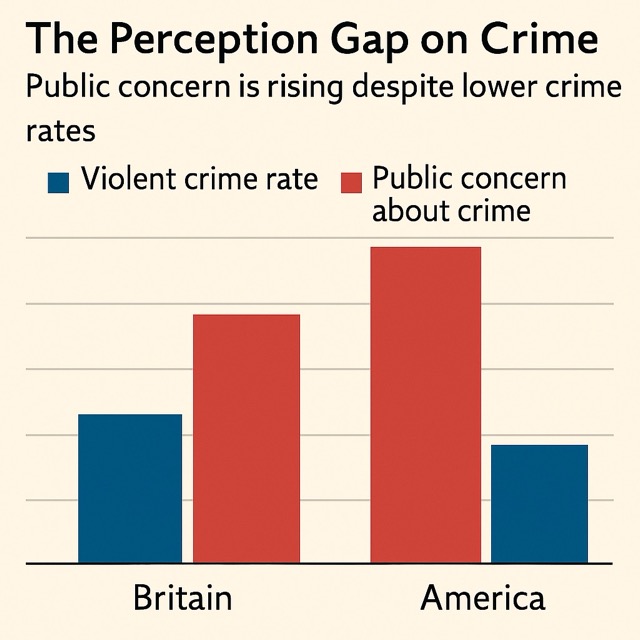
Despite headline-grabbing events like Tuesday’s shooting in New York, 2025 is on track to record the lowest violent crime rates in decades across both the United States and the United Kingdom. Yet paradoxically, public concern about crime continues to rise on both sides of the Atlantic.
New data from law enforcement agencies and independent research bodies reveal a consistent decline in homicides, assaults, and other serious violent offenses. In the U.S., major cities such as Chicago, Los Angeles, and Houston have all reported double-digit percentage drops in shootings and armed robberies compared to previous years. In the U.K., similar declines are being noted in knife-related violence, gang activity, and burglary.
Experts point to a variety of factors contributing to the downward trend: improved policing strategies, community outreach, technological advances in surveillance, and long-term socio-economic changes. Additionally, the COVID-19 pandemic reshaped urban behavior patterns, leading to lasting shifts in where and how people congregate.
“We’re witnessing a continuation of a trend that actually began over two decades ago,” said Dr. Elaine Brooks, a criminologist at the London School of Economics. “The streets today are statistically safer than they were in the 1990s or even the early 2000s.”
However, the perception of crime appears divorced from the data. Polls in both countries indicate that large segments of the population believe crime is worsening. In the U.S., a recent Gallup survey showed that 63% of respondents felt violent crime was increasing nationally. In the U.K., similar anxieties are echoed, particularly around knife crime and youth violence.
High-profile incidents, amplified by 24-hour news cycles and social media, may be fueling the disconnect. Dramatic events, no matter how rare, dominate public discourse and generate a disproportionate sense of fear. “One viral video of a street brawl or shooting can undo months of progress in public reassurance,” said Chief Superintendent Martin Lewis of the Metropolitan Police.
Politicians also play a role. In both countries, crime has become a potent campaign issue. Opposition parties accuse incumbent governments of being soft on crime, while leaders point to improved statistics that often fail to resonate with anxious voters.
The paradox poses a challenge for law enforcement and policymakers: how to align public perception with statistical reality. Some suggest increased transparency and public education campaigns about crime trends, while others advocate for stronger community engagement to rebuild trust.
Still, the consequences of rising fear are not merely psychological. They can impact public behavior, from the reluctance to use public transport to increased demand for private security and even changes in voting patterns. “Fear of crime is a powerful political force,” said American sociologist James Holloway. “And it’s often more influential than crime itself.”
As 2025 continues, authorities in both the U.S. and U.K. will have to contend not only with maintaining low crime rates but also with tackling the growing perception gap. With data on their side, the next step is winning over hearts and minds.




 The Tower Post