Washington Targets Global Shipping Empire Accused of Funding Tehran with Billions in Oil Revenue
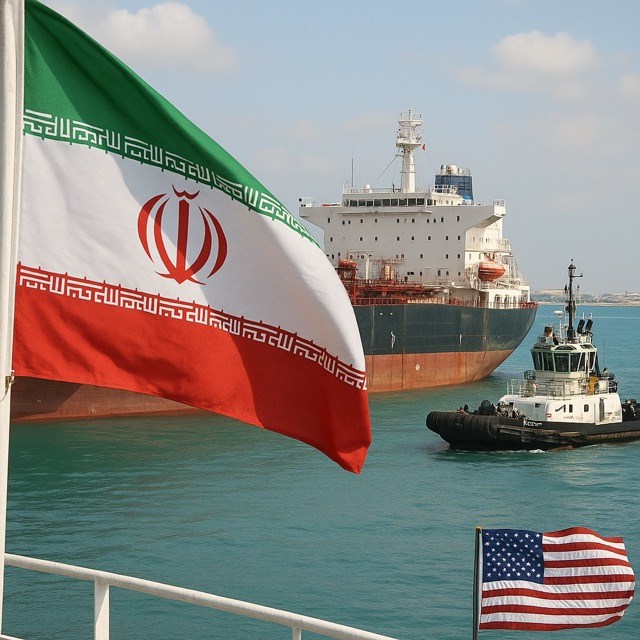
The United States has imposed a new round of sweeping sanctions on an expansive international shipping network accused of funneling tens of billions of dollars in oil revenue to Iran. The Biden administration’s move intensifies pressure on Tehran amid ongoing tensions over nuclear activity, regional conflicts, and growing ties between Iran and adversarial states.
According to the U.S. Treasury Department, the sanctions target a vast web of shipping firms, front companies, and intermediaries operating across multiple jurisdictions including China, the UAE, Turkey, and Singapore. Officials allege that the network helped Iran evade sanctions and sell oil surreptitiously, enriching the Islamic Republic’s coffers despite existing restrictions.
“This network has generated vast sums of money that fund destabilizing activities across the Middle East,” said Brian Nelson, Under Secretary for Terrorism and Financial Intelligence. “We are committed to aggressively enforcing our sanctions and denying the Iranian regime the resources it uses to fuel violence and oppression.”
Strategic Targeting of Maritime Assets
The newly sanctioned entities are accused of disguising the origin of Iranian crude through ship-to-ship transfers, falsified documentation, and reflagging vessels to mask their ties to Iran. Several tankers have also been designated, many operating under opaque ownership structures to avoid detection.
The U.S. says the campaign reflects a broader effort to clamp down on “shadow” oil sales that continue to support Iran’s economy in defiance of international sanctions. These illicit flows have grown increasingly sophisticated, relying on global trade routes and complex logistics to move petroleum under the radar.
The sanctions freeze any U.S.-based assets held by the entities and prohibit American individuals or companies from doing business with them. The move is expected to impact financial channels and insurance providers that facilitate maritime trade.
A Political and Diplomatic Signal
Beyond the economic impact, the sanctions send a clear message to Iran and its trading partners. U.S. officials argue that Tehran’s continued oil exports provide vital funding for its ballistic missile program, regional proxy forces, and internal security apparatus.
Analysts see the sanctions as part of a dual-track policy—applying economic pressure while keeping diplomatic channels open. However, the timing of the move, coming amid fragile talks in the region and ongoing hostilities in the Red Sea and Persian Gulf, risks inflaming tensions further.
“Iran will view this as an escalation,” said Karim Sadjadpour, senior fellow at the Carnegie Endowment. “The regime is under pressure domestically and internationally, and this cuts into a key source of survival.”
Global Implications
The crackdown also places global maritime players on alert. The U.S. has urged allies and international financial institutions to sever ties with Iranian-linked operations or risk secondary sanctions. That warning resonates across Asia and Europe, where some firms have been accused of indirectly facilitating oil movements tied to Iran.
The move also tests the effectiveness of Washington’s sanctions architecture at a time when countries like China and Russia are increasingly defying U.S. enforcement efforts. Iran’s ability to sell oil despite years of restrictions demonstrates the resilience—and adaptability—of its economic networks.
Looking Ahead
While Washington maintains that sanctions remain a central tool in its strategy to contain Iran, critics argue that without a broader diplomatic resolution, enforcement alone is unlikely to yield long-term results.
Still, the Biden administration appears determined to deny Iran economic lifelines while it continues to pursue what it describes as “malign activities.” The latest sanctions underscore a long-standing reality in U.S.-Iran relations: that economic warfare remains a potent—if controversial—instrument of foreign policy.
As geopolitical fault lines deepen, the effectiveness and consequences of such moves will likely reverberate far beyond the Strait of Hormuz.

 The Tower Post