While AI Promises to Advance Human Knowledge, Experts Warn of the Risk of Cognitive Atrophy
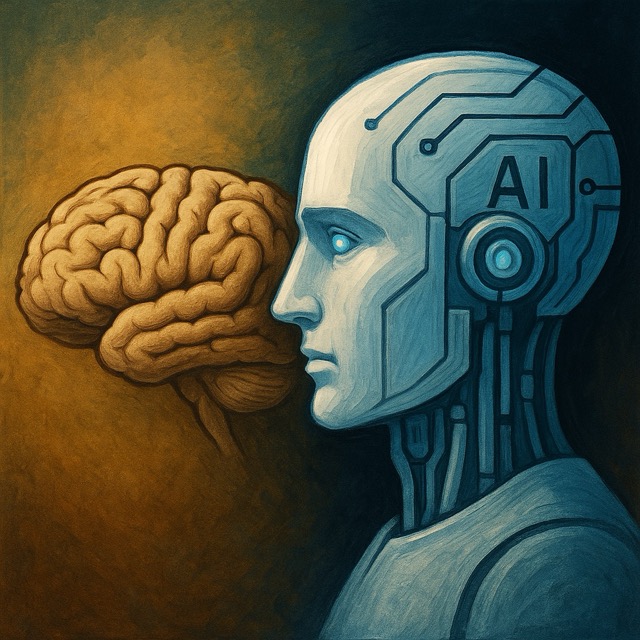
Artificial intelligence, once the realm of science fiction, is now embedded in our daily lives—from personalized recommendations and chatbots to medical diagnostics and climate modeling. As its capabilities expand at a rapid pace, many are heralding AI as a revolutionary force that could elevate human understanding and accelerate scientific discovery. But a growing chorus of voices warns that if not used thoughtfully, AI could dull our cognitive capacities, leading to what some call “digital dependency” or cognitive atrophy.
This nuanced perspective, outlined in a recent Financial Times editorial, underscores the double-edged nature of artificial intelligence: as a tool, it can enlighten and empower, but as a crutch, it may weaken our intellectual resilience.
The Power to Advance Knowledge
At its best, AI serves as a catalyst for innovation and intellectual progress. In healthcare, it can process vast datasets to identify genetic markers and predict disease risks. In science, AI algorithms are already helping researchers simulate complex molecular behavior or map the structure of proteins in hours instead of months.
Education, too, stands to benefit. Adaptive learning platforms that harness AI can tailor lessons to individual needs, offering new pathways to knowledge for students around the world. These tools can augment human learning and provide access to information previously out of reach.
“There is no doubt that AI can be a force multiplier for human ingenuity,” said Dr. Lena Brunner, a computational neuroscientist. “The key is to use it as an extension of our minds, not a substitute.”
The Risk of Mental Laziness
Yet as AI becomes more integrated into our decision-making processes, there’s a growing risk that humans may relinquish too much intellectual responsibility. Why memorize facts when a smart assistant can recall them in seconds? Why wrestle with critical thinking when an algorithm offers pre-packaged conclusions?
Psychologists warn that over-reliance on automation may lead to cognitive atrophy—our brains becoming less practiced at complex problem-solving or independent thought. In the same way that GPS has been shown to erode people’s sense of direction, generative AI could diminish our analytical reasoning or creativity over time.
“There’s a difference between using tools and outsourcing our minds,” said Professor Aisha Roy, a behavioral psychologist. “If AI becomes the default for every task, we risk a generation less capable of deep thinking.”
Striking the Balance
The challenge, then, is not whether to use AI, but how to use it wisely. Policymakers, educators, and technologists must work together to design systems that promote active engagement, not passive consumption. For example, AI tutors should guide students toward answers, not simply supply them. Recommendation engines should encourage curiosity, not just echo our existing preferences.
Companies building AI systems have a responsibility to prioritize cognitive health and transparency, ensuring that users understand how outputs are generated and can engage critically with them. Moreover, educational curricula must evolve to teach not only how to use AI tools, but when and why to use them.
Human-Centric AI
Ultimately, artificial intelligence should serve to amplify human potential, not replace it. As we stand on the threshold of a new technological era, the choices we make now will shape the mental landscapes of future generations.
The FT’s editorial concludes with a call for balance: embracing AI’s capacity to expand our horizons, while remaining vigilant against the intellectual complacency it might induce. In short, the future belongs not to the machines, but to those who use them wisely.
If humanity is to thrive alongside AI, it must remain both the architect and the critic of its digital tools.




 The Tower Post