Activist investor Elliott Management ramps up pressure as energy giant prepares detailed update
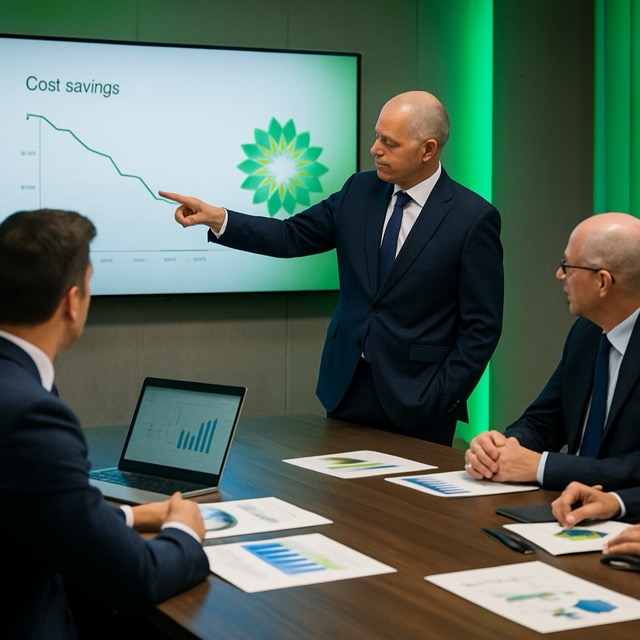
London, August 2025 – British energy giant BP is set to disclose tomorrow the latest progress on its ambitious $5 billion cost-cutting program, a critical initiative spurred by mounting demands from activist investor Elliott Management. The update, expected during a capital markets day event, will be closely watched by shareholders eager to gauge whether BP can accelerate savings and bolster shareholder returns without compromising operational integrity.
BP launched the cost-reduction scheme in early 2024, aiming to eliminate wastage, streamline operations, and realise synergies across its global divisions. The plan initially targeted $3 billion in savings but was expanded later that year to $5 billion in response to persistent concerns about the volatility of oil prices and BP’s ability to maintain competitive margins.
At the heart of the push is Elliott Management, the New York-based hedge fund that has gradually amassed a stake of just over 5 percent in BP. Elliott has publicly criticised BP’s cost structure as bloated, urging the board to adopt more aggressive productivity measures, divest non-core assets, and return excess cash to shareholders. The fund’s campaign — one of the most high-profile activist engagements in the energy sector this year — has resonated with other institutional investors concerned about BP’s stagnant share price performance.
In a letter to BP’s board last month, Elliott’s founder, Paul Singer, asserted that “significant additional cost savings are achievable through deeper organisational restructuring and tighter capital discipline.” The missive implied that BP could unlock further value by accelerating the disposal of underperforming oil fields, renegotiating service contracts, and flattening the company’s management hierarchy.
BP’s management team has responded by pledging to deliver the full $5 billion in savings by the end of 2025, a year earlier than initially planned. Chief Executive Officer Murray W. Hawkins is widely expected to highlight progress in areas such as procurement efficiencies, digitalisation of maintenance workflows, and the integration of business services with partner firms.
Insiders suggest that BP has already locked in approximately $3.2 billion in cumulative savings through measures including the consolidation of supplier agreements, the implementation of a global digital logistics platform, and the closure or sale of marginal production sites. However, the remaining $1.8 billion — the most challenging segment of the target — will likely require tougher decisions, such as workforce reductions and the renegotiation of long-term contracts with drilling and technical service providers.
Industry analysts are divided on how much additional savings BP can realistically achieve without jeopardising its long-term growth prospects, particularly in the renewable energy business, which is central to the company’s transition strategy. BP has ramped up investments in wind, solar, and biofuels, but these ventures have yet to contribute significantly to earnings. Any deeper cuts in support functions could risk slowing the roll-out of clean energy projects.
“We believe BP can strike a balance between operational lean and strategic investment,” said Helena van Der Meer, a senior energy analyst at Woodfield Partners. “The next phase of savings needs to be surgical — focused on non-value-adding activities — while safeguarding the resources necessary for the low-carbon transition.”
With its capital markets day scheduled for 09:00 BST at BP headquarters in London, the company will outline progress across three primary pillars: cost base optimisation, portfolio rebalancing, and capital allocation discipline. The presentation is expected to include detailed breakdowns of savings realised by region and business unit, as well as updated guidance on capital expenditure for 2026.
While the immediate focus is on cutting costs, investors will also be looking for clarity on BP’s broader strategy to navigate a decarbonising world and achieve net-zero emissions by 2050. The interplay between the short-term imperative of cost savings and long-term investment in low-carbon technologies presents a delicate balancing act for the company’s leadership.
As Elliott Management intensifies its campaign for greater efficiency, tomorrow’s update could prove a pivotal moment for BP, determining not only its financial trajectory but also the credibility of its commitment to both shareholders and the global energy transition. Ultimately, success in delivering the remaining savings will hinge on BP’s ability to enact deep, transformative change across its sprawling operations without undermining its future growth prospects.




 The Tower Post