Declines in spending by American and Chinese tourists in Japan and Europe deliver a fresh blow to the global luxury industry already under pressure from tariffs and economic uncertainty.
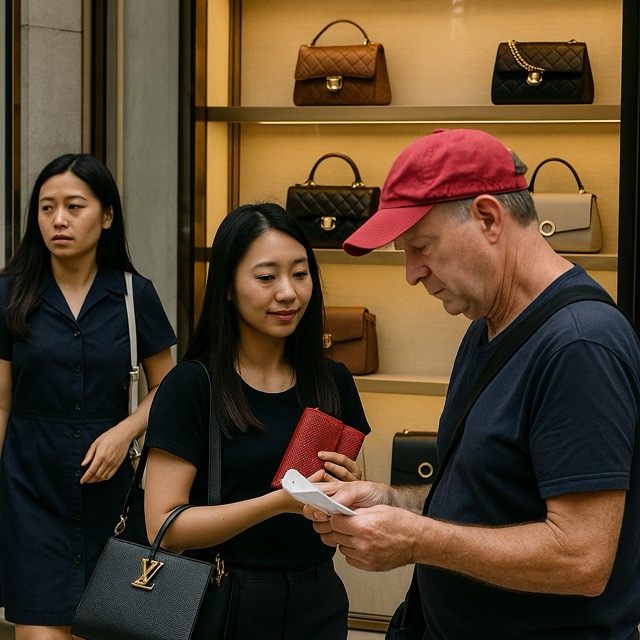
PARIS, August 5, 2025 — Sharp declines in spending by tourists from the United States and China are significantly impacting luxury goods sales in Japan and Europe, compounding pressures on an industry already struggling from trade tensions and economic headwinds. The latest downturn, largely driven by unfavorable currency movements, has luxury brands bracing for prolonged challenges.
For years, wealthy American and Chinese travelers have been the backbone of luxury retail sales in cities such as Tokyo, Paris, Milan, and London. However, recent shifts in currency values—particularly the weakening of the Chinese yuan and volatility in the US dollar—have severely diminished the purchasing power of these crucial tourist segments.
According to a recent industry report by Bain & Company, spending by Chinese travelers, historically the largest group of luxury consumers abroad, has dropped by nearly 25% compared to last year. Meanwhile, spending by American tourists has fallen approximately 18%, further exacerbating the downturn.
Major luxury retailers and boutiques in Europe’s high-fashion districts and Tokyo’s renowned Ginza district have reported noticeably lower foot traffic and declining sales volumes. “We’ve definitely noticed fewer tourists, especially from China,” said Marie Leclerc, manager of a high-end boutique in Paris’s Champs-Élysées area. “Those who still visit are spending less, watching their budgets much more carefully than before.”
This dramatic shift is largely due to the weaker yuan, making foreign purchases significantly more expensive for Chinese tourists, who previously enjoyed substantial savings on luxury goods abroad compared to buying domestically. Similarly, fluctuations in the US dollar have made luxury purchases in Europe and Japan less attractive to American tourists, historically known for lavish shopping sprees during international trips.
Adding further strain to the industry, US tariffs on European luxury imports—introduced as part of ongoing trade disputes—continue to raise prices, discouraging American tourists from splurging overseas. Analysts predict the luxury goods sector could lose billions in annual revenues if these conditions persist.
Industry insiders fear the current slump signals the end of an unprecedented boom period, characterized by robust growth driven by high tourist spending in the past decade. The ongoing uncertainty has prompted many luxury brands to rethink their global strategies and shift their focus towards local buyers and digital platforms to mitigate losses.
“The luxury market has reached a pivotal moment,” noted Caroline Dubois, a luxury market analyst at Goldman Sachs. “Brands can no longer rely heavily on tourist-driven revenue. They must diversify, adapt quickly, and refocus their strategies to capture local and online markets.”
Luxury groups such as LVMH, Kering, and Richemont have already begun adjusting their tactics, investing heavily in e-commerce and local customer engagement strategies, aiming to stabilize revenue streams amid declining tourist numbers.
With uncertainty in global trade and currency markets unlikely to subside soon, luxury brands face a prolonged period of strategic adaptation. How swiftly and effectively they respond will determine their ability to weather the current downturn and reposition themselves for sustainable growth in an increasingly volatile global marketplace.



 The Tower Post