Blame game erupts in Switzerland, political tensions rise over unexpected economic hit from major trade partner
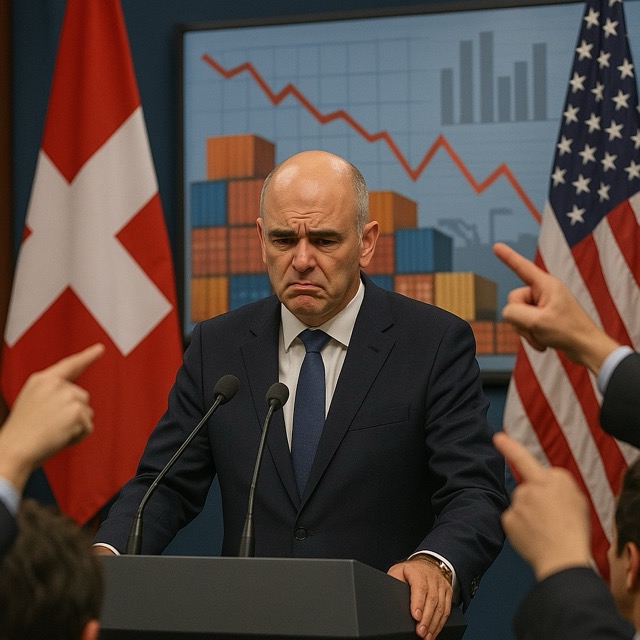
Zurich, August, 2025 – Switzerland finds itself embroiled in political turmoil after the United States unexpectedly announced a 39 percent tariff on Swiss imports, plunging diplomatic relations and economic stability into uncertainty. Swiss President Alain Berset now faces intense scrutiny from opposition parties, business leaders, and citizens demanding answers over what critics are labeling a significant diplomatic failure.
The surprising tariff hike, announced without prior indication from the Biden administration, has already begun to impact Swiss industries, particularly precision engineering, pharmaceuticals, and luxury goods—sectors highly dependent on access to American markets. Swiss stock markets reacted negatively, dropping sharply in response to fears of diminished exports and strained trade relations.
Opposition leader Petra Schneider of the Liberal Democrats was quick to place blame squarely on President Berset’s administration, criticizing what she described as “an astonishing lack of foresight and diplomatic savvy.” Schneider called for a parliamentary inquiry into how such drastic measures could have been enacted without any prior knowledge or intervention from Swiss diplomatic channels.
In response, President Berset’s office stated that the administration was caught off-guard by the tariff increase, calling it “unexpected and unilateral.” However, the administration insists it had maintained robust communication channels with Washington and is actively engaging with U.S. diplomats to seek clarification and a resolution.
Amid the chaos, Swiss economic analysts warn of potentially devastating long-term impacts if swift action isn’t taken. Dr. Jonas Meyer, an economist at the University of St. Gallen, cautioned, “The sudden tariff escalation poses a serious threat to Switzerland’s economic stability and may trigger a domino effect across multiple sectors, threatening thousands of jobs.”
Switzerland’s business community, typically aligned with the government’s economic policies, also expressed alarm. Claudia Fischer, head of the Swiss Export Association, demanded urgent government intervention, saying, “The tariff increase is not merely an economic setback; it’s a diplomatic and political wake-up call. Swiss companies cannot afford the uncertainty of prolonged trade disputes.”
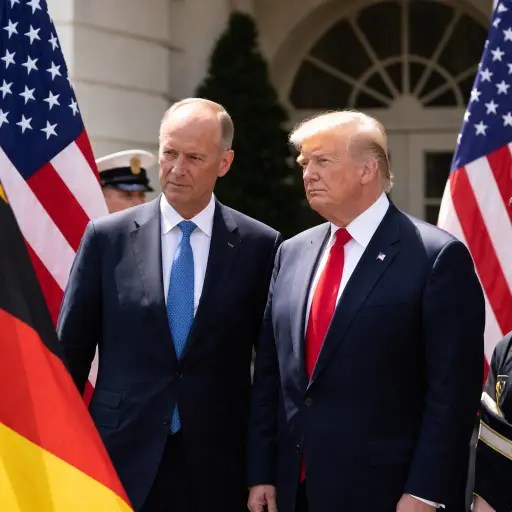
The United States, in a terse initial statement from the State Department, indicated the tariffs were a response to “imbalances and concerns regarding trade reciprocity,” without further elaboration. Speculation among experts suggests possible links to unresolved negotiations surrounding banking secrecy and taxation issues, though U.S. officials have neither confirmed nor denied this.
In Bern, tensions are rising as the political opposition mobilizes to challenge President Berset’s handling of diplomatic affairs. Public opinion polls already show declining support for the current administration amid mounting frustration.
President Berset, in a televised address, assured the nation that he and his cabinet were “committed to resolving this matter swiftly and decisively,” but confidence in his leadership appears increasingly shaken. With political tensions escalating domestically and internationally, Switzerland now stands at a critical crossroads, anxiously awaiting the next diplomatic move in what has become one of the most unexpected international trade disputes in recent history.

 The Tower Post