New tariffs imposed by Washington prompt Chinese manufacturers to rethink Southeast Asian operations, challenging the region’s role as a safe haven from US-China trade tensions.
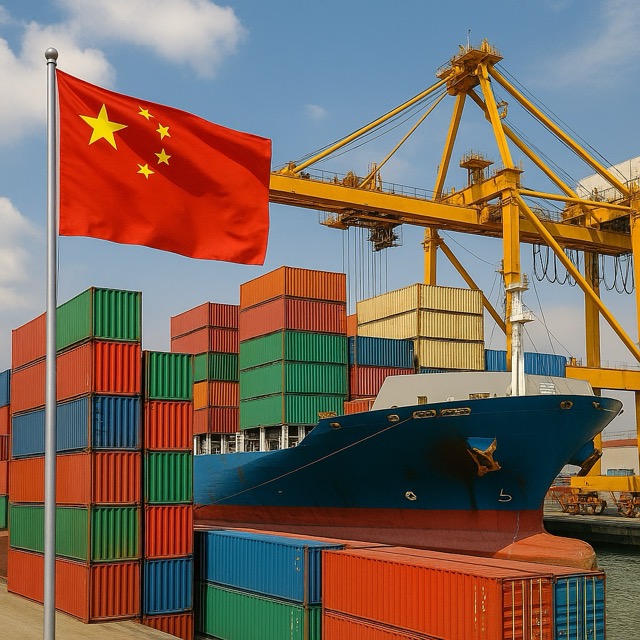
SHANGHAI, August, 2025 — A new wave of US tariffs aimed at curbing transshipment practices has led Chinese companies to reconsider billions of dollars’ worth of investments in offshore factories across Southeast Asia, significantly reshaping the region’s economic landscape.
The United States recently cut additional duties on direct imports from China to 30 percent amid ongoing trade talks with Beijing. However, simultaneously, it introduced tariffs ranging from 10 to 40 percent on imports from alternative manufacturing hubs in Southeast Asia, severely impacting companies that had shifted production out of China to avoid previous levies.
In recent years, Chinese exporters poured substantial resources into countries like Vietnam, Thailand, and Indonesia as part of a ‘China plus one’ strategy designed to mitigate their exposure to US tariffs, initially set in motion by former President Donald Trump’s trade conflict with China. These countries had increasingly become attractive alternatives, providing lower labor costs, strategic locations, and fewer trade barriers.
However, the latest tariffs have disrupted this carefully orchestrated migration. Though tariffs imposed on Southeast Asian nations generally remain lower than those placed on China, the new duties have significantly narrowed this advantage. Analysts point out that these levies, coupled with stricter rules against transshipment—the practice of rerouting Chinese goods through other countries to circumvent tariffs—have reduced profit margins and raised the cost of doing business in the region.
“The new US tariffs have created massive uncertainty,” explained Li Wei, senior economist at HSBC in Hong Kong. “Manufacturers are now forced to reevaluate their entire supply chains and offshore production strategies. The advantage Southeast Asia once had is becoming increasingly thin.”
The repercussions are evident. Many planned projects are on hold or scaled down as Chinese businesses reassess the viability of offshore factories. Investment in new manufacturing plants has slowed considerably in recent months, and supply chain consultants report a surge in inquiries from companies exploring reshoring production to China or diversifying further afield to avoid ongoing disruptions.
At the same time, Southeast Asian economies, heavily dependent on Chinese investment, are feeling the pressure. Vietnam, previously a major beneficiary of the manufacturing exodus from China, now faces declining foreign direct investment and a potential slowdown in economic growth.
Experts suggest that the evolving situation underscores the fragility of supply chains that rely heavily on tariff evasion strategies. “Businesses must now confront the reality that shifting production may not be enough to shield them from geopolitical tensions,” noted Amanda Choi, a trade policy analyst at the Asia Trade Institute.
As Washington and Beijing continue their complex negotiations, the region’s manufacturers find themselves caught in a commercial crossfire. The outcome of these trade discussions could redefine the future of global manufacturing, with Southeast Asia’s position as a manufacturing powerhouse now uncertain.



 The Tower Post